Draba (Krupka)
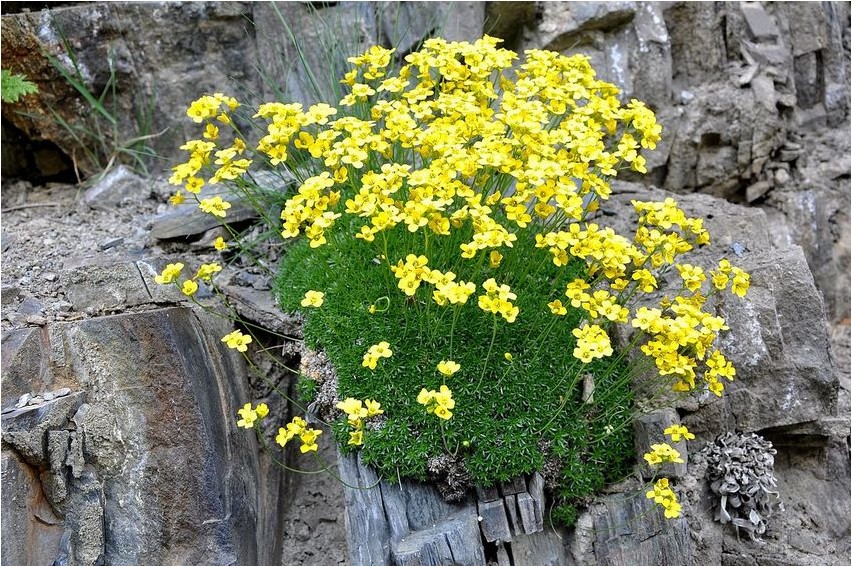
Draba (lat. Draba) is a relatively numerous genus of cushion-shaped herbaceous plants belonging to the Cruciferous or Brassica family.
The genus includes, according to most sources, 270 species, according to others, 400 species. Most representatives of the genus are highly ornamental plants designed to enhance the garden; some species are classified as medicinal plants, and some are considered weeds. Another name for the genus is Krupka, and it is under this name that representatives of the genus are familiar to gardeners and flower growers.
General characteristics of culture
The Draba genus is represented by herbaceous, low-growing, cushion-shaped plants bearing medium-sized foliage, collected in basal rosettes and pubescent over the entire surface. Peduncles in most species are weakly leafy or leafless, do not exceed 4-5 cm in height, they bear small flowers of white or yellow color, collected in racemose inflorescences. The fruits are formed in the form of oval or ovoid pods. In nature, most of the representatives of the genus are found in the Caucasus countries, some in Primorye and the Far East.
Common types
Draba evergreen (lat. Draba aizoides) – the species is represented by low-growing plants up to 8-10 cm high, which during the growth process form rich green dense bushes, above which racemose inflorescences of bright yellow color flaunt. The species is an early flowering species, its first flowers appear in early to mid-spring. Evergreen krupka is an unpretentious plant; it grows well even in poor soils, although it does not accept acidic soils. It prefers a sunny location, but light shade does not bother it.
Alpine draba (lat. Draba alpina) – the species is represented by herbaceous plants that during the growth process form thick pads crowned with pubescent wide foliage. This species does not exceed 15-20 cm in height and is similar in appearance to evergreen drab. Decorates the garden with bright yellow racemose inflorescences that bloom towards the beginning of summer, usually in June. The species is relatively whimsical, needs semi-shaded areas with diffused light with fertile, well-moistened soil. Does not tolerate waterlogged, acidic and swampy soils.
Krupka fladnisensis (lat. Draba fladnisensis) – the species is represented by low-growing turf bushes, crowned with linear-lanceolate pointed foliage, equipped with cilia and sparse pubescence. The flowers of this species are milky, less often pure white, relatively large (compared to other species), collected several times in racemose inflorescences. Blooms in late spring – early summer.

Mossy draba (lat. Draba imbricata) is a native of the Caucasus. It differs from other species in its miniature size and is often used to decorate alpine hills and rocky gardens. Bears low stems covered with small foliage. The flowers are yellow and bloom in late spring, usually in the second ten days of May. The species boasts high winter-hardy properties, but it does not tolerate living in waterlogged and damp areas. It is a sun-loving species, but needs regular moisturizing.
Application
Most of the common species belonging to the genus Draba (or Krupka) are actively used in landscaping gardens. Plants are especially often used to create alpine slides. Some species are used in folk medicine, because their foliage, stems and fruits contain a huge amount of healing substances designed to eliminate many ailments of mankind.
For example, the aerial part of oak drab contains a large number of alkaloids, flavonoids and saponins. An infusion of the plant is used internally as a diuretic and hemostatic agent. It is also famous for its good expectorant properties, therefore it is recommended for diseases of the respiratory system. An infusion of oak draba is often recommended for diseases of the cardiovascular system and kidneys.





