Okra
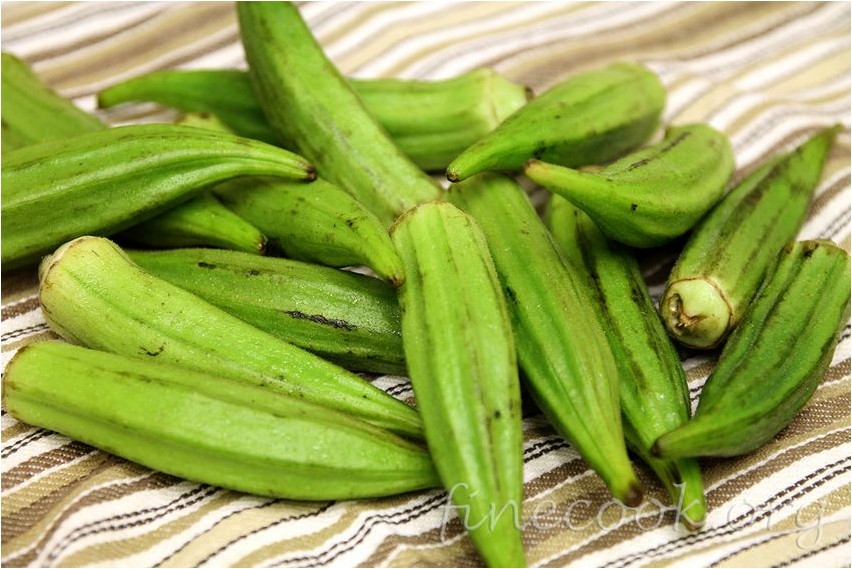
Okra (lat. Abelmoschus esculentus) is a vegetable crop; herbaceous annual belonging to the genus Malvaceae.
Description
Okra is a fairly tall plant: its height can vary from thirty to forty centimeters (this usually applies to dwarf varieties) to two meters.
The woody thick stems of okra are covered with stiff, sparse hairs and are branched at the very base (as a rule, each plant forms from two to seven stems).
The rather large, long-petioled leaves of okra can be colored in both light green and dark green tones. Each leaf is slightly pubescent and has five or seven lobes.
Large single okra flowers are always bisexual and are characterized by a yellowish-creamy color. All flowers sit firmly on short pubescent stalks and are located in the leaf axils.
Okra fruits, covered with thin hairs, are elongated pyramidal multi-seeded capsules, vaguely reminiscent of green pepper pods. The size of some fruits can reach twenty-five centimeters.

Where does it grow
Tropical Africa is considered to be the homeland of okra, and this plant can still be found in the wild in the Antilles. Okra is quite widespread in Asia, Africa, America and a number of southern European countries. And in Russia it is grown on relatively small plantations in the Stavropol and Krasnodar Territories.
Composition
Okra is rich in various nutrients: it contains a huge amount of vitamins and ascorbic acid necessary for the human body. And the seeds of the plant contain about twenty percent of valuable oil, much like olive oil. As for the pods, you can find carbohydrates, proteins, mineral salts, mucous substances, vitamins and organic acids in them.
Usage
Young okra pods have long been eaten. However, they should not be stored for too long, as their texture quickly becomes fibrous. The flavor of freshly picked okra is somewhat reminiscent of green beans and zucchini, so many cooks readily use them in a wide variety of dishes. Okra pods make a wonderful addition to soups and salads, and the pods are also often canned, frozen, and dried. Lightly fried or boiled okra makes an excellent soup dressing and a delicious side dish. It pairs beautifully with ginger, onions, tomatoes, red peppers, garlic, and other spices. Ripe okra seeds can be used to make a wonderful drink with a flavor very similar to coffee.
Okra is also used in folk medicine. Its high content of various mucilaginous substances allows this plant to be used both for the treatment and prevention of a wide range of gastrointestinal ailments. After a long illness or heavy physical labor, okra is sure to help restore strength, and a decoction of its pods (as well as dishes made from them) can significantly alleviate colds or bronchitis. Furthermore, some researchers claim that okra has a very beneficial effect on potency.
Cultivation and Care
Okra is very heat-loving—as soon as the soil temperature rises above 15 degrees Celsius, tiny seedlings will emerge within two weeks. Rapid growth and excellent fruiting are favored by temperatures around 20 degrees Celsius. It is most often grown in greenhouses.
Quite demanding, okra also requires watering—especially when the plant begins to form fruit. If okra experiences a moisture deficit, its growth will lag, and the harvest will be rather meager, with small, unsightly fruits. A similar effect will occur with a significant drop in temperature. However, the temperature in greenhouses should not rise above 30 degrees Celsius. How to Cook Okra / Okra Recipe