Scorzonera
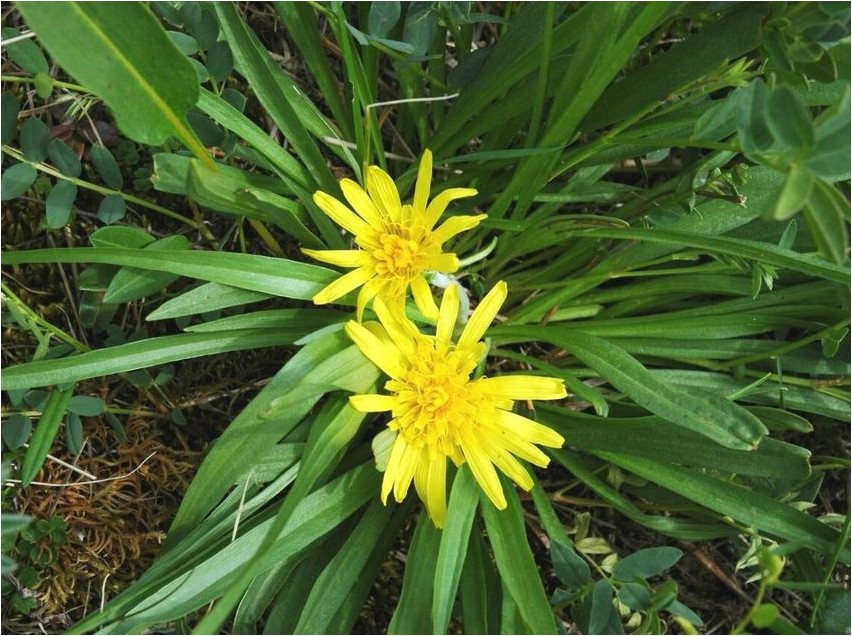
Scorzonera, or scorzonera (Latin: Scorzonera), is a genus of perennial herbaceous plants or subshrubs in the Asteraceae family.
The most common member of the genus is Scorzonera hispanica, also known as black root, or scorzonera hispanica, or sweet root. In some countries, the plant is cultivated as a vegetable crop. Its natural range is the Mediterranean and East Asia, and it grows primarily in arid regions. In Russia, the plant is grown throughout the country and is also found in Azerbaijan, Dagestan, and Georgia. The genus comprises approximately 200 species. The plant”s name comes from the Italian word “scorzone,” meaning “poisonous snake.”
Crop Characteristics
Scorzonera is a biennial or perennial plant that forms a large rosette of leaves and a root crop in the first year, and flower-bearing stems and, consequently, seeds in the second year. The basal leaves are lanceolate or ovate-lanceolate, long, entire, pinnately dissected or pinnately parted, and arranged alternately. The cauline leaves are quite small, lanceolate or awl-shaped. The taproot system forms a spindle-shaped or cylindrical root with a rough surface.
The average root weight is 60-70 g. The skin is dark brown or black, and the flesh is white and juicy. The scorzonera stem is highly branched, reaching a height of up to 100 cm. The yellow flowers, up to 4. 5 cm in diameter, are collected in heads and have a pleasant vanilla aroma. The fruit is a narrow, slightly ribbed, cylindrical, long achene, yellowish-white in color. The seeds are medium-sized, elongated, and remain viable for 1 year. The plant is cold-hardy and overwinters without problem in the soil without cover, except in regions with cold climates.
Growing Conditions
Scorzonera prefers loose, deeply tilled, moderately moist, fertile, neutral or slightly acidic soils. Thanks to its well-developed root system, the plant tolerates summer drought without problems; however, the roots produced in this case are small and tasteless. Prolonged drought often negatively affects the development of scorzonera, causing it to prematurely enter the stem stage, skipping the root stage. The plant responds negatively to soils fertilized with fresh manure. The best predecessors are cucumbers, tomatoes, peas, onions, and potatoes. It can be grown with other perennial vegetable crops.
Soil Preparation and Sowing
The area for scorzonera is prepared in advance: the soil is dug up to a depth of 35-40 cm, breaking up all lumps, rotted manure, compost or peat (30-40 kg per 10 sq. m.), ammonium nitrate (300 g), superphosphate (300 g) and potassium salt (400 g) are added. You can also fertilize with wood ash (1. 5 kg per 10 sq. m.). Sow scorzonera directly into open ground. This procedure can be performed in early spring, summer and late autumn. Spring sowing is preferable. Seeds are soaked in warm water before sowing. The crops are covered with film. You should not be late with sowing, otherwise the root crops will not please you with good taste characteristics and a large harvest. Scorzonera is sown in a narrow row method according to a pattern of 30*20 cm or in a wide row method — 45*15 cm. The seeding rate is 10-15 g per 10 square meters. m. Embedment depth — 2-3 cm.

Care
With the appearance of 2-3 true leaves on the seedlings, the crops are thinned out, leaving an interval between plants of 15-25 cm. The culture has a negative attitude towards thickened plantings; often the plants begin to shoot prematurely. When the plants reach a height of 6-7 cm, the soil on the ridges is mulched with peat. Before applying mulch, the soil is thoroughly loosened and watered abundantly. Further care consists of fertilizing and watering. For fertilizing, it is best to use liquid complex fertilizers.
Harvest
Harvesting is carried out in the fall, before the onset of stable frosts and freezing of the soil. Root crops are carefully dug up, cleared of soil, leaves are removed by twisting, sorted and tied into small bundles. Scorzonera root vegetables are stored in wooden boxes in the basement or cellar. You can sprinkle the fruits with wet sand.





