Acena
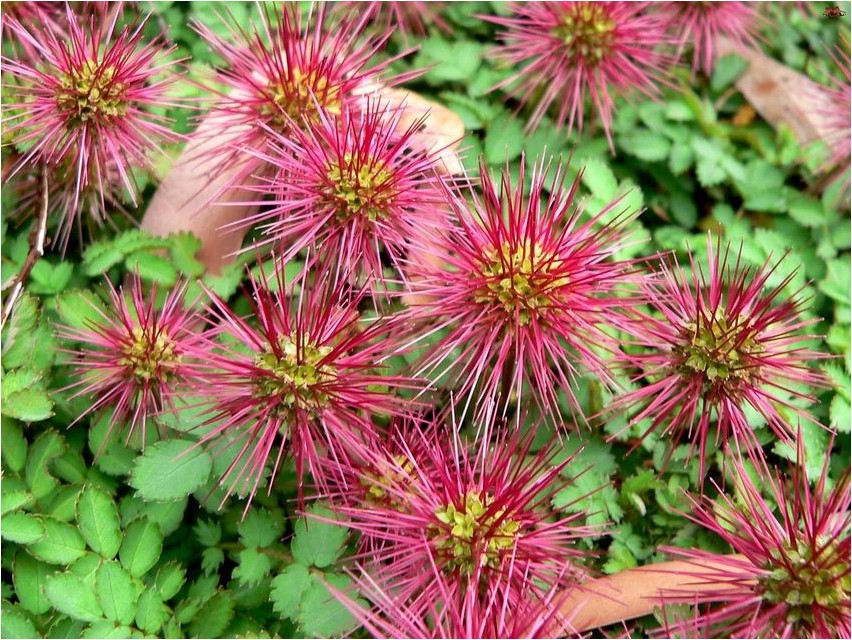
Acena (Latin: Acaena) is a genus of subshrubs and shrubs in the Rosaceae family. Acena is native to South America, New Zealand, and Australia. The genus comprises approximately 60 species.
Cultivation Characteristics
Acena is a creeping subshrub or shrub up to 30 cm tall with numerous, highly branched shoots that intertwine as they grow, forming a fairly dense ground cover. The leaves are rounded, leathery, with sharply serrated edges, and can be colored in a variety of shades—from light green to silvery and even bronze.
The flowers are small, up to 10 cm in diameter, and are gathered in spherical inflorescences with distinctive soft, thin “needles.” The plant blooms from late June to early July until late fall. Acena appeared in Russia relatively recently, but has already gained popularity among gardeners. As they grow, the plants form elegant clumps, and their creeping stems root easily when touching the soil surface.
Growing Conditions
Acena thrives in sunny areas. In shade, the plants form loose mats that do not bloom profusely. Soils for growing this plant should be well-drained, fertile, light, and moderately moist. Acena does not tolerate compacted, waterlogged, waterlogged, or highly acidic soils. Growing acena in low-lying areas with accumulated meltwater and cold air is not recommended. In such areas, plants do not survive winter well and are susceptible to rot in the spring.
Propagation
Acena is propagated by seeds and stem cuttings. Seeds are sown in early spring after a week of stratification. Seeds that are not stratified germinate poorly and do not produce uniform shoots. The crop is sown in seedling containers.

Seedlings emerge fairly quickly. At the stage of 1-2 true leaves, the seedlings are pricked out into individual pots. Acaena seedlings are planted in open ground at the end of May; by the end of August, the plants have developed into low, bushy bushes that will easily survive even a cold winter.
Cuttings are taken in spring or early summer. Each cutting should contain a section of the previous year”s shoot with aerial roots at the node. The cuttings are planted in the ground. Until a strong root system develops, the cuttings are regularly misted, and the soil is watered generously (avoid overwatering).
Care
In general, acena is an undemanding plant and doesn”t require special care. However, regular weeding, loosening the soil, and watering are essential. Fertilizing is also recommended, as it stimulates stem growth. Plants can be covered with spruce branches for the winter; this procedure is not necessary in southern regions. Acena is resistant to diseases and pests, especially if all growing conditions and proper care are met. Because the plant grows very quickly, it is important to prune it promptly to control shoot growth.
Uses
Acena has exceptional decorative qualities, which is why it is increasingly found in private gardens, as well as in gardens and parks. Acena is a unique lawn substitute and is ideal for decorating rocky areas. These plants look harmonious in combination with hyacinths, daffodils, tulips, and other bulbous plants. This plant also blends beautifully with conifers and members of the Ericaceae family. Acaena can be used as a trailing plant, and it can be grown in hanging baskets and pots.