Mealy Mullein
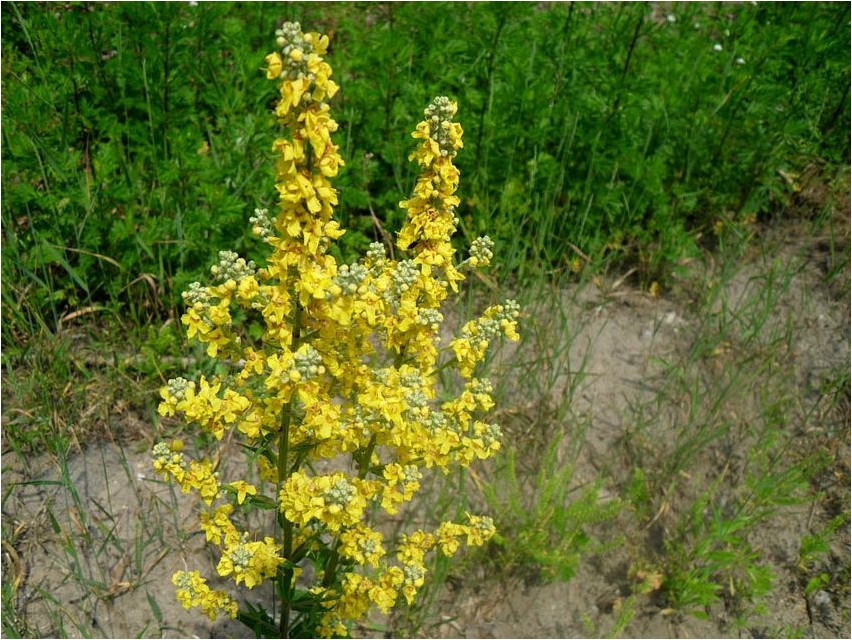
Mealy mullein is a member of the Scrophulariaceae family. Its Latin name is Verbascum lychnitis L.
As for the family name of the mealy mullein itself, its Latin name is Scrophulariaceae Juss.
Description of Mealy Mullein
Mealy mullein is also known by the following common names: babki, div, verbaska maschenskaya, divanka, zayaye uho, divina, mullein, kulinnik, molodets, matryonka, staritsa, felyn, tsar’s scepter, and tsar’s candle. Mealy mullein is a biennial herbaceous plant with densely covered tiny hairs that are star-shaped, appressed, and colored grayish-green. The stem of this plant reaches a height of approximately fifty to one hundred sixty centimeters. The stem is erect, leafy, branched, and ribbed. The leaves of this plant can be either lanceolate or ovate. The inflorescence is a strongly pyramidal panicle. The corolla is yellowish, though rarely whitish, and is approximately twelve to twenty millimeters in diameter. The capsule of the mullein is obtuse, glabrous, and elliptical, four to five millimeters long and two and a half to four millimeters wide.
The flowering period of the mullein begins in July and ends in August. In the wild, this plant is found in Ukraine, Belarus, Western Siberia, and all regions of European Russia, with the exception of the north and northwest. This plant prefers steppe slopes, fixed sand, forest edges, steppes, and open areas in mountain forests. It’s worth noting that mullein is not only a valuable honey plant but also an ornamental plant.
Description of the medicinal properties of mullein
Mullein has valuable medicinal properties, and the roots, flowers, and leaves of this plant are recommended for medicinal purposes.
The presence of such valuable healing properties should be explained by the content of saponins, iridoids, myoinositol, alkaloids, coumarins, tannins, vitamin C, higher aliphatic carbohydrates, alcohols, glucose, sucrose and manose in the plant. This plant is used as a valuable anti-inflammatory agent for various gynecological diseases, and also in the postpartum period.

An infusion prepared from the flowers of this plant is recommended for use internally for bronchitis, cough, whooping cough, pneumonia, inflammatory diseases of the digestive system, hemoptysis, hoarseness, asthma, shortness of breath and acute respiratory infections. In addition, this infusion should also be used to rinse the throat and mouth during various inflammatory processes.
Tincture of mealy mullein flowers should be used for rubbing as an anesthetic for arthritis, neuralgic pain and rheumatism. The powder of the flowers of this plant should be sprinkled on various cracks on the nipples and wounds: in this case, such places should first be lubricated with carrot juice.
Boiled flowers or leaves of this plant are recommended to be applied to burns, wounds and inflamed areas as an analgesic, anti-inflammatory and wound healing agent. A decoction prepared from the roots of mealy mullein can be used for baths and washes for hemorrhoids. It is noteworthy that the seeds of this plant were previously one of the components of ointments intended for the treatment of long-term non-healing wounds.





