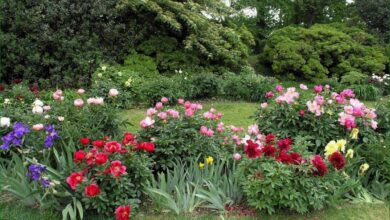
Epigea
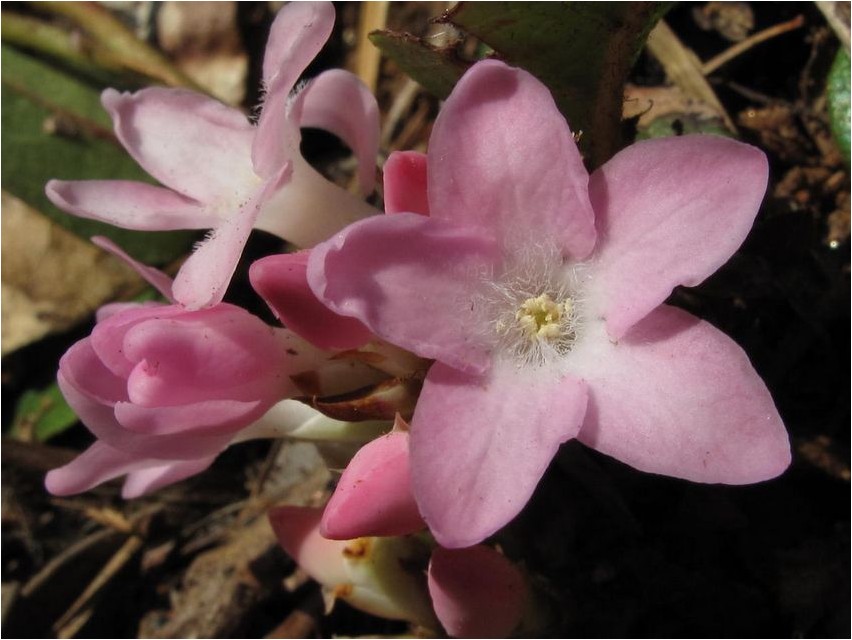
Epigea (lat. Epigaea) is a genus of low-growing, beautifully flowering shrubs of the Heather family. Epigea is now widely cultivated in North America.
In Russia, epigea is grown on personal plots in the Krasnodar region, as well as in the non-chernozem and central zones.
Characteristics of culture
Epigea is a small evergreen shrub up to 35 cm high. The leaves are dark green, simple, obtuse or pointed, ciliated or wavy along the edge, elliptical, round, ovate or ovate-oblong. The flowers are small, pink or white, very fragrant, collected in axillary or apical bunch-shaped inflorescences. The corolla is tubular. The fruit is a dry capsule containing a large number of small seeds.
Creeping Epigaea (lat. Epigaea repens) is one of the most popular species, found naturally in the Atlantic regions from Florida to Newfoundland. It is an evergreen shrub 30-35 cm high, forming dense turf as it grows. The stems are easily rooted, recumbent, and covered with thin short hairs. The leaves are short-petiolate, sparsely bristly, round or ovate, with a heart-shaped base, up to 8 cm long. The flowers are axillary, pinkish or bright pink, fragrant, collected in dense apical bunches. Epigea creeping blooms in late May — early June. It is characterized by increased frost resistance, withstands frosts down t o-45C.
Features of cultivation
Epigea is light-loving, but shade-tolerant. It develops worse in dense shade than in intensely lit areas. It does not respond well to direct sunlight and requires shading during hot midday hours. The culture is moisture-loving, but does not tolerate prolonged waterlogging, especially in early spring when the snow cover melts. For normal development, high-quality drainage is required. Epigea is most decorative on light, loose, loamy soils that do not contain lime.
Epigea is propagated by seeds, suckers, cuttings and division. Epigea seeds are small and do not require planting. They are carefully scattered over the surface of the soil, sprayed with a spray bottle and covered with glass or, in extreme cases, with plastic film. The hatched seeds are sown in seedling containers with fertile soil mixed with peat in equal proportions. Shoots appear in 25-40 days, which largely depends on growing conditions. The seedlings are planted in a permanent location next spring.

The most common method is considered to be propagation by dividing the bush. The bushes are carefully dug up, trying not to damage the root system, then divided and planted in a permanent location. Immediately after planting, a solution of urea and microfertilizers are added to the tree trunk area, watered and mulched with natural material, for example, peat, small chips or sawdust.
Care
Like many other representatives of the Heather family, epigea needs watering, weeding, loosening and fertilizing. Fertilizers are applied in early spring. Fertilizers should not come into contact with the plant. During prolonged heat, the epigea is thoroughly sprayed, but only in the evening hours. The epigeum does not require shelter for the winter, since most species have increased frost-resistant properties.
Usage
Epigea is highly decorative; as it grows, it forms ground-covered turfs of medium density. Beautiful fragrant flowers and ornamental leaves add some zest to the garden landscape design. Moreover, epigea is ideal for creating shady flower beds. The culture looks great in heather gardens, as well as rock gardens and rock gardens.