Ludicia versicolor
Ludisia versicolor is also known by such names as gemaria versicolor, ludisia colorless and ludisia bicolor.
This plant belongs to the family called Orchidaceae, in Latin the family name is Orchidaceae. The very name of the plant in Latin will sound like this: Ludisia discolor, Haemaria discolor.
Description of the multicolored people
The life form of the plant is a herbaceous plant. As for the light regime, growing in partial shade is recommended. Watering of Ludiaria multicolored should be provided abundantly, and it is also recommended to regularly spray the plant to ensure the necessary air humidity.
It is recommended to grow Ludicia multicolored on any windows, with the exception of southern windows. The plant can often be found in winter gardens, where the plant is most often used as a ground cover that should be grown in large pots.
The maximum size of this crop can reach twenty-five to thirty centimeters in the length of the shoots. As for the peduncle, its length can be about thirty centimeters.

Description of the features of caring for and growing Ludicia multicolored
The plant needs to be replanted every few years; for replanting, you should choose shallow pots. In this case, it is recommended to choose the following composition of the soil mixture: leaf soil and sand in equal proportions. In addition, perlite or sphagnum should also be added to the soil; it is also acceptable to add a mixture intended for Saintpaulias.
Soil acidity can be either acidic or slightly acidic. It is also important to remember that the plant can be extremely negatively affected by both excessive moisture of the plant and its drying out. Actually, like most plants from the orchid family, Ludicia variegated prefers stable growing conditions.
As for the plant’s dormant period, during this time the following temperature should be ensured: in the range between fifteen and twenty-two degrees. During this period, it is necessary to provide moderate watering of the Ludicia multicolored, and it is also recommended to maintain average air humidity. It is noteworthy that if the plant is grown at home, the dormant period is forced. This period of rest will last from October to February. This period of rest is due to the fact that at this time there will be an insufficient degree of lighting, as well as low air humidity.
Reproduction of Ludicia multicolored occurs both through cuttings and by division during transplantation.
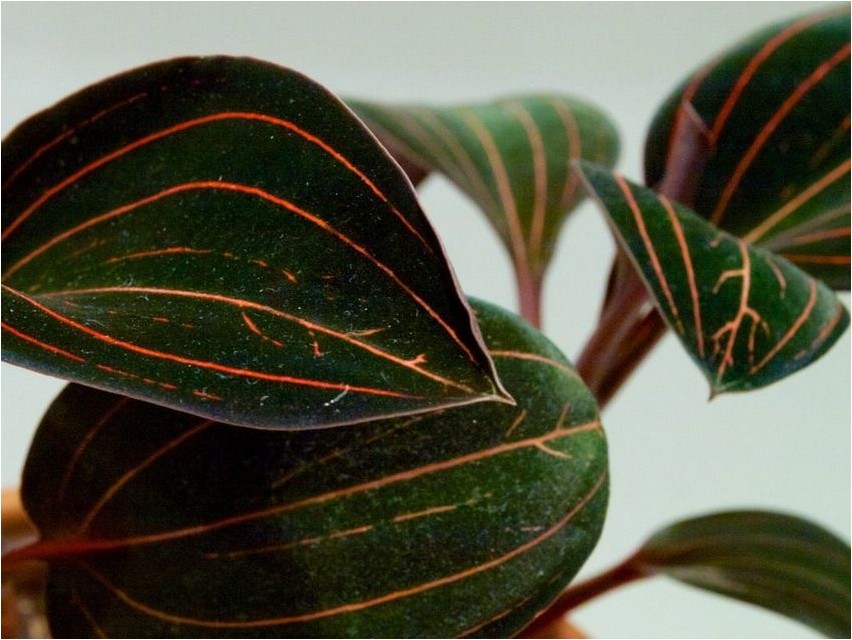
Both the leaves and flowers of this plant have decorative properties. The leaves of Ludicia variegated are colored brownish-green on top and will be velvety. Below, the leaves of the plant are purple and ovoid, with a rounded or pointed end.
In total, there are quite a few forms and varieties of this plant, which will differ in the color of the leaves. It is noteworthy that some varieties often also have a separate species; one of these species will have black-green leaves, on which there will be a whole network of orange-red veins.
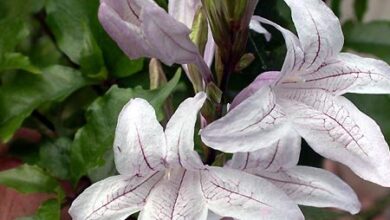
Flowering of Ludiaria multicolored occurs in the winter. The color of these flowers can be either white or yellow. The inflorescence of Ludicia multicolored itself is very peculiar and resembles night violets: the inflorescence will be spike-shaped, and the flowers will be quite small in size; the flowers are most often white in color and have yellow spots on the lip.
This plant is quite unpretentious in care and for this reason gardeners very often give preference to this plant.