Siberian cocklebur
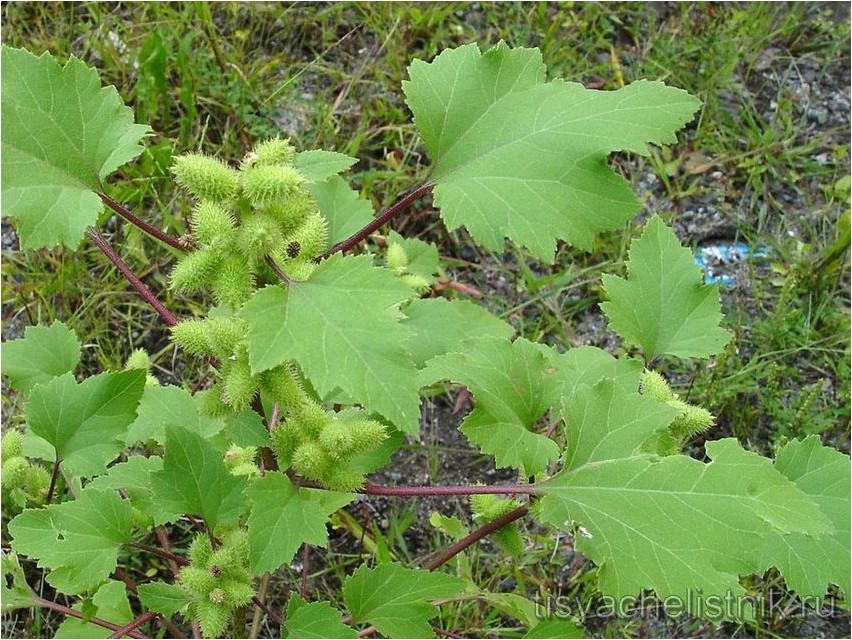
The Siberian cocklebur is one of the plants of the family called Asteraceae or Asteraceae; in Latin the name of this plant will be as follows: Xanthium sibiricum L.
As for the name of the Siberian cocklebur family itself, in Latin it will be like this: Asteraceae Dumort.
Description of the Siberian cocklebur
Siberian cocklebur is a perennial herbaceous plant that is found in the Amur region, Primorye and Sakhalin.
Description of the medicinal properties of Siberian cocklebur
Siberian cocklebur is endowed with very valuable healing properties, and it is recommended to use the grass and fruits of this plant for medicinal purposes. The presence of such valuable healing properties is explained by the content of alkaloids, saponins, and lactones in the herb and fruits. The fruits of the plant contain ascorbic acid, resins, iodine salts and the glycoside xanthostrumarin. The seeds of this plant contain resins and fatty oil containing linoleic acid.
Siberian cocklebur is very effective when used for decreased thyroid function, which is explained by the high iodine content of this plant.
As for traditional medicine, the fruits, herbs, seeds and juice of the Siberian cocklebur are widely used here. Such parts of the plant are used as a diaphoretic for influenza, fever and numerous colds. It is noteworthy that the roots of the fruits and seeds of this plant are endowed with a tonic effect, and the herb has anticonvulsant, antifungal and astringent effects. The fruits, herbs and seeds are found in antiseptic ointments, which are recommended for use in cases of scaly lichen, eczema, atonic dermatitis, boils, smallpox, abscesses, carbuncles and pustular skin lesions.

It is recommended to rinse the mouth with an infusion of Siberian cocklebur fruits for stomatitis. To prepare this infusion, you will need to take two teaspoons per glass of boiling water.
Fresh juice, as well as mashed unripe fruits and fresh mashed leaves are used as an external remedy for the treatment of scabies and as an antidote for bites of snakes and other poisonous insects. For malignant tumors, the fruits of this plant can be used as an analgesic, and the grass and seeds of the Siberian cocklebur are used as a diuretic.
For the treatment of eczema, scabies, boils, itchy dermatoses, and carbuncles, the following remedy based on this plant is recommended: To prepare this remedy, take three tablespoons of the powdered herb and fruit of Siberian cocklebur per one cup of melted lard. Boil the resulting mixture over low heat, stirring occasionally. Then let it steep for two hours, after which the remedy is ready to use.
For goiter and diarrhea, a fairly effective remedy based on Siberian cocklebur can also be used: to prepare this remedy, take one tablespoon of this plant’s herb per one cup of water. Boil the resulting mixture for ten minutes over low heat, then let it steep for two hours and strain thoroughly. Take one to two tablespoons of this remedy. For cancer and fever, freshly prepared juice of this plant is recommended, taken ten to fifteen drops twice daily. An infusion of this plant can also be used for gingivitis, stomatitis, tonsillitis, and periodontal disease. For the infusion, take one teaspoon of the fruit per glass of water, boil for ten minutes, and then steep for one hour.
Cocktail (Jimsonweed)
https://www. youtube. com/watch? v=InyucCQf2yc
Cocktail (Siberian Cocklebur)