Rhipsalis pubescent
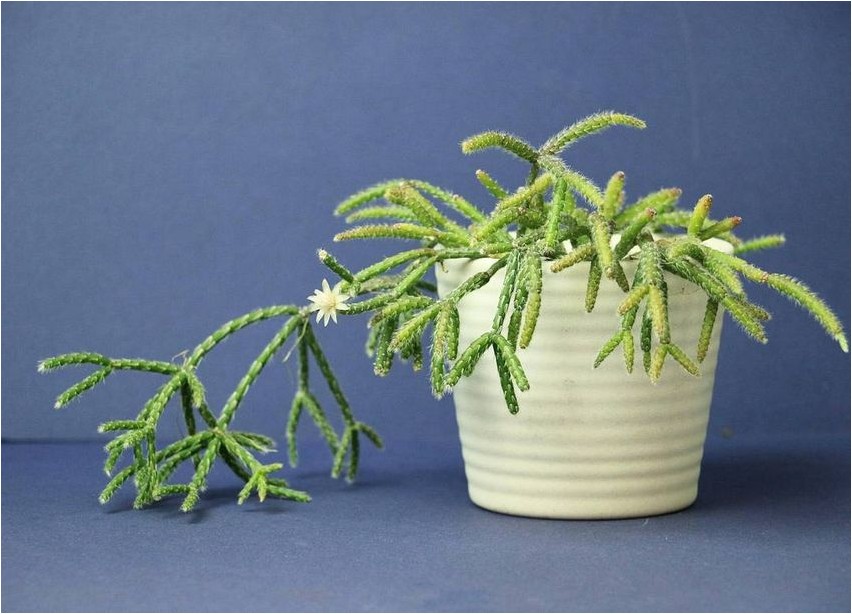
Rhipsalis pubescent is also known as Rhipsalis pilocarpa. In Latin, the name of this plant will be as follows: Rhipsalis pilocarpa or Erythrorhipsalis pilocarpa.
Rhipsalis pubescent is one of the plants of the family called cactaceae, in Latin the name of this family will be: Cactaceae.
Description of Rhipsalis pubescent
For the favorable development of this plant, it is recommended to provide a light regime of partial shade. Throughout the summer period, you should water the pubescent rhipsalis in a moderate mode. As for the degree of air humidity, it should be kept at a fairly high level. The life form of Rhipsalis pubescent is a succulent.
This plant is quite often grown in greenhouses. In indoor conditions, growing rhipsalis pubescent is possible on windows with any light level, however, for full flowering, you should select those places where the plant will receive sufficient lighting. As for the maximum size in culture, the diameter of the bush of this plant can reach approximately fifty centimeters.
Description of the features of care and cultivation of pubescent rhipsalis
For the favorable development of rhipsalis pubescent fruit, it is recommended to replant regularly. It is worth noting that the plant will need to be replanted as it grows, and rhipsalis pubescent fruit can be replanted at any season of the year. For replanting, use shallow and well-drained pots that exactly match the volume of the root system. As for the soil mixture itself, it should be very light and at the same time loose, and its main components will be expanded clay, sphagnum moss, peat and soil poor in organic matter. The acidity of such soil should be slightly acidic.
It should be noted that pubescent rhipsalis can bloom only with sufficient sunlight. In the event that growing conditions are unfavorable, this plant will shed its end segments. The formation of fruits decorating the plant can only occur when neighboring flowers are pollinated.

Throughout the entire dormant period of Rhipsalis pubescent, the optimal temperature regime should be maintained between fifteen and twenty degrees. It is noteworthy that at this time the plant will require moderate watering. This period of dormancy for Rhipsalis pubescent fruit occurs from October to December.
As for the propagation of this plant, it most often occurs through cuttings. The specific requirements of this culture include the fact that rhipsalis pubescent is a moisture-loving plant, but stagnation of water in the pot can have an extremely negative effect. In addition, regular spraying is recommended. Also, for the development of rhipsalis pubescent, both root and foliar fertilizing is very important, which should be carried out using a solution of complex mineral fertilizers taken in low concentration.
It should also be remembered that the plant should be protected from direct exposure to direct sunlight, as well as from a strong increase in temperature.
Flowers, as well as fruits and stems of rhipsalis pubescent fruit are endowed with decorative properties. It is noteworthy that the flowering of this plant can begin in any season of the year, but most often the flowering period occurs in the spring season. Rhipsalis pubescent flowers are painted in delicate cream tones.