Sorbocotoneaster
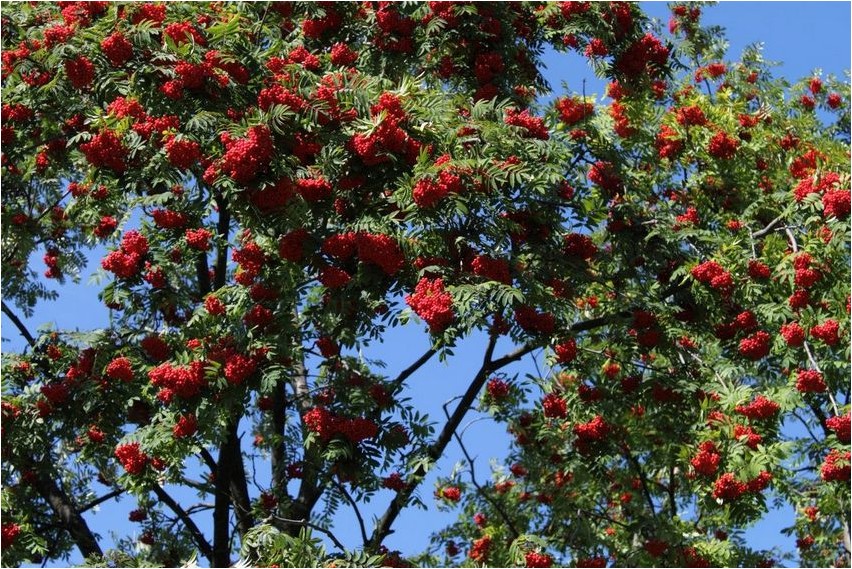
Sorbocotoneaster (lat. Sorbocotoneaster) is a beautifully flowering edible plant from the Rosaceae family.
Description
Sorbocotoneaster is a monotypic hybrid genus obtained under natural conditions by crossing aronia cotoneaster with Siberian rowan. The height of this shrub, endowed with thin stems, is usually within two to three meters. The length of the leaves of Sorbocotoneaster reaches three to seven centimeters, and these leaves are very similar to both cotoneaster leaves (if their edges are whole) and rowan leaves (if their edges are jagged).
Sorbocotoneaster inflorescences can be either corymbose or racemose, and the color of its flowers is most often either cream or white. As for flowering, it usually occurs in May.
The diameter of the spherical fruits of sorbocotoneaster can reach one centimeter. All fruits are colored either red or almost black with a characteristic bluish coating. They are not bitter at all and boast a pronounced rowan taste and aroma. And these fruits ripen in July.
The brightest representative of sorbocotoneaster is Pozdnyakov’s sorbocotoneaster.
Where does it grow
The natural distribution area of sorbocotoneaster is very limited — this plant can only be found in Eastern Siberia, on the Aldan River. That is, it is almost impossible to find sorbocotoneaster outside of Russia. This unique species has long been listed in the Red Book.

Usage
Sorbocotoneaster can be planted both in single plantings and in groups with almost any other shrubs: flowering and decorative foliage. The autumn color of the leaves makes this beautiful plant especially decorative, because it can be either red or orange or pink. Luxurious white inflorescences or a variety of edible red fruits also make it equally decorative.
Growing and care
Sorbocotoneaster is a shade-tolerant, but at the same time very light-loving crop that will feel best in fertile garden soils with moderate moisture. Ideally, soils should be well-drained and thoroughly limed, with the addition of crushed stone, humus and sand.
The winter hardiness of sorbocotoneaster is so high that it will not be difficult to grow it even in Yakutia. And in central Russia this plant does not need shelter at all.
With the onset of spring, it is recommended to feed sorbocotoneaster with good complex fertilizers. And plants older than five or seven years of age are also subject to pruning from time to time — in this case, pruning is carried out by analogy with pruning of most other types of mountain ash.
Sorbocotoneaster is propagated either by summer cuttings, by seeds, or by grafting. The seeds of this plant are able to germinate well only after a very long cold stratification, which is carried out for six to nine months — the seeds are kept at a temperature of two to five degrees during this entire time. Seed propagation allows you to preserve the traits of both mountain ash and cotoneaster in the offspring. Moreover, this is the easiest and most effective way to quickly propagate a beautiful plant. The rooting of cuttings in Sorbocotoneaster is very weak, and even when treated with various growth stimulants, only half of them manage to develop a full-fledged root system. If the choice fell on propagation by grafting, then for grafting it is best to take seedlings of common rowan.