The History of Sunflower Origin and Breeding
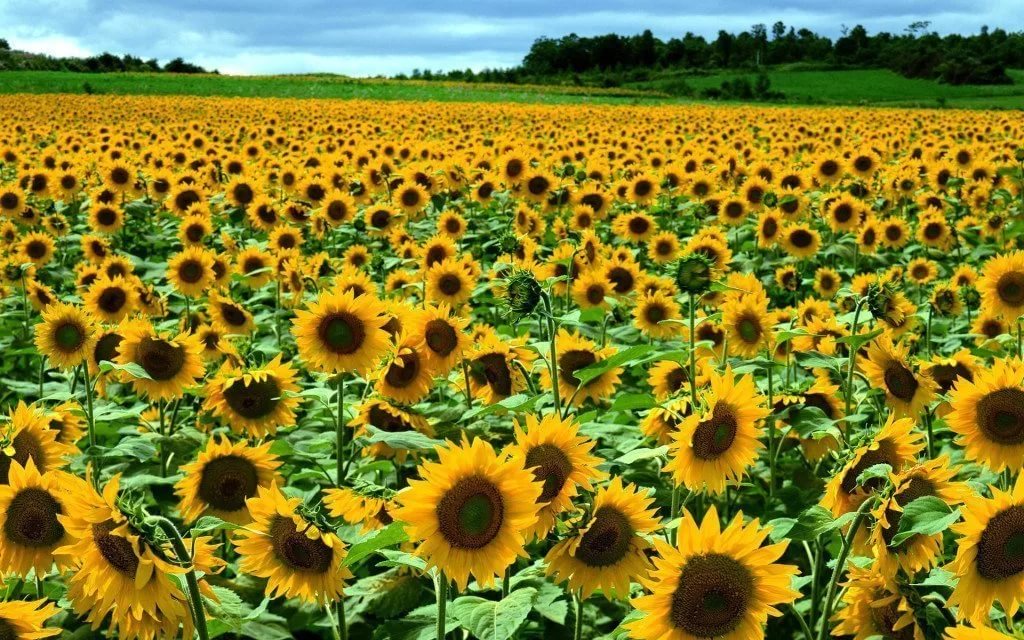
A sunny flower. Looking at it, you can”t help but smile, and gloomy thoughts quickly disappear. Of course, it”s a sunflower! Just as it”s impossible to imagine Russian meadows without chamomile, it”s impossible to imagine Russian fields without sunflowers. And yet, not so long ago, it was “unheard of, unseen.” But it “arrived” on our continent, or more precisely, in Europe, at the beginning of the 14th century. It was brought from Central America by the Spanish conquerors. It was there that the Indians cultivated sunflowers. Limagren RU is also currently engaged in crossbreeding and hybridization.
Application
At first, it served merely as a garden decoration. Its large inflorescences were simply stunning. However, as time passed, it became clear that sunflowers were not only beautiful, but also tasty and healthy. Somewhere around the mid-18th century, sunflower seeds established themselves as an unrivaled delicacy. Everyone loved them, from the lower classes to the upper classes. Evenings and get-togethers were incomplete without cracking sunflower seeds. It turned out that roasting them made the taste simply superb. Remarkably, sunflowers also proved to be a healing powerhouse: a decoction was made from the leaves and flowers, which was then administered to patients with fevers. The first patent for sunflower oil production was also issued in the 18th century. But at that time, it was needed for industrial purposes. And who would have known then that sunflower oil would gain such recognition among people as few other plants do?
The Appearance of the Sunflower in Russia
And, of course, the sunflower eventually arrived in Russia. It was brought there by none other than Tsar Peter the Great. Although the sunflower arrived relatively late, by the mid-19th century, Russian producers were churning out thousands of tons of sunflower oil. Interesting fact: the sunflower only arrived in North America after it had “visited” Russia.
Breeding
Many of today”s wonderful cultivated plants do not exist in the wild. No one, for example, has seen or knows wild corn, wild soft or durum wheat, wild spinning flax, peaches, or sunflowers. We have many reasons to believe that these cultivated plants arose in a hybrid way, i. e. through crossbreeding, that the ancient peoples were excellent at the method of crossing and even the method of hybridization. Area of activity of the Limagren company
- Increasing the quality and oil content of oil;
- Increasing sunflower productivity and its stability;
- Drought resistance;
- Resistance to broomrape;
- Production of early ripening hybrids;
- Tolerance or resistance to a number of dangerous diseases such as sclerotinia, alternaria, phomopsis, downy mildew, verticillium, phomosis, ash rot and others;
- Tolerance to herbicides.
Many years have passed, but sunflower flowers still delight us both in the fields and in the front gardens. His golden eyed baskets still follow the movement of the sun. This feature of the plant is surprising and amazing. It is also amazing how the range of beneficial properties of sunflower has expanded over time. And there were even more of them when it turned out that there was also a tuberous sunflower. This is —; Jerusalem artichoke, or earthen pear. Oil, sugar, honey, alcohol, seeds, paper, silage, etc., etc., etc. It seems that the beneficial properties of sunflower are becoming more and more numerous. It seems that this wonderful plant will surprise the world more than once with yet another beneficial property. Let”s live —; we”ll see!
https://www. youtube. com/watch? v=vgmlnESx0a4


