Crassula portulacaceae
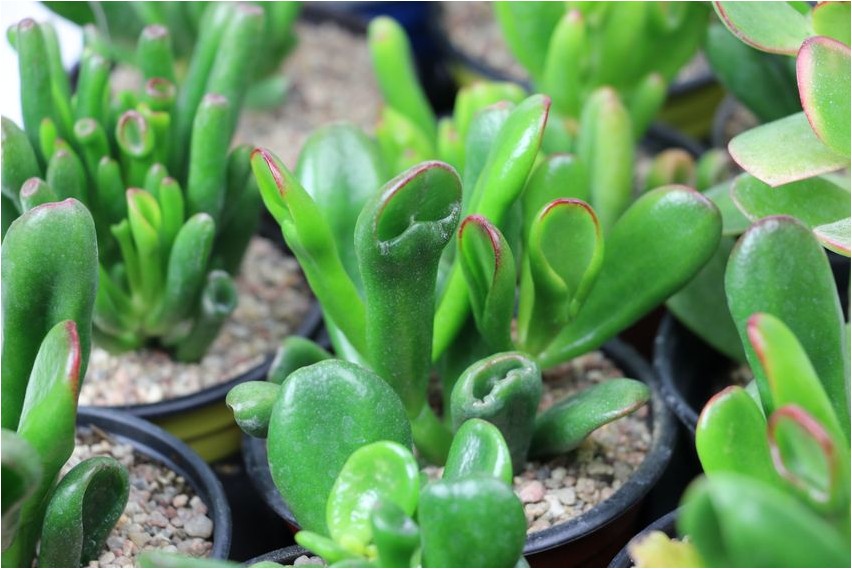
Crassula portulacaceae is also known by many other names: bear’s ear, monkey tree, lucky tree, money tree, crassula, silver crassula, ovate crassula, and oval crassula.
The Latin name for this plant is Crassula portulacea or Crassula ovata. It belongs to the Crassulaceae family, and its Latin name is Crassulaceae.
Growing Instructions
The plant requires full sun, but partial shade is also acceptable. In summer, Crassula portulacaceae should be watered moderately, and the air humidity should also be moderate. This plant grows as a leafy succulent. Jade purslane is recommended for growing not only in conservatories and greenhouses, but also in common areas. The plant is also often grown indoors on bright windowsills. It’s worth noting that even novice gardeners can handle growing this plant.
Jade purslane can reach a height of up to one meter in cultivation. Regarding potential growing problems, it’s important to note that repotting is essential for this plant, otherwise it may stunt its growth. Jade purslane should be repotted every few years, choosing classic-shaped pots or bonsai pots. For favorable development, the soil mixture should be as follows: one part turf and sand, and three parts leaf mold. It’s worth noting that regular soil specifically designed for cacti can also be used. It’s recommended to choose either neutral or slightly acidic soil based on pH. It’s worth noting that the purslane plant is very sensitive to overwatering. To ensure even growth, the pot will need to be rotated occasionally. It’s worth noting that if the plant’s pot is exposed to direct sunlight, the leaves of the purslane plant can become severely sunburned. However, if the sunny location is shaded, this unpleasant consequence can be avoided. It’s important to remember that this plant is virtually immune to diseases and pests.
Throughout the entire dormant period, the plant will need to provide a temperature of approximately ten to fifteen degrees Celsius. At this time, watering should be rare, and air humidity should also be kept at an average level. It is worth noting that if the plant is grown in sunny conditions, a period of rest will be forced. This period of rest will occur due to the fact that at this time the humidity and illumination of the air will be insufficient. The rest period occurs from October to February.
Reproduction of the purslane plant occurs through rooting of both stem and leaf cuttings. These cuttings should be rooted in damp sand, and such procedures should be carried out in the spring or summer.

It is important to provide a bright location for growing this plant, as well as moderate watering. The pot in which the crassula purslane is grown must have good drainage. The leaves and stem of this plant are endowed with decorative properties. The leaves will be dark green in color, and they are also obovate. These leaves reach five centimeters in length and about two centimeters in width. In adult plants, the stem is covered with a very beautiful and textured wrinkled bark.
Common types and varieties of Crassula! Varieties of the Money Tree!
Crassula purslane crassula