Kislitsa
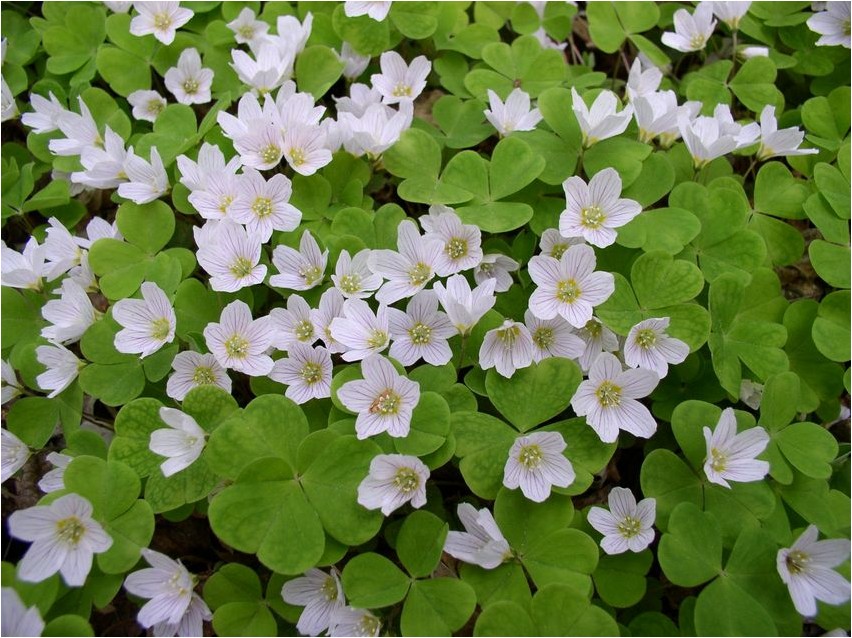
Oxalis (Latin Oxalis) is a genus of annual and perennial herbs or subshrubs of the Oxalis family (Latin Oxalidaceae). The genus is numerous, including about 800 species.
Its natural range is South Africa, Central and South America, and Central Europe. In Russia, only five species are found in nature, growing mainly in forest areas in the Far East.
Characteristics of culture
Oxalis is a herbaceous plant or subshrub with a creeping or knobby rhizome. The leaves are green, brownish, burgundy or purple, petiolate, alternate, compound, trifoliate or palmately dissected, often with a bend. The leaves are arranged pinnately or palmately (depending on the type). With the onset of darkness, the leaves curl up. The flowers are small, regular, pink, yellow or white. The flowers, as well as the leaves, close in cloudy weather or late in the evening. The fruit is a capsule, cracking along the valves when ripe.
Subtleties of cultivation
Oxalis cannot be called a demanding crop; most species develop normally in both sunny and shaded areas. To a large extent, this condition depends on the species. Soils are preferably slightly acidic or neutral, drained, rich in humus. An admixture of peat or compost is welcome in the soil composition.
Oxalis is propagated by seeds, stem cuttings, nodules and division of rhizomes. The method of reproduction also depends on the type of sorrel. All sowing and planting work is carried out in early spring. When planting crops in divisions or nodules, maintain an optimal distance of 10-12 cm. Planting depth is 3-4 cm.
Oxalis seeds are sown in April in seedling boxes or greenhouses. The substrate is made up of sand, peat and leaf soil in a ratio of 1:2:1 or peat, leaf and turf soil and sand in a ratio of 1:2:2:1. In autumn, rhizomes and nodules are dug up. Store planting material in a cool room in containers filled with dry sand.

Caring for oxalis consists of rare fertilizing with mineral fertilizers or a weak infusion of mullein, watering during long droughts, and weeding. Loosening is also not prohibited. When growing perennial species of sorrel for the winter, the plantings are mulched with peat, sawdust, humus, or covered with spruce branches.
Application
The use of sorrel is multivariate. It is used in folk medicine, for landscaping gardens, and less often in cooking. The pineal-shaped root shoots are mainly eaten. Thus, in Chile, such shoots are an excellent alternative to sugar, because by the end of the growing season, the acid contained in the cones is replaced by sugar.
Oxalis is most widely used in medicine; infusions from it are used to increase appetite, eliminate heartburn and vomiting, lower blood pressure, normalize the acidity of gastric juice and other problems. Oxalis infusions are useful in the treatment of purulent wounds, boils and ulcers of various types. But the list of miraculous properties of plants of this genus does not end there.