Pequi
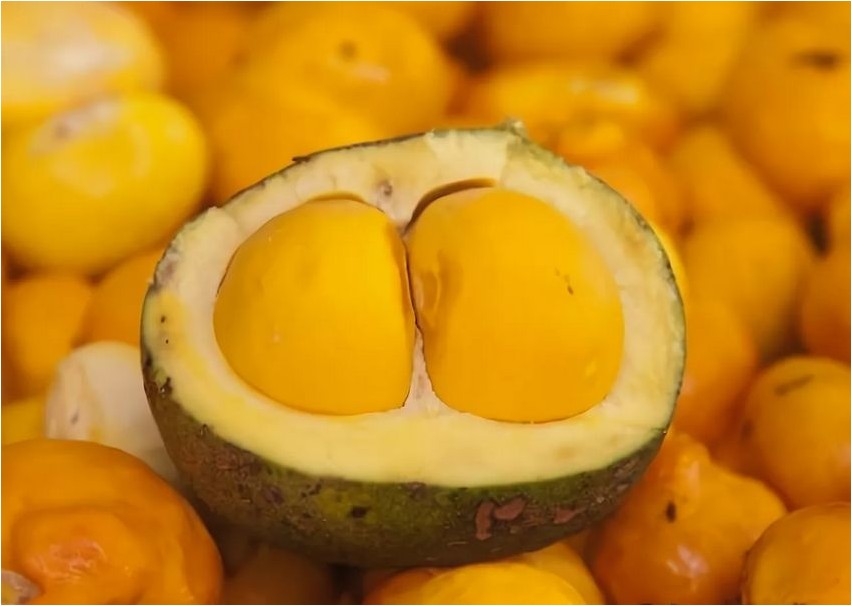
Pequi (lat. Caryocar brasiliense) is a tree fruit crop from the Caryocaraceae family. The fruits of this plant are sometimes called “souari” nuts.
Description
Pequi is a spectacular fruit tree up to ten meters high, equipped with rather hard, bristly and large leaves. Pecui begins to bloom in July and ends in September. Its bisexual yellowish-whitish flowers include a truly incredible number of stamens. During the day, all the flowers are prudently closed, opening only in the dark, and these bizarre flowers are pollinated by bats. It should also be noted that pekui flowers cannot boast of a pleasant smell.
Pecuya fruits are characterized by a fairly strong and rich aroma, dark olive, rich green or bright yellow color, as well as a surprisingly pleasant taste. After fruit set, it takes an average of six months for them to ripen. In the fleshy parts of the fruit there are light seeds enclosed in black shells, and the shells themselves are covered with thin and small, but at the same time amazingly hard thorns.
Where does it grow
The homeland of pecuya is distant Brazil. This is where it mainly grows now.
Application
Pecuy has a special cultural significance among the Indian population of sunny Brazil — they willingly eat these fruits for food and prepare amazingly tasty and very original dishes from them. And the taste of roasted pecuya seeds is not much different from the taste of roasted peanuts. Many representatives of the world of animals and birds do not refuse to enjoy the fruits of the pecuya, they are especially loved by such a common bird of prey in Panama as the yellow caracara.
Pecuya fruits are not only incredibly tasty, but also very nutritious — they are very rich in fatty palmetic and oleic acids, and also contain stearic and linolenic acids that are beneficial for the human body.

By the way, excellent edible oil is squeezed out of pecuya seeds, as well as from the pulp — its total content in fruits with seeds reaches about sixty percent. The oil from these fruits is incredibly thick, like resin. It is transparent in color, with a slight yellowish tint. Since pecuya oil is rich in antioxidants and vitamin A, it is often consumed as a dietary supplement. It can also be used to lower cholesterol and prevent the development of not only atherosclerosis, but also a number of other diseases of the cardiovascular system. Pequia oil is also widely used to normalize the menstrual cycle, as well as to treat some fungal diseases and even sarcoma. It is valued in medicine and as an external remedy: during physical overload and sprains, it perfectly relieves muscle pain.
Pecuya oil is also used in cosmetology — highly effective face creams are made on its basis, ideal for those with dry skin. To restore hair and give it a healthy shine, pecuya oil is also rubbed into curls. And the Indians make wonderful soap based on pequi oil that prevents drying of the skin.
Pequia wood has also found its way into use; it is completely unaffected by deformation and is characterized by amazing strength — these valuable qualities have made it very popular in construction.
It is noteworthy that silverware begins to turn black after contact with pecuya fruits, so experts recommend eating these fruits with your hands, without resorting to any cutlery.
Contraindications
When consuming pecuya fruits, the possibility of allergic manifestations and individual intolerance cannot be completely excluded.





