Horseradish
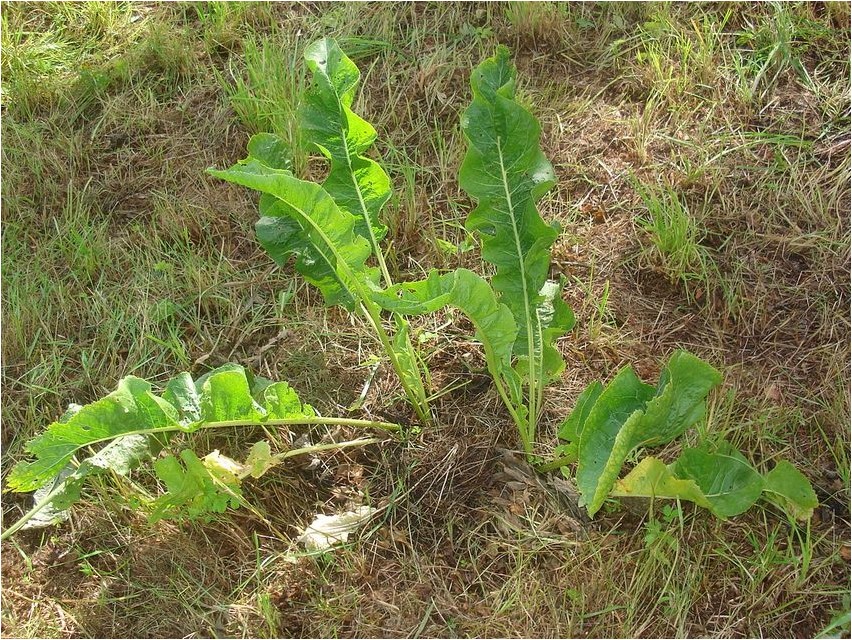
Horseradish (lat. Armoracia rusticana) is a herbaceous medicinal perennial plant of the Horseradish genus (lat. Armoracia), belonging to the Brassica family (lat.
Brassicaceae). All parts of the plant are rich in natural components that can maintain human health or heal from illnesses.
What’s in your name
The Latin name of the genus “Armoracia” reflects some similarity between Horseradish and Radish, because the word “Armoraci” is translated into Russian as “wild radish”.
As for the Russian name of the genus “Hren”, there are several versions about the origin of this word. According to one of them, the roots of the word lie in the ancient Indian language (appeared 4 thousand years ago), in which a consonant word meant “burning, caustic.”
The Google translator returned the specific epithet “rusticana” as “with a rustic look,” referring to the Corsican language. In Russian it sounds like “village”, although more often the plant is called “Ordinary Horseradish”.
The rich language of the Russian people has invented many other names for this amazing creation of nature, among which the most popular are: forest radish, pepper root, peasant mustard..

Description
The main part of the common Horseradish is its fleshy thick roots, the burning taste of which was to the taste of man, and therefore he classified the plant as a vegetable crop and began growing horseradish. Moreover, the roots of the plant have healing abilities and have been used for healing human ailments since ancient times.
A powerful root produces powerful, erect stems on the surface of the earth, the height of which varies from 0. 5 to 1. 5 meters. The stems love to branch.
Three types of leaves live on one plant at the same time. The basal leaves continue the tradition of the roots and stem, being large in size. The long, oblong leaves have a heart-shaped base, an acute apex and a wavy-toothed, striking edge. The oblong-lanceolate leaves in the lower part of the stem are pinnately divided, and higher up the stem there are whole leaves of a linear shape.
The stems of Horseradish end in lush multi-flowered inflorescences formed by white 4-petalled flowers with yellow stamens in the center, typical for plants of the Brassica family.
The crown of the growing season is swollen, oblong-oval, short, nest-shaped pods with four seeds sitting in the nest.
Chemical wealth
All parts of the plant are real storehouses, filled with chemicals beneficial to humans, which require a sense of proportion when used.
Horseradish owes its specific pungent taste and smell to the essential oil that permeates all parts of the plant. The main component of the essential oil is allyl mustard oil, for which the plant is popularly called “Peasant Mustard”.
It would take a long time to list the beneficial substances contained in roots, fresh root juice, leaves and seeds, such as starch, carotene, carbohydrates…, but all these substances are also found in other plants.
But what you won’t find in other plants is “horseradish peroxidase.” This is an ideal enzyme, the product of whose activity is a luminescent, that is, colored, glowing compound, which is used by scientists involved in molecular biology. Obtaining this enzyme is much cheaper than obtaining other similar enzymes, and it “works” relatively more stable than others.
Usage
In addition to its use in molecular biology, horseradish has long gained popularity among not only rural but also urban chefs.
Not a single holiday table is complete without horseradish, because this spicy-flavoring additive can turn any meat or fish dish into an unforgettable pleasure.
The bactericidal abilities of the roots and leaves, as well as their specific aroma, make Horseradish an indispensable element for pickling any garden vegetables and mushrooms.
Folk healers in Rus’ have long used the healing abilities of Horseradish in the treatment of diseases of the human digestive system, for various problems when the intervention of substances with antibacterial properties is required.
https://www. youtube. com/watch? v=Gv4wdY-HG68