winter lover
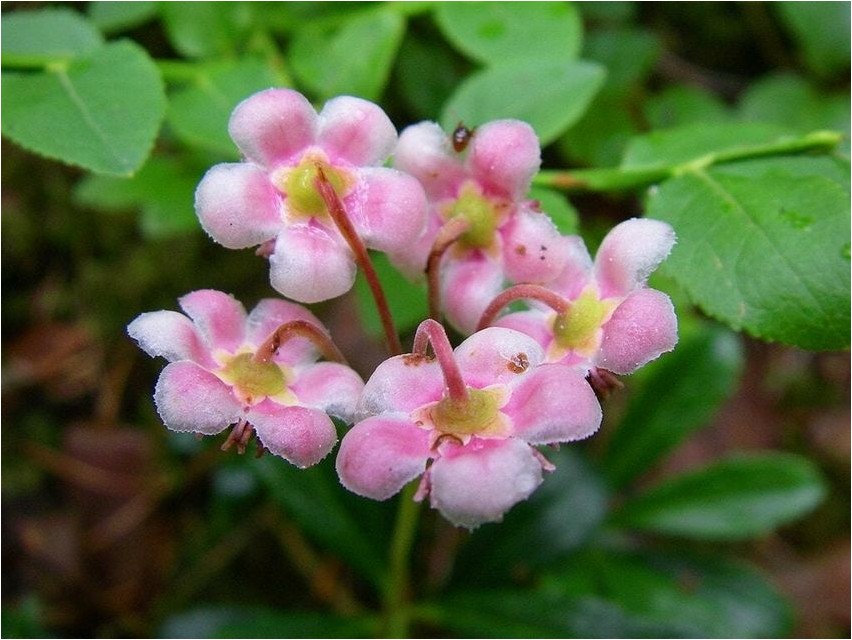
Wintergreen (lat. Chimaphila) is a genus of herbaceous plants of the Ericaceae family. Under natural conditions, the culture grows in the temperate and cold climate zone of the Northern Hemisphere.
The genus includes four species.
Characteristics of culture
Wintergreen is a perennial herbaceous plant or subshrub up to 25 cm high with a ribbed stem and creeping rhizome. The leaves are evergreen, leathery, sharply toothed, oblanceolate or ovate, with a wedge-shaped base. The flowers are large, flat-bell-shaped, drooping, white or white-pink, collected in umbellate inflorescences of 2-7 pieces. The fruit is an erect capsule, equipped with bare valves, which open from top to bottom when ripe. Wintergreen blooms in June-August.
Species
*Winter-loving paniculata (lat. Chimaphila makulata) – the species is represented by subshrubs 10-25 cm high with white or pink flowers.
*Japanese winterweed (lat. Chimaphila japonica) – the species is represented by herbaceous plants 10-15 cm high with white and pink flowers. The species is distributed mainly in the Far East.
* Umbrella wintergreen (lat. Chimaphila umbellata) – the species is represented by herbaceous plants 5-15 cm high with pink flowers with a diameter of 15 mm.

* Winter-loving Menciza (lat. Chimaphila menziesii) – the species is represented by herbaceous plants up to 15 cm high with white or dark pink flowers.
Growing conditions It is preferable to grow wintergreen in semi-shaded areas with light, well-drained and moderately moist soils. The culture will not tolerate waterlogged, saline and highly acidic soils. Wintergreen also cannot tolerate stagnant water.
Reproduction and care
Wintergreen is propagated by seeds, cuttings and layering. Sowing of seeds is carried out in the fall under cover. Cuttings are carried out in early spring or mid-summer. When propagating a crop by layering, healthy and strong shoots are pinned to the soil surface, covered with soil and watered. The rooted cuttings are separated from the mother plant the following spring, and then transplanted to a permanent place.
Care consists of rare watering, fertilizing, weeding and loosening. Organic and mineral fertilizers are applied in the spring. Water the plants at the roots. Light pruning is also required by plants; it allows for abundant branching.
Harvesting and harvesting
Wintergreens are collected during flowering, the shoots are carefully cut off and the darkened leaves are removed. Then the wintergreen is laid out on a pallet, on the bottom of which a layer of paper is laid. Cut shoots must be turned over daily to avoid dampness. After the grass is completely dry, it is packaged in paper or fabric bags. The raw materials should not be packed too tightly, otherwise they may become moldy. Store packages in a well-ventilated place. The shelf life is 2 years.
Application
Wintergreen has won one of the first places in terms of healing properties. It is used as a tonic, astringent and diuretic, which is why it is most often used in the treatment of diseases of the genitourinary system. Infusions of wintergreen are also useful for more serious diseases: gonorrhea, hematuria, nephritis, purulent urethritis, ascites, etc. Fresh leaves of the plant are used to treat burns, tumors and ulcers. Wintergreen is used as an auxiliary remedy for chronic prostatitis, stomach ulcers, tuberculosis, and breast cancer. Dry wintergreen shoots are also used to make tea.





