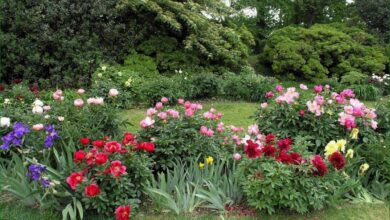
Broom
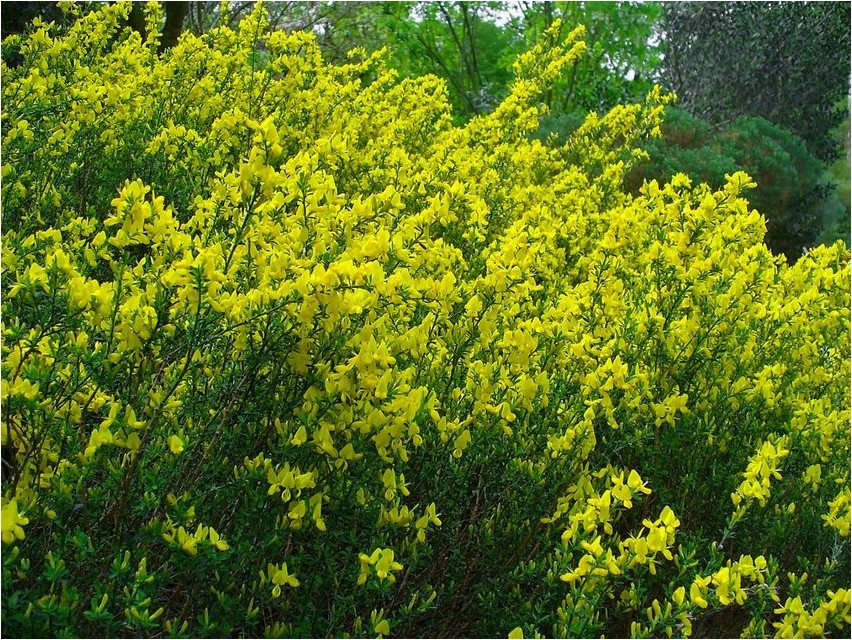
Broom (Latin Cytisus) is an ornamental plant; a deciduous, or rarely evergreen, shrub in the legume family. In the wild, broom grows in ravines, rocky slopes, and forest edges in Western Siberia, Europe, and North Africa.
Cultivation Characteristics
Broom is a shrub 0. 5-3 m tall with sparsely vascular or ring-shaped, patterned wood. All parts of the plant contain toxic substances. The leaves are alternate, trifoliate, and the stipules are either small or absent.
The axillary, papilionaceous flowers are 2-3 cm long, collected in racemes or paniculate inflorescences, and can be yellow, yellowish-white, lilac, pink, or purple. The calyx is funnel-shaped, bell-shaped, or tubular, and bilabiate. Depending on the variety, broom blooms in spring or summer; most bloom for a long time (30-35 days) and are profuse.
The fruit is a linear, split-open legume. The seeds, with an aril, are flat and shiny. Broom always maintains a dense crown, as shoots grow from early spring until severe frosts; shoots that have not yet fully grown freeze.
Growing Conditions

Broom is a sun-loving plant, preferring well-drained areas protected from strong winds. The soil for growing the shrub should be well-drained, light, sandy or sandy loam, with a slightly acidic or neutral pH. The plants are sensitive to liming.
Propagation and Planting
Broom is propagated by seeds, layering, green cuttings, and grafting. Before sowing, the seeds undergo stratification, which lasts two months. Sow the seeds in special containers filled with a soil mixture consisting of turf, sand, and peat. Water them, cover with plastic film, and place them in a room with an air temperature of 18-20°C. Once the seedlings develop true leaves, transplant them into individual pots. In the spring, transplant them into open ground by transshipment. With this propagation method, flowering can be expected only in the 3rd or 4th year after planting.
For vegetative propagation, take green cuttings with 3-4 leaves and plant them in pots filled with a mixture of peat and sand until they root. Cuttings typically root within 1-2 months, and plants are transplanted to their permanent locations after 1. 5-2 years.
Broom seedlings are planted in early spring or autumn. The planting hole is prepared in 2-3 weeks, its width should be about 45-50 cm, and its depth — 50-55 cm. Drainage in the form of gravel or sand is laid at the bottom of the hole in a 15 cm layer, and a soil mixture consisting of fertile soil, sand and peat is added. Then the seedling is lowered, sprinkled with soil, compacted, watered and mulched. Important: the root collar of the seedling is placed at soil level.
Care
Broom is a drought-resistant crop; with optimal precipitation, it does not require additional watering. It responds well to fertilizing, weeding and loosening in the tree trunk area. The first feeding is carried out in the spring with urea, the second — before flowering with granular superphosphate and potassium sulfate. For the winter, young plants are covered with spruce branches. Sanitary pruning is carried out in early spring before the buds swell, and formative pruning is carried out after flowering. Broom has a negative attitude towards transplantation.
Broom is often attacked by diseases and pests. The most dangerous pests for shrubs are broom moths and fox moths. If they are detected, the plants are treated with 0. 2% chlorophos or bacterial insecticides. Diseases such as powdery mildew and black spot are dangerous for the crop. When the first signs of damage appear, the bushes are sprayed with a 5% solution of copper sulfate or foundationazole.
Application
Broom is a highly ornamental shrub that looks excellent in group and solitary plantings. Often used in rocky gardens. Broom is also grown as a container plant. Goes well with ornamental grasses, ground cover perennials, coniferous and deciduous shrubs. It is not recommended to plant broom near bodies of water where fish live, since all parts of the plant contain toxic substances.