Lyubka bifolia
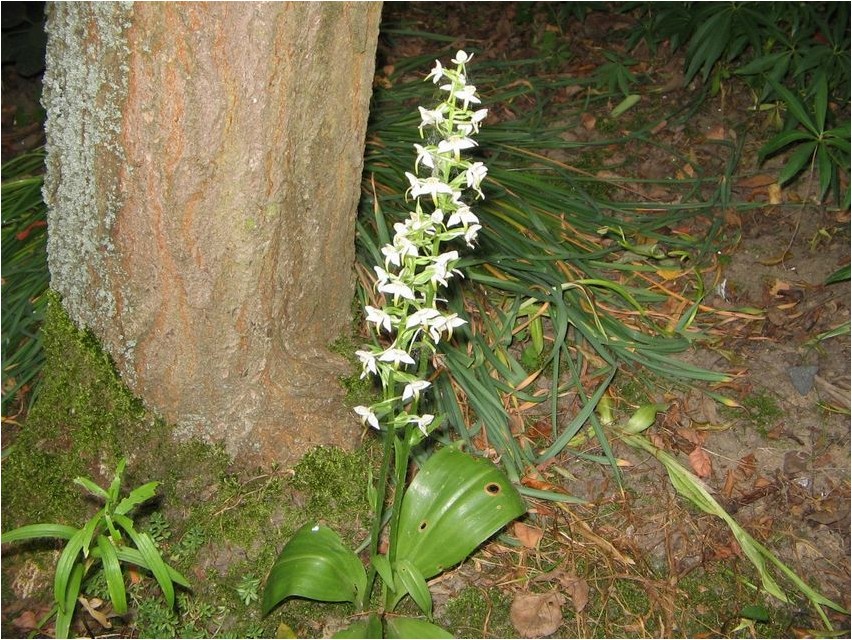
Lyubka bifolia is one of the plants of the family called orchids; in Latin the name of this plant will be as follows: Platanthera bifolia (L.) Rich.
As for the name of the Lyubka bifolia family itself, in Latin it will be: Orhidaceae LindL.
Description of Lyubka bifolia
Lyubka bifolia is a perennial herbaceous plant endowed with two oblong-oval tuberous roots. One of the roots of this plant is old and large, and the other is flabby and young, but smaller. The stems of Lyubka bifolia are erect and ribbed, as well as simple; the height of such a stem will fluctuate between thirty and sixty centimeters. Such a plant will be endowed with two large, elliptical-shaped, stem-encompassing and blunt leaves that will taper into a petiole. In addition, Luca bifolia has small linear sessile leaves located slightly higher. The flowers of Lyubka bifolia will be fragrant, they can be painted in both white and greenish-white tones, and are also collected in a brush. The perianth of this plant consists of six leaflets, which will be dressed in different shapes. The stamen of Lyuba bifolia has only one, it will be fused with the pistil style. The ovary of this plant is very delicate and quite long. It is noteworthy that the flowers of Lyubka bifolia will intensify their aroma in the late afternoon and, especially, at night. The fruit of this plant is an oblong capsule endowed with very small-sized seeds.
Flowering of Lyubka bifolia occurs in the period from June to July. Under natural conditions, this plant is found in the territory of Belarus, Ukraine, Western Siberia and in all parts of the European part of Russia, with the exception of the Far North, as well as in both the mountain forest and subalpine belts of Altai, Sayan and the Caucasus. For growth, this plant prefers bushes, forest belts, forest-steppes, forest edges, meadows and clearings.
Description of the medicinal properties of Lyubka bifolia
Lyubka bifolia is endowed with very valuable healing properties, and for medicinal purposes it is recommended to use young root tubers of this plant, both dried and fresh.
It should be noted that the dried root tubers of Lyubka bifolia are called salepa. It is recommended to harvest tubers throughout the entire flowering period or after flowering, as long as the flower arrows are preserved. However, later it seems quite difficult to find this plant in the grass.

The tubers of Lyubka bifolia will contain mucus, which consists of starch, protein substances, mannitol, sugar, coumarin, traces of alkaloids, sodium, calcium mineral salts and a small amount of calcium oxalate.
Luke bifolia is endowed with very valuable restorative, antiseptic, anti-inflammatory, tonic, anticonvulsant and enveloping effects, and such a plant can also enhance sexual activity. Lyubka bifolia is used for diarrhea, respiratory diseases, bladder diseases, chronic inflammatory diseases of the gastrointestinal tract: colitis, gastroenterocolitis, duodenal ulcer and stomach disease, as well as sexual impotence, weakened function of the sweat glands. In particular, this plant is used as a general tonic for sick and elderly people with nervous and physical exhaustion. It should be noted that when used correctly, all Luca bifolia-based products are very effective.





