Disocactus Ackermann
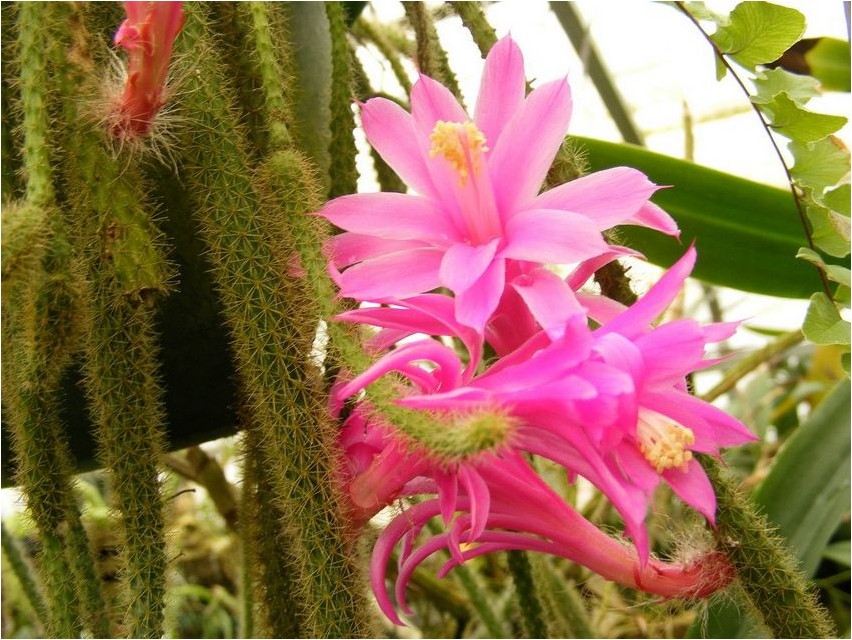
Disocactus Ackermann is also known by such names as phyllocactus ackermann and nopalcoxia ackermann. In Latin, the name of this plant will be as follows: Disocactus ackermannii or Nopalxochia ackermannii.
This plant belongs to the plant family called cactaceae. In Latin the name of this family will be: Cactaceae.
Description of growing features
It is worth noting that Ackermann’s disocactus is not a particularly demanding plant to care for. It is recommended to maintain partial shade so that the plant can develop favorably. In the summer, you will need to provide the plant with very abundant watering. It should be noted that Ackermann’s dysocactus also prefers high air humidity. The life form of the plant is a succulent. The plant can be found not only indoors, but also in numerous greenhouses. Disocactus ackermann is grown as both a potted and hanging plant. It is worth noting that the maximum size of this crop will be about seventy centimeters in height.
It is important to remember that the plant will require annual replanting, which is associated with the rather rapid growth of Ackermann disocactus. It is recommended to replant the plant in the spring; for this, choose a wide and fairly spacious container, and there should be very good drainage at the bottom of the pot. You can water the plant only after at least a few days after transplanting.
It should be remembered that it is important to provide the plant with nutritious soil, which will not only be very light, but also loose. The soil should consist of small particles, the diameter of which will be about one centimeter. The main components of the soil mixture intended for disocactus ackermann should be garden soil, expanded clay, peat and sphagnum moss. It is also permissible to add light humus to the soil. The acidity of the soil should be slightly acidic.
As for possible problems when growing ackermann disocactus, you should remember that if the plant is directly exposed to intense sunlight, the plant can burn. It is also important not to forget that especially large branches will require garter. If there is insufficient lighting, the shoots may stretch, but flowering itself will not occur.

Throughout the entire rest period, it is necessary to ensure a constant temperature regime, which will be approximately fifteen to seventeen degrees. Watering should be rare at this time, and air humidity should be significantly reduced. The dormant period of disocactus ackermann begins in October and continues until March.
Most often, propagation of this plant occurs through rooting of mature cuttings. It is recommended to dry such cuttings for several days, and after that they should be rooted in a moist substrate.
As for the specific requirements of this crop, it should be noted that for the normal development of this plant it will be necessary to provide fairly frequent spraying with warm water, and it is recommended to wipe the branches with cotton swabs. During the period of growth of disocactus ackermann, fertilizing should be carried out, which is a weak solution of complex either mineral or organic fertilizers. If you want to form a very beautiful bush, then from time to time you should trim thin, weak and damaged shoots at the very base. However, thin shoots can also be removed from the ends of the branches of this plant. Throughout the entire budding period, you will need to be very careful to ensure that the substrate in the pot with Ackermann disocactus does not dry out.