Pueraria
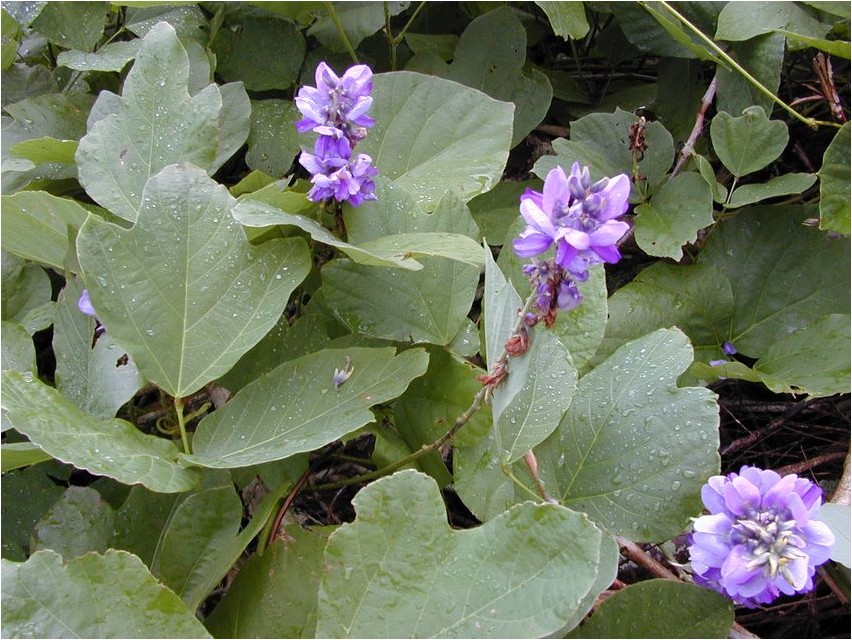
Pueraria (lat. Pueraria) is a small genus of perennial vine-like plants from the legume family (lat. Fabaceae). Botanists classify this genus as only 15 to 20 species of plants born on Asian soil.
The place of birth determined the use of the healing abilities of some species of the genus in traditional Chinese medicine, which is becoming increasingly popular in the West and in Russia. Particularly valuable for the modern world is the ability of plant flowers to reduce the negative effects on the human body that occur when drinking alcohol.
What”s in your name
The Latin name of the genus preserves the memory of the authoritative botanist to whom Mankind owes the description and classification of vegetables growing on our planet. The name of this botanist, originally from Switzerland, is Marc Nicolas Puerari, years of life (1766 — 1845).
Description
Plants of the genus Pueraria, being liana-shaped creatures of the plant world, have an external resemblance to a grapevine. This includes their ability to curl around a support provided or arranged by humans, and the shape of the leaves, which differs in different species, but can be similar to compound grape leaves, consisting of three or five-lobed leaves.
The longevity of plants is supported by roots that penetrate to a depth of 15 meters, or tubers that store nutrients for the plant and healing substances to maintain human health and longevity.
Such a reliable underground basis of plants of the genus allows them to quickly increase the above-ground parts, including the length of the stems, which after a couple of years of life in a warm climate can be 30 meters. In areas with cold winters, the above-ground parts of the plant die off with the onset of cold weather, but the roots remain, producing new shoots in the spring.

The flowers have a typical shape for plants of the legume family, have a pleasant aroma and are colored blue and purple in different shades.
The fruit is also typical of legumes — it is a bivalve pod filled with beans.
Some varieties
* Lobed or lobed Pueraria (lat. Pueraria Lobata) is the most common species in gardening.
* Wonderful Pueraria (lat. Pueraria Mirifica) — it is not for nothing that this miracle plant was given the specific epithet “Mirifica” (“wonderful”), because this species is included in the list of plants that support human health and prolong the period of its presence on the wonderful and amazing planet called “Earth”.
* Mountain Pueraria (lat. Pueraria montana) is a beautifully flowering climbing plant that has earned popularity in ornamental gardening. In especially favorable living conditions, it has even become an annoying weed, actively displacing its neighbors from the territory.
* Pueraria bean-shaped (lat. Pueraria phaseoloides) — is distinguished by its wide range of uses, being a feed for livestock, a healer of depleted lands, a ground cover plant for growing fruit trees, and a healer of human health.
* Pueraria tuberosa (lat. Pueraria Tuberosa) — the healing nodules of the plant played a cruel joke on it, turning the plant into a species disappearing from the planet due to the barbaric digging of the roots-nodules of the plant.
Usage
Plants of the genus “Pueraria” are multifunctional and are used by humans for a variety of everyday needs.
* These are climbing or ground-cover garden plants that help hide nondescript facades of buildings, decorate a garden gazebo or protect the soil around fruit trees from the sun”s drying rays.
* They are planted when it is necessary to cure depleted soil in order to enrich it with nitrogenous compounds produced by bacteria that have found shelter on plant nodules.
* Flowers, leaves and tuber roots of plants of the genus contain substances beneficial to human health, relieving people from diseases, destroying harmful pathogens and giving people longevity. Communities of people living in areas where such plants grow are characterized by an enviable life expectancy.