Dog tongue
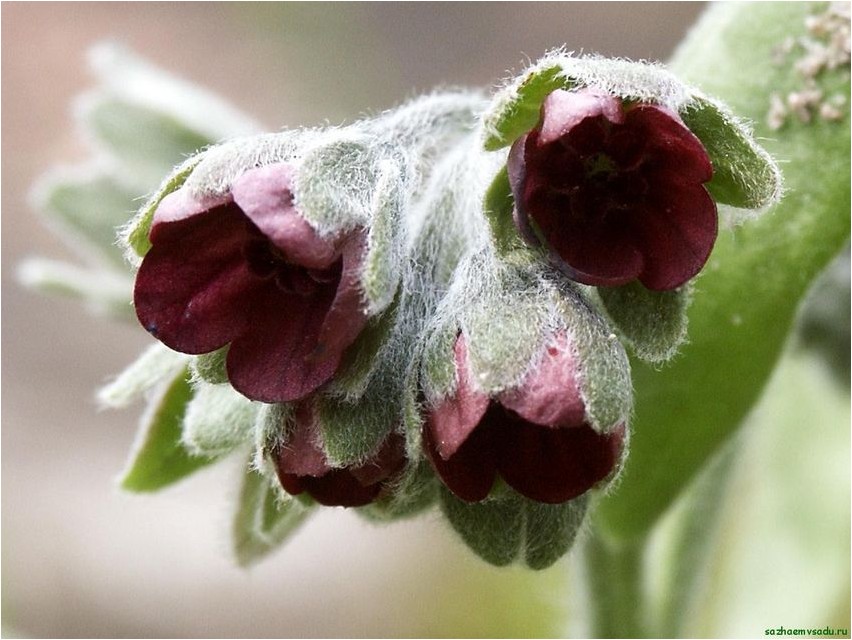
Dog’s tongue (lat. Cynoglossum) is a genus of plants with oblong and rough leaves from the borage family (lat. Boraginaceae). It would be more reasonable to call the genus “Dog Tongue,” as it is literally translated from Latin, but, apparently, the word “Dog” sounds more intriguing. In Russia, the plant is known as “Blackroot”.
What’s in your name
The Latin name of the genus “Cynoglossum” is based on two Greek words that mean “dog” and “tongue”. That is, if translated literally, the Russian version should sound like “Dog tongue.” But the original source of the Russian version softened the name somewhat, replacing the word “dog” with the word “dog,” which sounds more harmonious, although it is somewhat more difficult to pronounce.
The genus earned this generally unflattering name for plants for its leaves. Their length, oblong shape and rough surface remind people of a dog’s tongue.
But in simple speech, people do not so often use the official Latin names of plants, coming up with numerous folk names. The Russian version of the genus name is “Black Root”, since the tap root of some plant species of the genus, which has healing powers, is covered with a black crust.
Folk art does not end there, and therefore you can hear other names: dog root, cat soap, mouse spirit…
As for the English-language names, the plants are called whatever they call them: hound’s tongue, wild comfrey, Chinese forget-me-not…

Description
As a rule, the plant of the genus “Cynoglossum” is an erect, unbranched perennial with simple, entire leaves (although there are other varieties).
A characteristic feature is the roughness of the stems and leaves of the plant, caused by their thin hairy cover. Roughness is felt when touching the plant. In the lower part of the stem the leaves are densely located, but as they approach the top of the plant they become less and less.
Small 5-petalled flowers form inflorescences.
Plants of the genus contain alkaloids that can cause irritation to delicate human skin. Therefore, when working with a plant, for example, when planting or transplanting, collecting raw materials or roots for medicinal purposes, you should be careful and use protective equipment (rubber gloves).
Some species of plants of the genus Cynoglossum
* Pleasant black root (lat. Cynoglossum amabile)
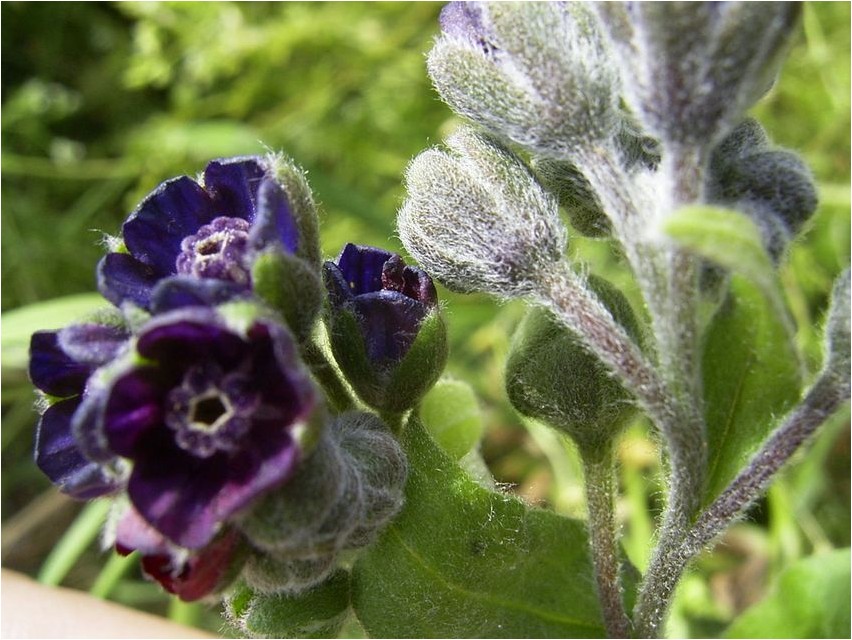
* Black root (lat. Cynoglossum officinale)
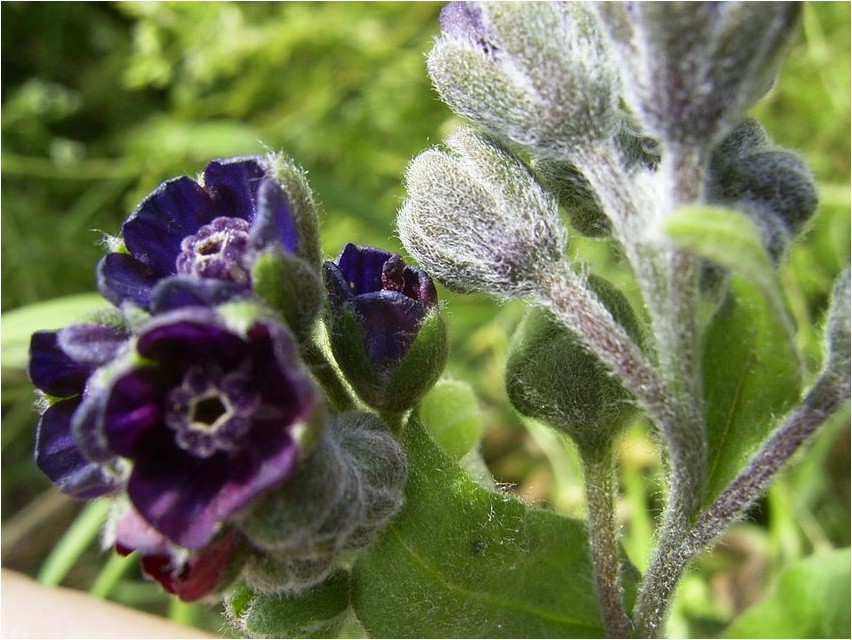
* Tongue of the Australian hound (lat. Cynoglossum australe)
* Virginia blackroot (lat. Cynoglossum virginianum), known in America as Wild comfrey
* Western hound tongue (lat. Cynoglossum Occidentale)
* Tongue of the German hound (lat. Cynoglossum germanicum)
* Variable black root (lat. Cynoglossum rotatum).
Usage
Pleasant blackroot is used as an ornamental plant in flower beds. It has relatively large oval-elongated leaves with a sharp tip and small bright blue flowers, similar to the flowers of forget-me-nots. The erect stem is small in stature, and the entire bush is very compact and elegant.
Black root contains a number of alkaloids in all its parts. They determine the healing abilities of the plant, which should be used with great caution, observing the dosages recommended by experts. Otherwise, you may end up with additional health problems instead of treatment.
Traditional healers use the leaves and roots of the plant in their work. Lotions help to quickly heal burns on the skin and get rid of boils.
Black root is used in cases where it is necessary to relieve pain, soften a dry cough, and relieve muscle cramps.
The juice and roots can repel all kinds of rodents who love to feast on the fruits of human garden labor.





