Kalina Gordovina
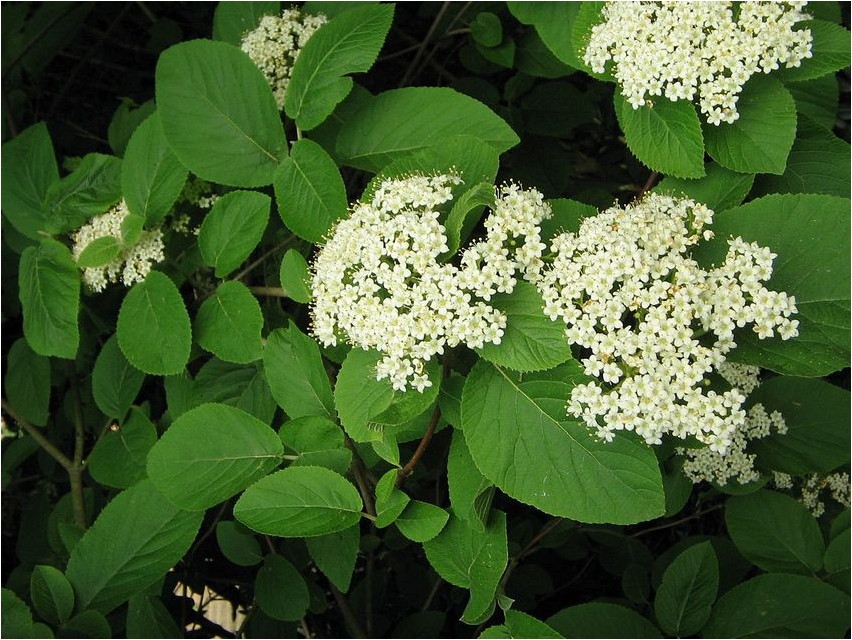
Viburnum pride is one of the plants of the family called honeysuckle; in Latin the name of this plant will be as follows: Viburnum furcatum Blume ex Maxim.
As for the Latin name of the Viburnum gordovina family itself, in Latin it will be: Caprifoliaceae Juss.
Description of Viburnum Gordovina
Viburnum gourdovina is a perennial shrub whose height will be about two to three meters. The shoots of this plant are scaly and pubescent; the buds are not equipped with scales. The leaves of Viburnum Pride are entire and mostly oval, while also being completely pinnately uneven; the leaves below will be wrinkled and pubescent. The length of the leaves of this plant will be about six to nineteen centimeters; the petiole is not endowed with glands. The flowers of this plant are painted white. The fruits of Viburnum Pride are a black and ribbed drupe, the length of which does not reach even one centimeter.
Flowering viburnum occurs during the period from May to June. It is noteworthy that sometimes flowering can last a little longer. Under natural conditions, this plant is found in the Crimea, the Carpathians and the Dnieper region of Ukraine, in Moldova, the Caucasus, Belarus, and also in the Black Sea region of the European part of Russia. For growth, the plant prefers edges, forest glades, forests, limestone and rocky slopes.
Description of the medicinal properties of viburnum gordovina
Viburnum gourdovina is endowed with quite valuable healing properties, and it is recommended to use the leaves and bark of this plant for medicinal purposes. Viburnum branches will contain ursolic acid, and the bark contains tannins. The leaves of this plant contain pectin, sucrose, triterpenoids, catechins, flavonoids, tannins, phenolcarboxylic acids and their derivatives, anthocyanins, chalcones, as well as the following acids: acetic, formic, malic, citric, valeric, isovaleric, oleanic, ascorbic and ursolic. Chalcones and triterpenoids are present in the flowers of the viburnum, and the fruits contain anthocyanins and flavonoids.
It is noteworthy that the leaves of this plant will be endowed with an astringent effect. As for traditional medicine, a decoction of the bark of this plant is quite widespread. This decoction of Viburnum viburnum should be used in the treatment of diarrhea, and also as a gargle for both gingivitis and laryngitis.

It should be noted that the plant is very decorative. It is important to remember that the fruits of the viburnum gourdine are poisonous, and therefore they can cause hematuria in both humans and animals.
For diarrhea, it is recommended to use the following rather valuable remedy based on Viburnum viburnum: to prepare such a remedy, take one tablespoon of the crushed bark of this plant per glass of water. The resulting mixture should be boiled for three to four minutes over fairly low heat, and then this mixture is left to infuse for two hours. You should take one or two tablespoons of this remedy based on viburnum viburnum three times a day.
As a rinse for stomatitis, gingivitis and laryngitis, it is recommended to use the following remedy based on Viburnum viburnum: to prepare such a remedy, take two teaspoons of dry crushed bark of this plant per glass of water. The resulting mixture should be boiled over low heat for three to four minutes, and then infused for two hours, after which the mixture is carefully filtered. You should gargle with this mixture until a positive effect is achieved.





