Nightshade black
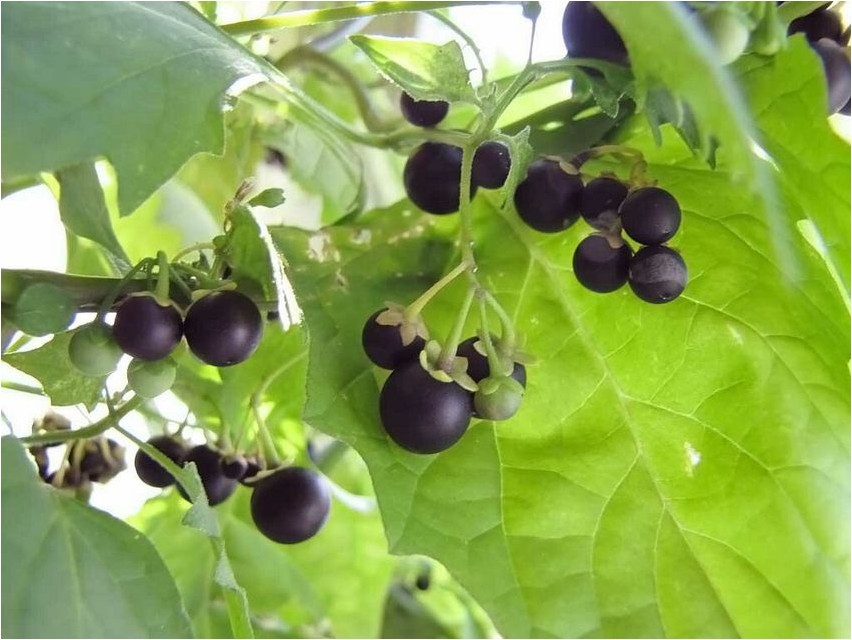
Black nightshade is one of the plants of the family called Solanaceae; in Latin the name of this plant will be as follows: Solanum nigrum L.
As for the name of the black nightshade family itself, in Latin it will be: Solanoceae Juss.
Description of black nightshade
Black nightshade is known by numerous popular names: soulless grass, nightshade, wolfberry, baznika, black dogberry, magpieberry, crowberry, crowberry, crowberry, sunflower and dogberry. Black nightshade is an annual herbaceous plant whose height will vary between fifteen and seventy centimeters. The stem of this plant is branched and erect, and at the top it will be somewhat flattened. The leaves of the black nightshade are ovate and petiolate, they will be pointed, and can also be either notched-angular or entire. The flowers of this plant are quite small in size, they are painted white and are located in false umbrellas on drooping pedicels. The fruits of black nightshade are spherical berries, colored black, and sometimes they can be green in color.
Black nightshade blooms in summer and autumn. Under natural conditions, this plant is found in Ukraine, the Caucasus, Belarus, the European part of Russia, Central Asia, northern Kazakhstan, the Far East and Siberia. For growth, this plant prefers places near houses, vegetable gardens, riverside bushes and places along roads.
Description of the medicinal properties of black nightshade
Black nightshade is endowed with very valuable healing properties, and it is recommended to use the herb of this plant for medicinal purposes. The term grass includes leaves, flowers and stems.
The presence of valuable healing properties is recommended to be explained by the content of sitosterol, rutin, solasodine, glycoalkaloid solanine, solangoustine, saponins, tannins and organic acids in the composition of this herb and the green fruits of this plant. It is noteworthy that after the fruits of black nightshade ripen, the glycoalkaloids will disappear almost completely. The leaves of this plant, in turn, contain carotene, and the ripe fruits contain ascorbic acid, while the roots contain alkaloids and saponins, and the grass contains flavonoids and alkaloids.

Black nightshade is quite widespread in folk medicine in Turkey, Venezuela, Portugal, France and England. It has been proven that preparations based on this plant have the ability to dilate blood vessels, lower blood pressure, and will also affect the nervous system, while at first such an effect will be short-lived and then become depressing.
For hypertension and atherosclerosis, it is recommended to eat five to six grams of the fruits of this plant per day. In homeopathy and folk medicine, the herb and berries of black nightshade are recommended to be used as a diuretic and tonic for edema, dropsy and urolithiasis. The juice of the herb of this plant is endowed with a very effective diaphoretic effect, and is also indicated for use in various colds. In addition, this juice is an anticonvulsant and sedative. It is recommended to use an infusion prepared from black nightshade flowers as an expectorant for bronchitis and cough.
An infusion based on the leaves of this plant is used as an astringent and hemostatic agent for dysentery and diarrhea, and is also used for cholelithiasis and hepatitis.





