Marsh Wormwood
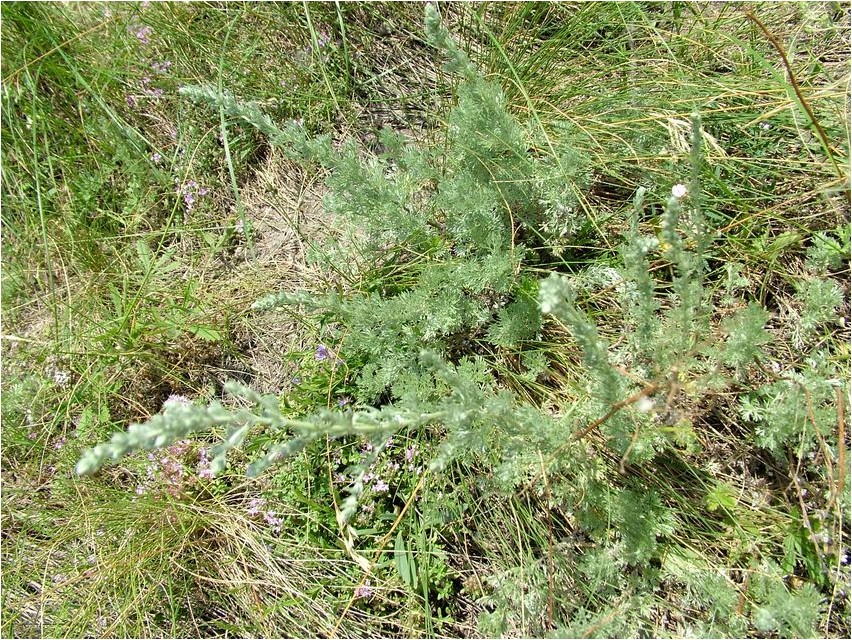
Marsh wormwood is a member of the Asteraceae or Compositae family. Its Latin name is Artemisia palustris L.
The Latin name for the marsh wormwood family is Asteraceae Dumort. (Compositae Giseke).
Description of Marsh Wormwood
Marsh wormwood is an annual herbaceous plant, growing between four and fifty centimeters tall. This plant is glabrous and has a vertical rootstock. Its stem is erect, and its antechambers are spherical, approximately two to three millimeters wide. There are two to ten antechambers, clustered in racemes or dense glomeruli, which in turn form a paniculate inflorescence. The marginal flowers of this plant are pistillate, numbering only eleven to thirteen. The corolla is filiform-tubular, with approximately twenty-eight to thirty disc florets. The corolla itself is bare and conical, with brownish-brown, ovoid-oblong achenes.
This plant blooms in August. In the wild, marsh wormwood is found in Western Siberia, the western Amur region of the Far East, and the Daurian and Angara-Sayan regions of Eastern Siberia. This plant prefers valley forests, sandy and alkaline steppes, steppe meadows, floodplains, gravel beds, arable land, roadsides, pastures, sandy banks of rivers and lakes, and cliffs. Description of the Medicinal Properties of Marsh Wormwood
Marsh wormwood possesses highly valuable medicinal properties, and its inflorescences, fruits, and herb are recommended for medicinal use. The herb includes flowers, stems, and leaves.
The presence of such valuable medicinal properties is attributed to the plant’s content of flavonoids, sesquiterpenoids, chalcones, essential oil, umbelliferone, phenolic acids, and their derivatives. It is noteworthy that the essential oil from the aboveground parts of this plant possesses antibacterial activity.
As for Tibetan medicine, wormwood is very widespread here. Tibetan medicine recommends using an infusion based on the herb of this plant for nonspecific arthritis, and the ash from burning the herb wormwood should be used for various skin diseases. In addition, infusion and decoction prepared from the fruits of this plant are indicated for use in pulmonary tuberculosis, pneumonia and bronchitis. Wormwood leaves are used for various skin diseases.

For nonspecific arthritis, it is recommended to use the following very effective remedy based on this plant: to prepare such a healing remedy, you will need to take one tablespoon of dry crushed herb wormwood per one glass of boiling water. It is recommended to infuse the resulting healing mixture for about one hour, after which the mixture should be filtered very carefully. Take this medicine based on wormwood before meals three to four times a day, one to two tablespoons.
For tuberculosis, pneumonia and bronchitis, the following remedy is used: one teaspoon of wormwood inflorescences per glass of boiling water. This healing mixture is infused for one hour and carefully filtered, and this remedy based on marsh wormwood is taken in half a glass or one third of it three times a day.
Wormwood swamp wormwood





