spring primrose
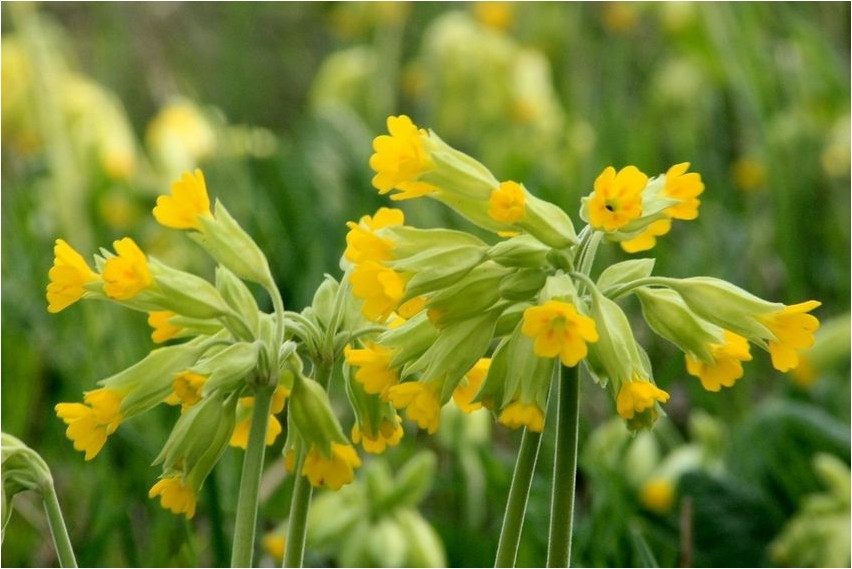
Spring primrose is one of the plants of the family called primroses; in Latin the name of this plant will be as follows: Primula veris L.
As for the name of the spring primrose family itself, in Latin it will be: Primulaceae Vent.
Description of spring primrose
Spring primrose is known by numerous popular names: lamb, rams, lady’s hands, crow’s eyes, keys, kudelka, copperhead, lamb grass and seals. Spring primrose is a perennial herbaceous plant whose height will vary between ten and thirty centimeters. This plant is endowed with an oblique rhizome and numerous cord-like roots. The leaves of this plant are petiolate, ovate or oblong-ovate in shape, they will be crenate and wrinkled, and below they are grayish-thin felt and such leaves are collected in a basal rosette. The stem of the spring primrose will be erect, it will not have leaves and will be slightly pubescent; at the top of such a stem there will be a one-sided umbrella-shaped inflorescence. The flowers of this plant are painted in bright yellow tones, they are endowed with a very pleasant honey smell, and will also be five-membered, with the corolla and calyx being tubular. The fruit of the spring primrose is a multi-seeded ovoid capsule, colored brown.
The flowering of this plant occurs in the period from May to June, while the fruits of the spring primrose will ripen from August to September. Under natural conditions, this plant is found in Western Siberia, the European part of Russia, Crimea, Ukraine, Belarus, Kazakhstan, the Caucasus, the Urals and Central Asia. For growth, spring primrose prefers meadows, sunny forests, dry glades, forest edges, steppes, places along river banks and among bushes, as well as mixed and deciduous forests.
Description of the medicinal properties of spring primrose
Spring primrose is endowed with very valuable healing properties, and it is recommended to use the leaves, roots and rhizomes of this plant for medicinal purposes. The leaves should be harvested throughout the entire flowering period of this plant, while the rhizomes and roots of the spring primrose should be harvested already in the autumn.
The presence of such healing properties is recommended to be explained by the content of essential oil, saponins, carotene, ascorbic acid, glycosides, vitamin C and E in the roots and rhizomes of this plant. Spring primrose is endowed with a very effective laxative, antispasmodic, sedative, antitussive, antipyretic and diaphoretic effect. This plant is quite widely used to treat scurvy. A decoction prepared from the roots of spring primrose is recommended for use in various inflammations, bronchitis, bronchial asthma, acute and chronic laryngitis. An infusion based on the leaves of this plant should be used for hypo- and vitamin deficiencies.

As for traditional medicine, here this plant is quite widespread. An infusion prepared from the roots and leaves of spring primrose has long been used here for various kidney diseases, loss of strength, tuberculosis, bladder diseases, rheumatism, headaches and constipation. In addition, such remedies are used for insomnia, neuroses, headaches and neurasthenia.
A salad is prepared on the basis of spring primrose leaves, which is used for hypo- and avitaminosis. Such a salad based on this plant will have a sweetish taste and a spicy, pleasant aroma.





