Wintergreen
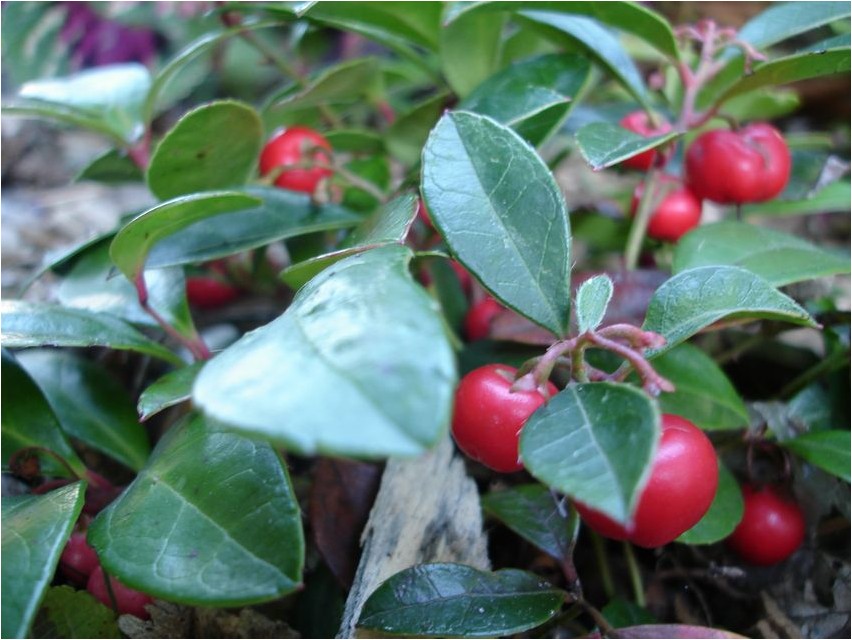
Wintergreen (lat. Gaultheria) is an evergreen shrub of the Heather family. Other names are Gautheria or Gaulteria. The genus includes about 170 species, according to other sources 180 species.
The genus was named in honor of the French botanist, zoologist and physician Jean-François Gautier. In nature, representatives of the genus can be found in the countries of South and North America, Australia, New Zealand and Asia. Previously, wintergreen was classified as a member of the Pernetti genus, but later both genera were combined. Only seven cultivated species are grown in Russia.
Common types and their characteristics
* Wintergreen (lat. Gaultheria procumbens) — the species is represented by low-growing subshrubs that form creeping shoots. The leaves are rich green, round, glossy, up to 4 cm long. The flowers are solitary, white, pitcher-shaped. The fruits are red, inedible, up to 10 mm in diameter. Wintergreen blooms from May to September (depending on climatic conditions). The fruits do not fall until next spring. The species is winter-hardy and differs from other species in its distinct aroma. Homeland — North America. In nature, it is found in bushes and mixed forests.
*Gaultheria trichophylla (lat. Gaultheria trichophylla) — the species is represented by low-growing shrubs with oblong or elliptical gray-green leaves up to 10 mm long. The flowers are bell-shaped, slightly drooping, up to 4 mm long, and pink in color. The fruits are blue or blue, spherical. It is not winter hardy and is grown in southern countries. The homeland of the species is considered to be the Himalayas and Western China.
*Gaultheria adenothrix (lat. Gaultheria adenothrix) — the species is represented by shrubs up to 30-35 cm high. The leaves are leathery, oval, bare on the upper side, serrated along the edge. The flowers are small, single or collected in groups of three, and are white or whitish-pink in color. The fruit is red, round, covered with glands. The species is relatively winter-hardy. The homeland is Japan.
Growing conditions
Wintergreen grows well in both shady and sunny areas. Preferably acidic and peaty soils. Compaction of the top layer and the presence of lime are undesirable. It is important to remember that the soil factor plays an important role for crop growth. Wintergreen does not tolerate waterlogged soils, otherwise the root system will begin to rot and as a result the plant will die.
The area for wintergreen must be drained; broken bricks, pebbles or any other material can be used as drainage. The optimal drainage thickness is 10-15 cm. Laying peat on top of the drainage layer is not prohibited; it will make the substrate loose and significantly increase its acidity, which is vital for the crop. You can also use a soil mixture consisting of river sand, peat and coniferous soil in a ratio of 1:3:2.
Reproduction and planting
Wintergreen is propagated by seeds, layering and cuttings. The second method is the most effective; moreover, it allows you to preserve the properties of the mother plant. Other methods are more troublesome and require more effort and time. When propagating a crop by layering, the lower shoot of the bush is bent to the soil surface, pinned and covered with soil. Layers are laid in the spring, and in the fall the rooted material is separated from the mother plant and transplanted to a permanent place. Before the cuttings develop a healthy and developed root system, they must be watered regularly.
Cuttings of the crop are carried out in summer or autumn. Cuttings are taken from semi-lignified shoots, then treated with growth stimulants and planted in a peat-sand mixture. Before rooting, the cuttings are covered with film, regularly ventilated and sprayed with warm water. Seedlings and other material are planted in groups at a distance of 25-35 cm from each other. The depth of the planting hole should be about 30-40 cm; a high-quality drainage layer is required at the bottom.
Care
Plants need systematic feeding with mineral fertilizers. For these purposes, nitroammophoska is ideal in an amount of 150 g per 1 sq. m. m. or the drug “Kemira-universal” in the amount of 100 g per 1 sq. m. Watering is carried out regularly, at least 2 times a month, 5-7 liters per plant. During prolonged drought, plants are sprayed, but only in the evening, otherwise burns cannot be avoided.
Removing weeds and loosening the soil are no less important procedures for caring for wintergreen, but loosening is carried out superficially. In early spring (before the shoots begin to grow), shoots are pruned. It is important to systematically remove dry shoots. For the winter, plants are mulched with wood chips or peat.
Wintergreen
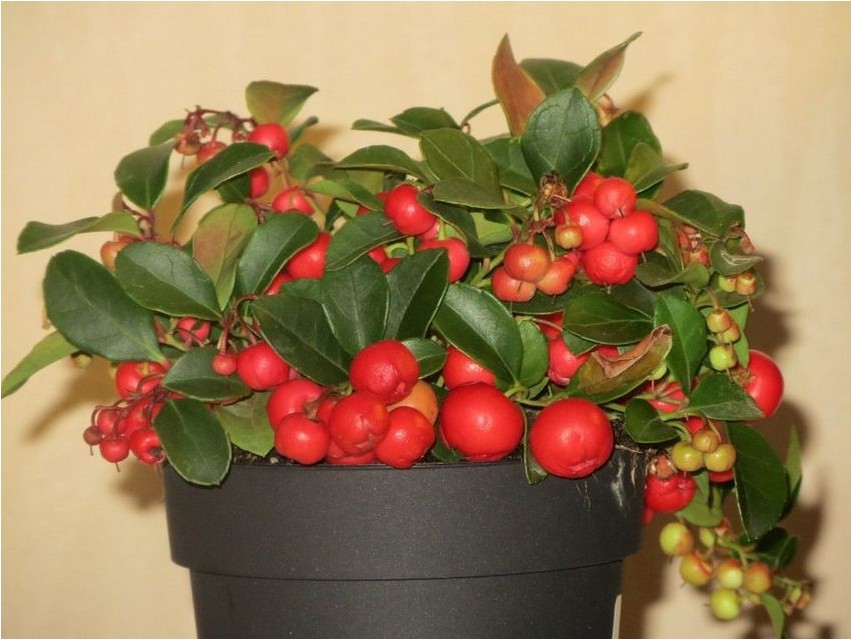
Wintergreen (lat. Gaultheria) is an evergreen shrub of the Heather family. Other names are Gautheria or Gaulteria. The genus includes about 170 species, according to other sources 180 species.
The genus was named in honor of the French botanist, zoologist and physician Jean-François Gautier. In nature, representatives of the genus can be found in the countries of South and North America, Australia, New Zealand and Asia. Previously, wintergreen was classified as a member of the Pernetti genus, but later both genera were combined. Only seven cultivated species are grown in Russia.
Common types and their characteristics
* Wintergreen (lat. Gaultheria procumbens) — the species is represented by low-growing subshrubs that form creeping shoots. The leaves are rich green, round, glossy, up to 4 cm long. The flowers are solitary, white, pitcher-shaped. The fruits are red, inedible, up to 10 mm in diameter. Wintergreen blooms from May to September (depending on climatic conditions). The fruits do not fall until next spring. The species is winter-hardy and differs from other species in its distinct aroma. Homeland — North America. In nature, it is found in bushes and mixed forests.

*Gaultheria trichophylla (lat. Gaultheria trichophylla) — the species is represented by low-growing shrubs with oblong or elliptical gray-green leaves up to 10 mm long. The flowers are bell-shaped, slightly drooping, up to 4 mm long, and pink in color. The fruits are blue or blue, spherical. It is not winter hardy and is grown in southern countries. The homeland of the species is considered to be the Himalayas and Western China.
*Gaultheria adenothrix (lat. Gaultheria adenothrix) — the species is represented by shrubs up to 30-35 cm high. The leaves are leathery, oval, bare on the upper side, serrated along the edge. The flowers are small, single or collected in groups of three, and are white or whitish-pink in color. The fruit is red, round, covered with glands. The species is relatively winter-hardy. The homeland is Japan.
Growing conditions
Wintergreen grows well in both shady and sunny areas. Preferably acidic and peaty soils. Compaction of the top layer and the presence of lime are undesirable. It is important to remember that the soil factor plays an important role for crop growth. Wintergreen does not tolerate waterlogged soils, otherwise the root system will begin to rot and as a result the plant will die.
The area for wintergreen must be drained; broken bricks, pebbles or any other material can be used as drainage. The optimal drainage thickness is 10-15 cm. Laying peat on top of the drainage layer is not prohibited; it will make the substrate loose and significantly increase its acidity, which is vital for the crop. You can also use a soil mixture consisting of river sand, peat and coniferous soil in a ratio of 1:3:2.
Reproduction and planting
Wintergreen is propagated by seeds, layering and cuttings. The second method is the most effective; moreover, it allows you to preserve the properties of the mother plant. Other methods are more troublesome and require more effort and time. When propagating a crop by layering, the lower shoot of the bush is bent to the soil surface, pinned and covered with soil. Layers are laid in the spring, and in the fall the rooted material is separated from the mother plant and transplanted to a permanent place. Before the cuttings develop a healthy and developed root system, they must be watered regularly.
Cuttings of the crop are carried out in summer or autumn. Cuttings are taken from semi-lignified shoots, then treated with growth stimulants and planted in a peat-sand mixture. Before rooting, the cuttings are covered with film, regularly ventilated and sprayed with warm water. Seedlings and other material are planted in groups at a distance of 25-35 cm from each other. The depth of the planting hole should be about 30-40 cm; a high-quality drainage layer is required at the bottom.
Care
Plants need systematic feeding with mineral fertilizers. For these purposes, nitroammophoska is ideal in an amount of 150 g per 1 sq. m. m. or the drug “Kemira-universal” in the amount of 100 g per 1 sq. m. Watering is carried out regularly, at least 2 times a month, 5-7 liters per plant. During prolonged drought, plants are sprayed, but only in the evening, otherwise burns cannot be avoided.
Removing weeds and loosening the soil are no less important procedures for caring for wintergreen, but loosening is carried out superficially. In early spring (before the shoots begin to grow), shoots are pruned. It is important to systematically remove dry shoots. For the winter, plants are mulched with wood chips or peat.





