Adams wormwood
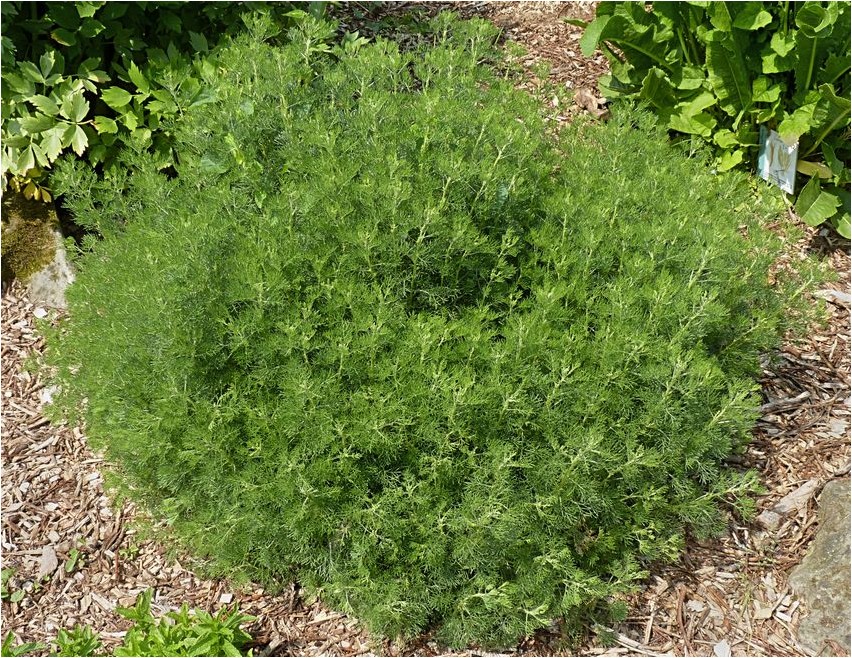
Adams wormwood is one of the plants of the family called Asteraceae or Asteraceae; in Latin the name of this plant will be as follows: Artemisia adamsii Bess.
As for the name of the Adams wormwood family itself, in Latin it will be: Asteraceae Dumort. (Compositae Giseke).
Description of Adams wormwood
Adams wormwood is a perennial herbaceous plant whose height will range between ten and fifty-five centimeters. The root of this plant is relatively thin and woody, while the stem is covered with dark brown bark. The baskets of Adams wormwood will be spherical, their width is approximately two to four millimeters, they are on legs and drooping, while such baskets will be more or less close together on the branches and they are in a narrow paniculate inflorescence. The marginal flowers of this plant are pistillate, most often there are about eleven to twelve of them, the corolla, in turn, is narrow-tubular, the disc flowers are bisexual and quite numerous. The corolla, in turn, is bare and narrowly conical; the length of the seeds will slightly exceed one millimeter, and their shape will be oblong-conical.
Artemisia adams blooms in August. Under natural conditions, this plant is found in the following regions of Eastern Siberia: Daurian and Angaro-Sayan. For growth, this plant prefers saline licks, lake shores, river valleys and saline steppes; as a weed, Adam’s wormwood is found on borders.
Description of the medicinal properties of Adams wormwood
Adams wormwood is endowed with very valuable healing properties, and it is recommended to use the inflorescences and grass of this plant for medicinal purposes. The term grass includes stems, flowers and leaves. The presence of such valuable healing properties is recommended to be explained by the content of coumarins, sesquiterpenoids, flavonoids and essential oils in this plant.
The essential oil of this plant will be endowed with antibacterial properties, for this reason this product can be used as a substitute for peppermint oil for fragrance in a variety of cosmetics, and also as a source of camphor. It should be noted that yaceosidine and eupafolin will exhibit antibacterial activity.

As for traditional medicine, here this plant is quite widespread. Traditional medicine recommends using an infusion and decoction prepared from the inflorescences and leaves of Adams wormwood as a very effective antipyretic gargle for toothache and sore throat. In Tibetan medicine, a powder based on the herb of this plant is used: when used in complex recipes, such a healing agent turns out to be very effective. A decoction prepared from the herb of this plant is recommended for use as an antipyretic.
As an antipyretic, it is recommended to use the following very effective remedy based on this plant: to prepare such a healing remedy, you will need to take two teaspoons of crushed Adams wormwood herb per glass of boiling water. The resulting healing mixture should be infused for about thirty to forty minutes. The resulting medicine based on Adam’s wormwood is taken two to three times a day, one to two tablespoons, as an antipyretic, and the same remedy can also be used as a rinse and for toothache. When used correctly, this healing remedy will be very effective.





