Wormwood whole leaf
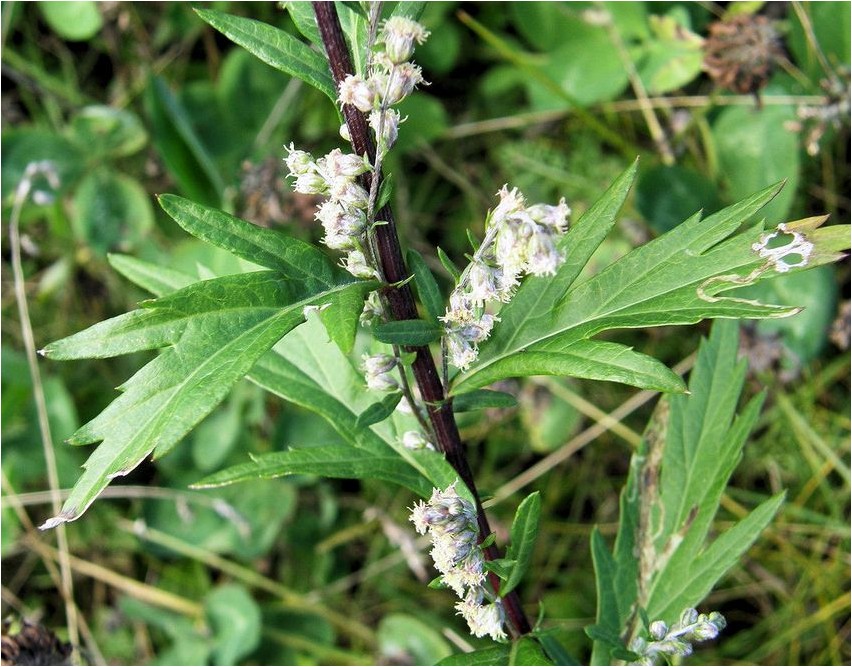
Wormwood is one of the plants of the family called Asteraceae or Asteraceae; in Latin the name of this plant will be as follows: Artemisia integrifolia L.
As for the name of the entire wormwood family itself, in Latin it will be like this: Asteraceae Dumort. (Compositae Giseke).
Description of wormwood
Wormwood whole-leaved is a perennial herbaceous plant, the height of which will fluctuate between forty and one hundred centimeters. The rhizome of this plant is creeping and thin. The stem of Artemisia allifolia will be slightly ribbed, single and simple, most often the stem will be colored in reddish-purple tones. The leaves of this plant will be oblong and simple, they are dark green on top, and thin white tomentose underneath. The length of such leaves will be about five to ten centimeters, and the width will be one to two centimeters. The baskets of wormwood are located in a spike-shaped or narrow paniculate inflorescence; there are only fourteen to fifteen marginal flowers, they will be pistillate. The corolla is narrow-tubular and two-toothed; there are about twenty-seven to thirty flowers on the disk of this plant; they will be bisexual.
The flowering of wormwood occurs in the month of August. Under natural conditions, this plant is found in the Far East, Eastern and Western Siberia. For growth, this plant prefers shrubs, floodplain meadows, coastal thickets, river banks, grassy swamps and deciduous forests.
Description of the medicinal properties of wormwood whole leaf
Wormwood is endowed with very valuable healing properties, and it is recommended to use the herb of this plant for medicinal purposes. The concept of grass includes leaves, inflorescences and stems. The presence of such valuable medicinal properties should be explained by the content of flavonoids and essential oils in this plant.
As for traditional medicine, here this plant is quite widespread. Actually, it should be noted that traditional medicine recommends the use of the herb wormwood whole-leaved in a similar way to common wormwood. A decoction of this plant in the form of baths is recommended for use for urolithiasis; an ointment based on the leaves of wormwood is used for various skin diseases. The smoke produced by burning the dry leaves of this plant should be inhaled for bronchial asthma. A decoction prepared from the leaves of wormwood is indicated for use in cases of pyoderma, neuralgia and toxicosis of pregnant women, and can also be used as an antipyretic, tonic and hemostatic agent.

Tibetan medicine uses this plant for swelling of the joints, and also recommends the use of wormwood as a hemostatic agent.
For sciatic neuralgia, it is recommended to use the following very effective remedy based on this plant: to prepare such a remedy, you will need to take three grams of crushed dry leaves of wormwood per glass of water. The resulting medicinal mixture should first be boiled for about three to four minutes, then this mixture is left to infuse for one hour, after which such a healing mixture based on this plant should be filtered very carefully. Take the resulting healing remedy based on wormwood whole leaf two to three times a day before meals, one-third or one-fourth of a glass. When used correctly, this remedy turns out to be very effective.





