Chinese Girchevnik
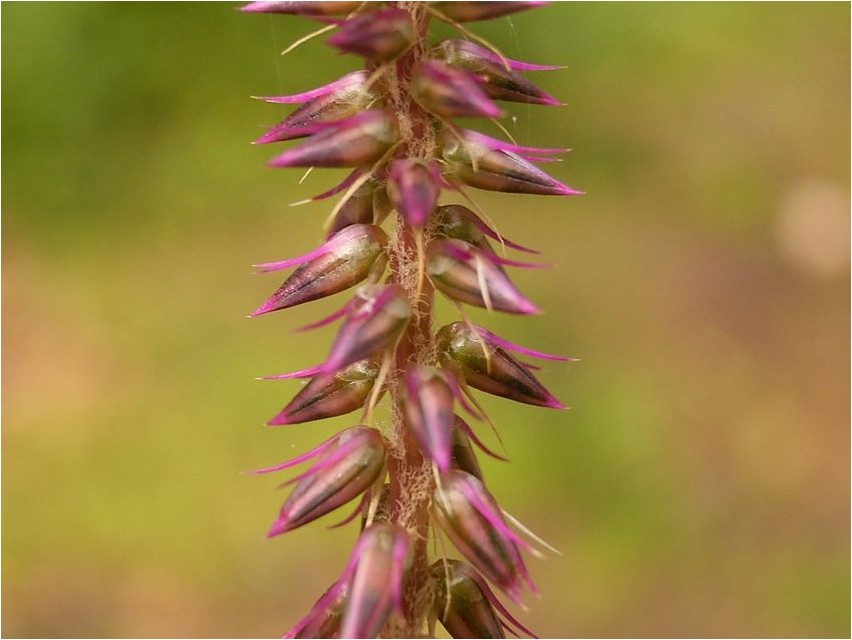
Chinese Girchevnik is a member of the Apiaceae family. Its Latin name is Conioselinum chinense (L.) Britt.
Its family name is Apiaceae Lindl. or Umbelliferae Juss.
Description of Chinese Girchevnik
Chinese Girchevnik is a perennial herbaceous plant. It has a fairly robust root system, approximately two to three centimeters thick, with the largest specimens reaching four to five centimeters in thickness. Its stems can be single or in groups of several. These stems are slightly curved at the nodes, bare along with the leaves, and hollow inside, though branched at the top. The stems of this plant reach a height of approximately fifty to one hundred fifty centimeters. The leaves of the Chinese gypsophila are triangular in outline, with the lower leaves on long petioles, and at the base they merge into a widened but not swollen sheath. The umbels of this plant have approximately fifteen to thirty slightly roughened rays and are approximately four to nine centimeters in diameter. The umbels are multi-flowered, with the rays on the upper surface being faintly roughened and approximately one and a half centimeters in diameter. The fruits of this plant are ovoid, approximately four to eight and a half millimeters long and two to five millimeters wide.
The flowering period of the Chinese gypsophila begins in July and ends in August. In the wild, this plant can be found in the Far East: Primorye, the Amur region, Sakhalin, and the Kuril Islands. This plant prefers damp rocks, streamside areas, tall grass thickets, and coastal meadow slopes.
Description of the medicinal properties of Chinese rhizome
Chinese rhizome is endowed with highly valuable medicinal properties, and the leaves, roots, and rhizomes of this plant are recommended for medicinal purposes.
The rhizomes and roots of this plant contain coumarins, polyacetylene compounds, essential oil, as well as the following phthalides: ligusticumlactone and ligustilide. The Chinese herb contains essential oil. It is noteworthy that the fruits of this plant contain coumarins, essential oil, as well as higher essential acids: linoleic, petroselidinic, palmitic and petroselinic.

A decoction of the roots and leaves of this plant is widely used in Chinese medicine. Such remedies are recommended for use for headaches, gynecological and gastric diseases, as well as for colds, paralysis and hypertension. At the same time, the extract of the roots of this plant is endowed with rather weak antitumor activity.
For hypertension, it is recommended to use the following remedy: to prepare it, you will need to take one teaspoon of crushed roots of the Chinese herb per glass of water. This mixture should be boiled for about three to four minutes, and then left to steep for two hours, after which the mixture should be thoroughly strained. This remedy should be taken half a glass approximately three to four times a day before meals.
For stomach ulcers, the following remedy is effective: to prepare it you will need to take two tablespoons of crushed dry leaves of this plant per three hundred milliliters of water. Then it is recommended to boil this mixture for about three to four minutes, and then leave it to brew for two hours and strain thoroughly. This remedy is taken half a glass three times a day.





