Siberian Inflated Carpus
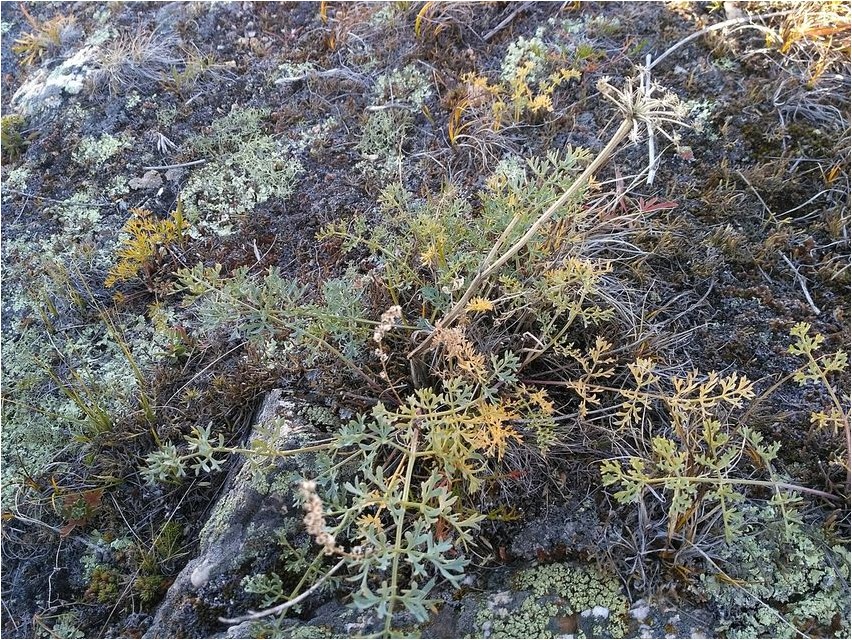
Siberian Inflated Carpus is a perennial herbaceous plant that can range in height from ten to fifty centimeters.
The Latin name for this plant is Phlogodicarpus sibiricus. Siberian Inflated Carpus is a member of the Umbelliferae family, which is known as Apiaceae Lindl.
Description of Siberian Inflated Carpus
The root of this plant is thick, and in some cases, it can be multi-headed. The root collar of this plant appears to be covered in the remains of the petioles of the root leaves, which are brown in color. The stems are either single or multiple. The stems of Siberian Inflated Carpus are glabrous and reach a height of about fifteen to seventeen centimeters. The plant’s basal leaves are quite numerous, trigeminate, and glaucous-green in color. These basal leaves are glabrous, and their carpels are oblong-ovate in outline. The umbels number between eight and twenty-three, and the petals are approximately two millimeters long and white. The fruits are broadly ovate, about five to eight millimeters long, and about three millimeters wide. The flowering period of the Siberian inflated carp lasts from approximately June until July.
This plant is widespread throughout Eastern Siberia, with the exception of the Yenisei region. Furthermore, the Siberian inflated carp can also be found in the Far East, in steppe meadows and rocky steppes. The roots of this plant are used for medicinal purposes. Description of the medicinal properties of Siberian bloatcarp
The roots of Siberian bloatcarp contain the following coumarins: visnadin and dihydrosamitin, as well as scopoletin, umbelliferone, iterexin, samedin, kellacton diisovalerate, acomalin, deltoin, suxdorfin, and also dihydrosamitin and isoimperatorin.
It is noteworthy that sucrose, essential oil, alpha-pinene, limonene, myrcene, beta-pinene, gamma-terpinene, beta-phellandrene, flavonoids and coumarins such as buchtarmine, xanthogalin and lamatin were found in the aerial part of the Siberian puffball. It should be noted that the underground part of the plant can also become a raw material from which drugs called dihydrosamidine and dimidine can be obtained. Such drugs will have an antispasmodic effect in case of peripheral vascular spasms, Raynaud’s disease, mild forms of chronic coronary insufficiency, as well as spastic forms of endarteritis.
In Tibetan medicine, the roots and rhizomes of Siberian carp are often used as components of rather complex medicinal mixtures. Such mixtures turn out to be especially valuable for gastroenteritis, pneumonia, pulmonary tuberculosis, various neuroses, a number of blood diseases and diphtheria. In addition, such mixtures also act as anthelmintics. It is noteworthy that parts of this plant have been shown to have bacteriostatic activity against the tuberculosis bacillus. Coumarins, which are part of this plant, also have antispasmodic properties.

For pulmonary tuberculosis, neurosis and pneumonia, it is recommended to prepare the following remedy: for this you will need to take approximately eight to ten grams of crushed dry roots per glass of water. It is recommended to boil this mixture for approximately five to six minutes over fairly low heat, and then leave the resulting mixture to infuse for two hours. Then add boiled water up to the original amount and filter this mixture. It is recommended to take this remedy three times a day, two tablespoons.
Siberian swollen carp





