Jujube odoriferous
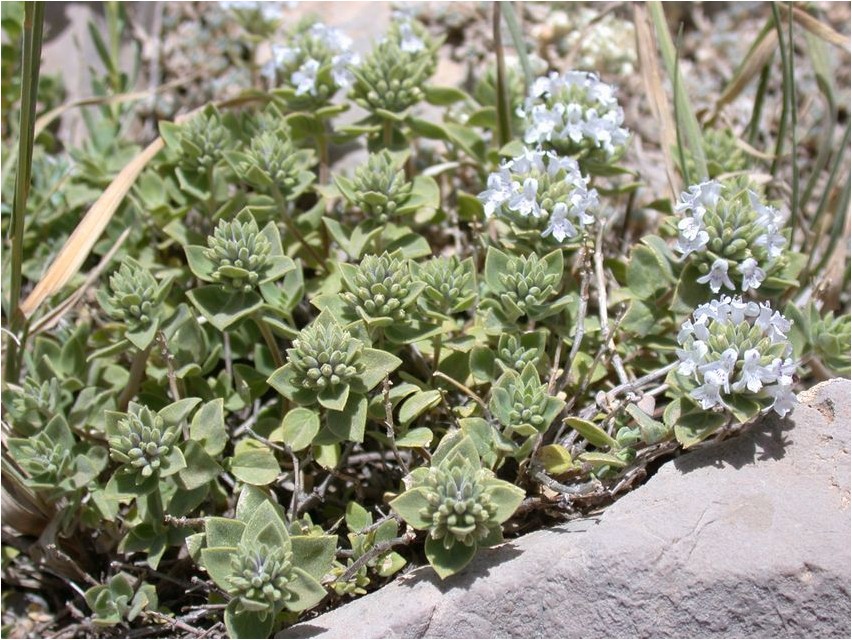
Ziziphora odorant is one of the plants of the family called Liliaceae; in Latin the name of this plant will be as follows: Ziziphora clinopodoides L.
As for the name of the ziziphora odoriferous family itself, in Latin it will be like this: Liliaceae Juss.
Description of ziziphora odoriferous
Jujube fragrant is a subshrub whose height will be about eight to forty centimeters. It is noteworthy that this plant is fragrant. The stems of this plant are quite numerous; they can be either slightly ascending or erect. The stems of ziziphora odoriferous are covered with short hairs. The length of the leaves is six to twenty-five millimeters, and the width is about three to twelve millimeters; most often the leaves are bare. The inflorescences are located at the tops of the stems, they will be capitate and almost spherical, they are dense, and their diameter is about one and a half to three centimeters. The calyx of this plant will be hairy and red on one side. It is noteworthy that the corolla turns out to be one and a half times longer than the calyx; the corolla is colored either in light purple or pinkish tones. The outside of the corolla will be short pubescent.
Flowering of ziziphora odorant occurs from June to August. Under natural conditions, this plant is found in Central Asia, the Angara-Sayan region of Eastern Siberia, as well as in the Trans-Volga and Lower Don regions of the European part of Russia. For growth, the plant prefers rocky river banks and slopes. Jujube odorous is a perganos, and is also a rather valuable honey plant.
Description of the medicinal properties of ziziphora odoriferous
Jujube is endowed with very valuable medicinal properties, and for medicinal purposes it is recommended to use the above-ground part of the plant and its leaves.
The presence of such valuable healing properties is explained by the content of essential oil, saponins, coumarins, flavonoids, alpha-terpinene and p-cymene in the plant. Fatty oil was found in the seeds, and oleic, stearic, palmitic, linolenic and linoleic acids were found in the hydrolyzate.

A tincture prepared from the herb of this plant is recommended for various colds and scrofula. Externally, an infusion of the herb is used for rubbing and for toothache. Notably, the essential oil of this plant has fungicidal and antibacterial activity. Infusions and extracts have been shown to have a diuretic effect in experiments, while a tincture of this plant has cardiotonic, anthelmintic, and hypotensive properties. It should be noted that an aqueous solution of flavonoids also has hypotensive properties.
In folk medicine, a decoction of the aerial parts of this plant is recommended for internal use for typhoid fever. A decoction of the herb is also used internally for heart conditions accompanied by edema, as well as for tachycardia and gastralgia. An infusion prepared from the leaves should be used as an antipyretic. The juice of this plant can be used to treat helminthiasis in children: one teaspoon should be taken two to three times a day for five to seven days.
It should be noted that the flowers of the Ziziphora odorata are used as a spice in fish processing. This plant is also used in the perfume industry to flavor both toothpastes and tooth powders.
For hypertension, take twenty drops of a tincture of this plant’s herb in 40% alcohol.