Linden
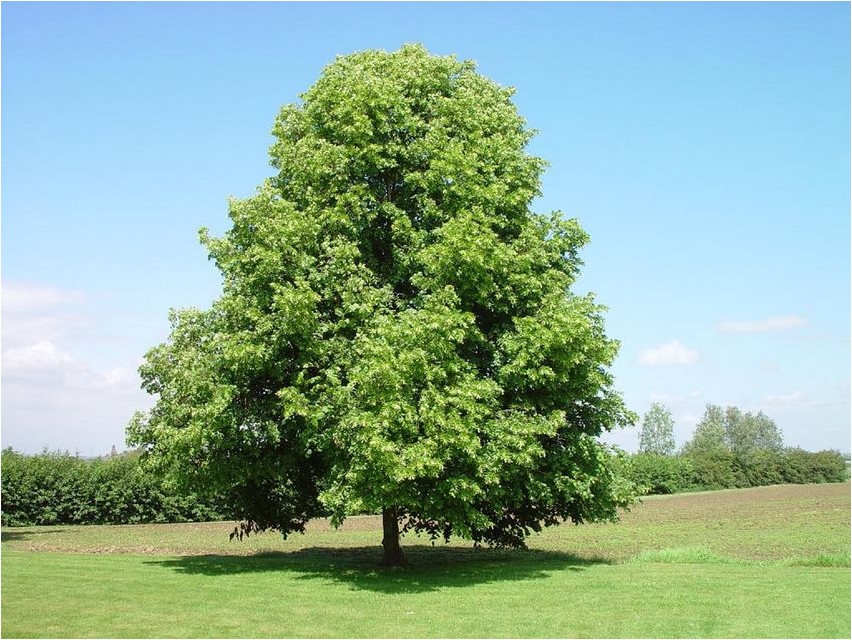
Linden (lat. Tilia) is a genus of trees in the Linden family. According to the results of modern research, representatives of the genus are classified as members of the Malvaceae family. The genus includes 45 species.
In nature, linden is found in Southeast Asia, the temperate zone of Europe, North America and Transcaucasia.
Characteristics of culture
Linden is a large deciduous tree up to 40 m high with a powerful root system and a beautiful dense crown that can be easily shaped. The leaves are simple, alternate, heart-shaped, obliquely heart-shaped or obliquely oval, with serrated or sharply toothed edges, with an asymmetrical base. The leaves are equipped with stipules, which fall off quite quickly. Some species have extrafloral nectaries at the base of the leaves. The flowers are regular, bisexual, fragrant, collected in corymbose or umbellate inflorescences with membranous leaf-shaped bracts that grow tightly to the middle of the petiole. The fruit is a single-seeded nut.
Growing conditions
Linden is a shade-tolerant crop, but intensively lit areas are preferred for its cultivation. In such areas, plants will form a beautiful lush crown. Linden is not picky about soil conditions, but develops better on sandy soils fertilized with humus. The culture has a negative attitude towards stagnation of groundwater in close proximity to the root system. Since the plants have a powerful root system, they are not afraid of strong winds.
Reproduction and planting
Linden is propagated by seeds, root shoots and stem layering. The seed method is labor-intensive and time-consuming. From the moment the seeds are sown in the ground until healthy young plants are obtained, it takes about 5-10, and sometimes even 12 years. Linden seeds require preliminary stratification. The seeds are placed in damp sand or sawdust and kept in a cool room for 6 months. The seeds are sown in open ground in the spring, the emerging seedlings are thinned out, and later transplanted to a permanent place. For the winter, still immature plants are carefully covered with organic material. It is not forbidden to grow seedlings indoors; in this case, the seeds are sown in containers.
When propagating a crop by layering, the lower branches of the mother plant are bent to the ground and placed in previously prepared furrows. The cuttings are pinned, covered with soil and watered abundantly. Complete rooting occurs after 1-2 years, then the cuttings are separated and replanted. It is advisable to lay cuttings in the spring, before the buds appear. The easiest way is propagation by root shoots. The shoots are separated from the mother plant and transplanted to a permanent place.

Planting pits for linden seedlings are prepared in advance; their depth should be at least 50 cm and width 60-70 cm. A layer of 10-15 cm of high-quality drainage is placed at the bottom of the pit. Broken brick, pebbles or crushed stone are suitable for these purposes. Then soil, thoroughly mixed with humus and mineral fertilizers, is poured into the hole. The root collar of the seedling should be located at the level of the soil surface; it should not be buried, although there is nothing wrong with that. Immediately after planting, the seedlings are watered and mulched abundantly.
Care
Regular feeding is important for the normal development of linden. The first three years after planting, plants are fed with fertilizers with a high nitrogen content (three times per season). In the future, two feedings are enough — in spring and autumn. You can begin cultivating the linden tree, or rather trimming its crown, a year after planting. Shorten the shoots by 1/3, no more. Formative pruning is carried out in early spring, before the buds open.
Watering young plants should be regular and plentiful; adult plants should be watered only during prolonged drought. Water consumption is 20 liters per 1 square meter of crown projection. The tree trunk zone is also systematically loosened, which is combined with weed removal.