Kostyanika
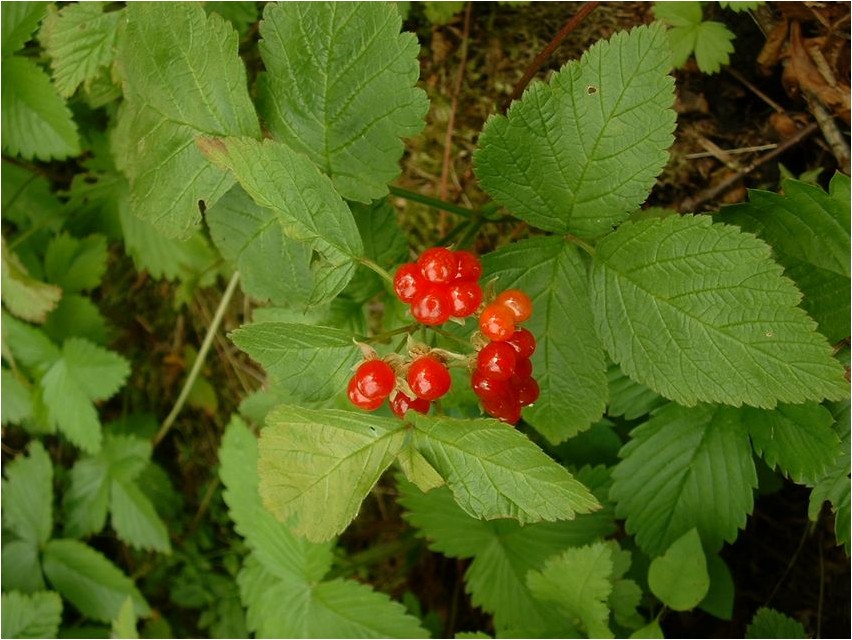
Drupes (lat. Rubus saxatilis) is a berry crop, a representative of the Rosaceae family.
Description
Drupe is a small herbaceous perennial, the height of which almost never exceeds thirty centimeters. The plant is endowed with rather long shoots spread along the ground, which take root with the onset of autumn and reach a length of up to one and a half meters. The straight stems of the drupe are characterized by very hard fibers, and the rough trifoliate leaves sitting on long petioles are covered with harsh hairs. And the stipules of this plant are ovate-lanceolate and free.
Bisexual and very small white flowers are collected at the tops of the stems into umbellate or corymbose inflorescences, each of which has from three to ten flowers. As for the flowering period, it usually occurs in May or June.
Quite large drupe fruits are collected in fancy tassels and can be either red or with a slight orange tint. Each berry consists of four parts, containing one seed of very decent size. These fruits ripen in July or August. The juicy pulp of the berries boasts a wonderful sour taste, vaguely reminiscent of the taste of pomegranate. It is for this that the plant received its second name — “northern pomegranate”.
Where does it grow
This wonderful berry is practically never found in garden plots, as it is considered a forest fruit. At the same time, it feels best in the vast expanses of damp coniferous forests.
On the territory of Russia, this plant can be seen in most areas of its European part, with the exception of the far south. It is found in the Far Eastern regions and in Siberia. And in Central Russia it will not be difficult to see it in all areas (mainly in coniferous forests).

Application
Drupe berries can be enjoyed fresh, or you can serve them with healthy honey or fresh milk, as well as with cream or sugar. Just as often, the stone fruit is dried or made into complex teas, as well as excellent wine or vinegar. These amazing berries make excellent fruit drinks or kvass, compotes, jelly, as well as jellies, mousses, jams, all kinds of seasonings, delicious juices and rich syrups. And in order to preserve the stone fruit as long as possible, it is filled with water or sprinkled with sugar and stored in a cold place (cellar or refrigerator).
Drupes are an excellent helper not only for various colds, but also for anemia. It will also be an excellent help for people with atherosclerosis, because these berries significantly reduce cholesterol levels and significantly strengthen blood vessels. A decoction of its stems and leaves is used for a wide variety of gastrointestinal ailments, as well as gout, various tumors and very painful inflammation of the joints. In addition, this decoction is an excellent antiscorbutic remedy. And among Siberians, infusions of leaves act as a cardiac analgesic or sedative, as well as an effective remedy for strengthening hair, against dandruff and migraines.
Drupes are endowed with the ability to free the body from all kinds of harmful substances and harmful salts. It also has an extremely beneficial effect on the most important metabolic processes. If there is a need to quickly cope with abrasions and burns, then it will not be difficult to make highly effective lotions from the fruits.
It is noteworthy that even drupe leaves attacked by the fungus are used — a decoction is prepared on their basis, with the help of which stuttering, as well as epilepsy and fear are treated.
Contraindications
It can harm the boneweed only if there is an individual intolerance — no other contraindications have been found at present.
Stone berry.
https://www. youtube. com/watch? v=0aM-j2m-IAk





