Grapefruit
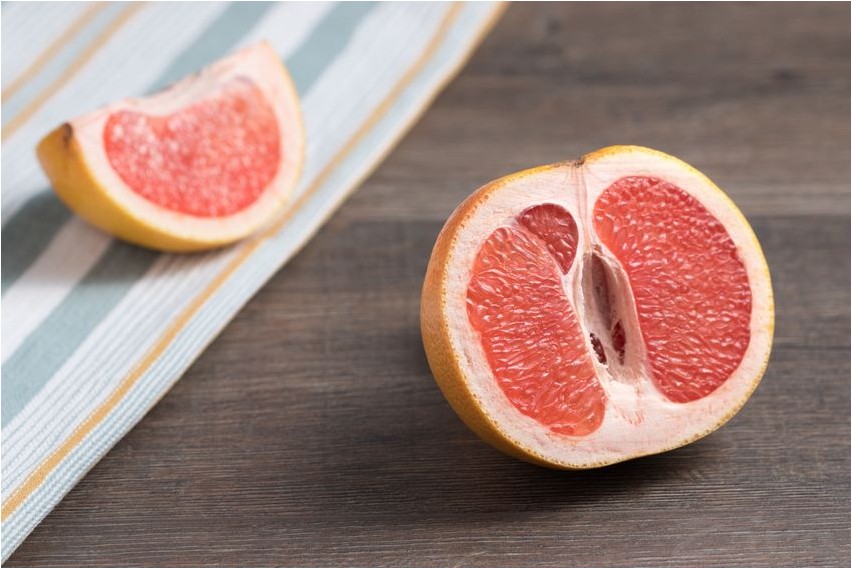
Grapefruit (lat. Citrus paradisi) is a citrus tree belonging to the Rutaceae family. Currently, there are about two dozen different varieties of this crop.
History
The grapefruit first appeared in Barbados in 1650. And it acquired its first name only a century later, in 1750: the well-known Griffiths Hughes unexpectedly called this citrus fruit “forbidden fruit.” This fruit was renamed into the familiar “grapefoot” by enterprising Jamaican traders only in 1814. It was at that time that both the volume of consumption and the popularity of these fruits increased significantly, as a result of which in the United States they began to be cultivated on an industrial scale in 1880. The largest grapefruit plantations are now in Florida and Texas. And grapefruits for supplies to European countries are mostly cultivated in Cyprus and Israel.
Description
Grapefruit is an evergreen subtropical tree whose height can vary from five to six meters. True, occasionally trees can grow up to thirteen to fifteen meters in height.
Thin and long grapefruit leaves (on average, their length is fifteen centimeters) are painted in dark green tones. And the white flowers, reaching five centimeters in diameter, are endowed with four or five petals.
The diameter of juicy grapefruit fruits ranges from ten to fifteen centimeters. Outwardly, they somewhat resemble oranges. Inside each fruit you can find sourish pulp divided into slices. And the color of the pulp, depending on the variety, can vary from rich reddish-ruby to delicate light yellowish. The skin of grapefruits is mostly yellow, but in varieties with reddish flesh it sometimes has a slight reddish tint.
Usage
Grapefruit fruits are almost always eaten raw, but sometimes their pulp is added to spicy or light fruit salads. Grapefruit is also widely used to obtain delicious juice. And sometimes they make wonderful jam from it.

The essential oils contained in these fruits are actively used in the alcoholic beverage and confectionery industries, as well as in the perfume industry — a wide variety of eau de toilettes and colognes are made from them.
A number of substances contained in grapefruits can actively interact with certain medications. Therefore, it would not hurt anyone who uses certain medications to clarify how grapefruit can affect the body while taking them. And even more so, it is unacceptable to use grapefruit juice together with medications — it can cause an overdose effect by increasing the content of active substances in the blood.
If you eat one grapefruit a day, you can significantly reduce your blood cholesterol levels. This fruit is especially useful for people with circulatory diseases and coronary heart disease, because high cholesterol has always been an additional risk factor for them. At the same time, grapefruits with red flesh can lower cholesterol much more than their counterparts with yellow flesh. Grapefruit is also a wonderful dietary product that can help you lose extra pounds.
Grapefruit seed extract has a powerful antifungal and pronounced antimicrobial effect. And the juice of these fruits helps increase the acidity of gastric juice, so it is recommended for people with low acidity.
To enjoy a grapefruit, cut it with a sharpened knife, after which the core and part of the films adjacent to it are removed from each half. Then sugar is poured into the resulting depression and the gradually formed sweet juice is extracted with a spoon. And if you want to eat slices, then in order to get rid of excessive bitterness, you need to remove the leathery translucent film enveloping each segment.