Marula
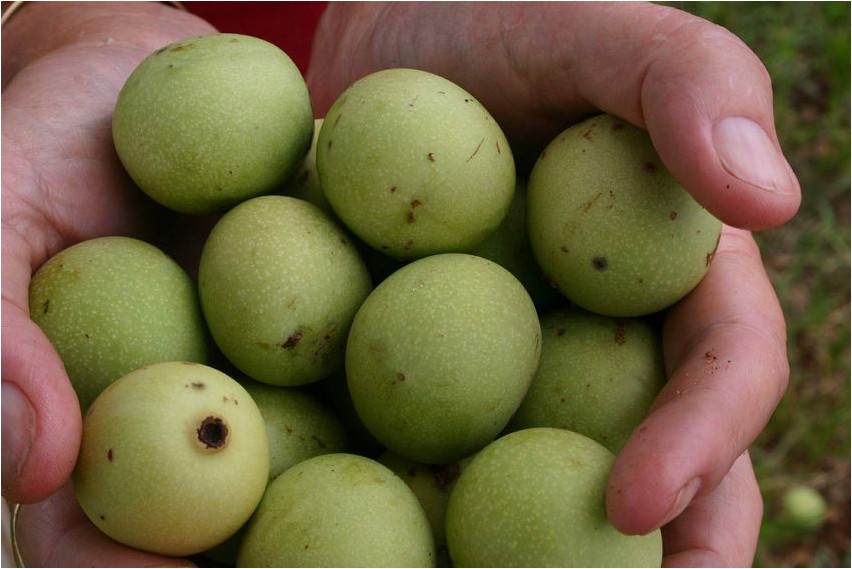
Marula (lat. Sclerocarya birrea) is a fruit tree belonging to the Sumacaceae family. Marula is also called Ethiopian sclerocaria.
History
Marula is a unique plant native to the wooded areas of Western and Southern Africa. In distant Africa, marula began to actively spread following the migration of the Bantu tribes — from time immemorial, these nutritious fruits were an integral part of their diet. And this is confirmed by numerous archaeological finds. In addition, both the fruits and leaves of marula have long been the food of many animals living in South Africa — they are consumed with great pleasure by waterbucks, slender giraffes, forest antelopes and warthogs. Elephants, monkeys and pigs also drink the fermented juice of overripe fruits falling to the ground.
Description
Marula is a deciduous, single-stemmed, dioecious fruit tree, endowed with grayish bark dotted with convex round spots and a fairly wide, lushly unfolding luxurious crown. The height of marula can reach eighteen meters.
The grayish-greenish leaves of this crop are collected closer to the tips of the branches in small groups of four to ten leaves each, thereby forming fancy spiral rosettes. Each rosette is crowned with a single leaf directed directly to the sky.
Since marula is a bisexual plant, female and male flowers grow on completely different trees. The appearance of the flowers is also different: the female flowers are slightly smaller, sit on rather long legs and have reddish-purple petals framed by white edges. And the male flowers, scattered throughout the trees in sparse pinkish tassels, are larger in size and brighter in color. Marula usually begins to bloom in July, and its flowering can continue until January.
The ripened fruits, covered with thin yellow skin, contain white pulp rich in vitamin C. By the way, juicy marula contains eight times more vitamin C than the oranges we are used to. Quite tart and incredibly juicy marula pulp has a rather strong smell of turpentine. However, this fruit is incredibly tasty. And the outwardly attractive marula fruits are very reminiscent of plums. Inside each fruit you can find a very hard stone.

Marula is capable of bearing fruit even twice a year. This usually happens before the rainy seasons (September-October or March-April).
Application
Marula is eaten fresh, and the pulp of the fruit is also used to prepare a wide variety of alcoholic drinks, jellies or juices. The well-known liqueur “Amarula” is prepared with the addition of marula. Children drink chilled juice from this fruit with great pleasure, and the pulp is an excellent addition to original exotic dishes. They even make candies from marula!
The kernels of marula seeds, rich in fats and proteins, are also eaten. In addition, they serve as excellent raw materials for oil production.
Africans prepare a very tasty tea-like drink from a decoction of the peel of the fruit, and the roasted peel is an excellent substitute for coffee.
And soft marula wood is very actively used for artistic carving — beads, figurines and other ethnographic souvenirs are made from it. Quite strong ropes are made from the inner part of tree bark, and the bark itself serves as raw material for making brown paint.
Growing
In general, marula is not very picky about soils, but it grows best on light loams. But this plant really doesn’t like sandy soils: even if it grows on them, the marula will neither bloom nor bear fruit in this case.





