Brukenthalia
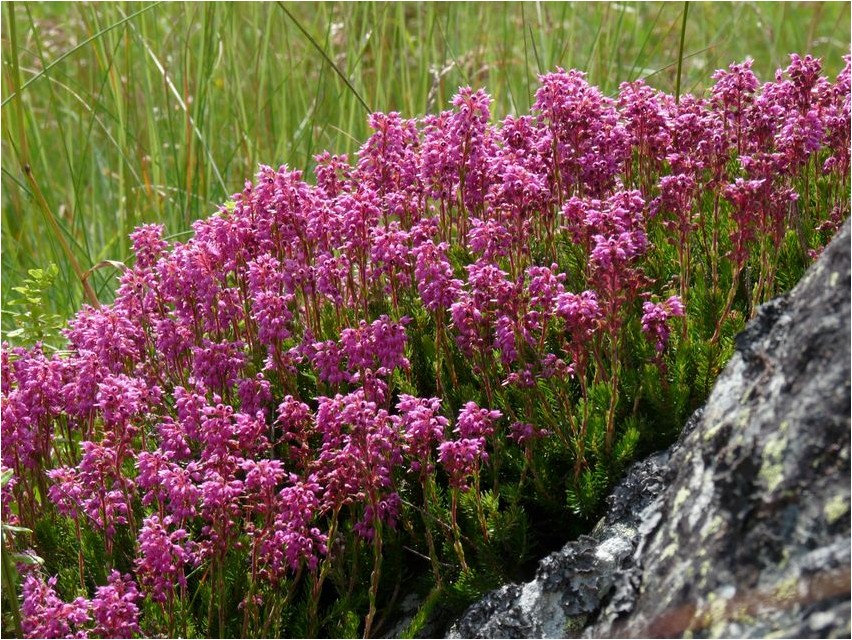
Brucenthalia (Latin: Bruckenthalia) is a genus of beautifully flowering ornamental shrubs in the Ericaceae family. Brukenthalia is native to Asia Minor and Central Europe. Typical habitats include mountains, coniferous forests, and subtropical meadows.
Cultural Characteristics
Brucenthalia is an evergreen shrub up to 20 cm tall with a compact crown, resembling heather in appearance. The branches are slender, numerous, and ascending. The flowers are small, light pink, gathered in spike-shaped inflorescences, have a pleasant, rich aroma, and are borne at the tips of the shoots. Brukenthalia blooms in summer, in central Russia beginning in late August.
Brucenthalia spiculifolia is one of the most common species. It is an evergreen shrub 20-25 cm tall with a broad rhizome and numerous shoots. The branches are brown, covered with densely seated, needle-like, rich-green leaves, which give the plant a “fluffy” effect. Light pink flowers with a slight lilac tint are gathered in loose, spike-shaped inflorescences up to 3 cm long, rising above the foliage in even rows. The flowers have a strong but very pleasant fragrance, which persists even when dried. This species is not known for its winter hardiness, but one cultivar, specifically the “Balkan Rose” cultivar, can withstand significant frosts.
Growing Conditions
Bruckentalia is a heat-loving, sun-loving shrub; some species tolerate partial shade. It can thrive in groups of other beautifully flowering, low-growing shrubs. Brukenthalia is undemanding regarding soil conditions, the only requirement being highly acidic soil. The plant tolerates drafts and strong winds poorly, as well as external pollution and cold nights.
Care
Water the Brukenthalia only during droughts, but this does not apply to young specimens aged 1 to 3 years; they need to be moistened as the soil dries. In winter, cover the shrubs with spunbond or spruce branches, and mulch the soil around the trunk with peat, fallen leaves, or coniferous wood materials to a depth of 10-15 cm. Fertilizing is important; two applications per season are sufficient. The first application is in the spring, the second before flowering.
Propagation and planting details
Brukenthalia is propagated by seeds, cuttings, root layering and dividing the bush. The seed method is not always effective, but more than 50% of the seeds will definitely germinate (subject to all conditions, of course). Cuttings are carried out in the summer. Before planting, cuttings are treated with growth stimulants, otherwise the rooting percentage will not even reach 40%.

Brukenthalia seedlings are planted to a depth of 40-50 cm. An earthen roller is formed at the bottom of the planting hole, the soil mixture for which is prepared from coniferous soil or compost, sand and peat in a ratio of 2:1:3. If there is clayey and compacted soil on the site, drainage must be made from stone chips or broken bricks. Crushed limestone is not recommended for drainage. After planting, the soil in the tree trunk area is watered and mulched with natural material.
Application
Brukenthalia is used in landscaping gardens. It looks harmonious in group and single plantings, and is magnificent in heather gardens. In the latter case, Brukenthalia will begin the flowering parade of some representatives of the Ericaceae family, in particular heather and Erica. Brukenthalia is combined with ground-blooded plants, as well as with tall herbaceous perennial crops. Brukenthalia is also suitable for creating original borders, alpine slides and other types of flower beds.





