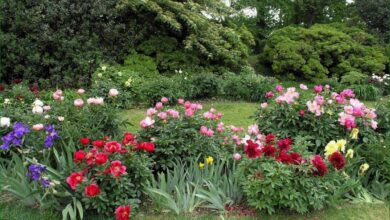
Rhododendron
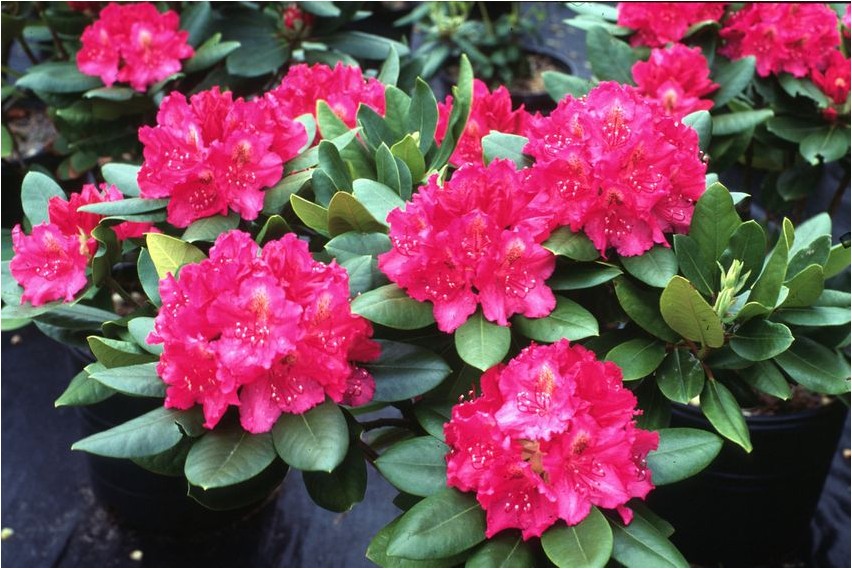
Rhododendron (lat. Rhododendron) is an ornamental shrub or tree of the Heather family. Rhododendron is native to the countries of the Northern Hemisphere.
Characteristics of culture
Rhododendron is an evergreen, semi-evergreen or deciduous shrub, or less commonly a tree with simple, leathery leaves of various shapes and colors. The flowers are collected in corymbose or umbellate inflorescences, depending on the variety they can be white, yellow, cream, golden yellow, lemon, pink, ruby, purple, red, lavender, blue, blue-violet and dark purple.
A distinctive feature of rhododendron inflorescences are the long curved stamens, which give the plant a special attractiveness. The crop blooms in late April — early June; some varieties may bloom again in the first or second decade of September. Flowering is short-lived, however, almost all shrubs retain their decorative properties throughout the entire gardening period. There are currently about 1, 300 species of rhododendron.
Common types
*Daurian rhododendron (lat. Rhododendron dahuricum) — the species is represented by deciduous, highly branching shrubs 1. 5-2 m high. The branches are directed upward. The leaves are elliptical in shape, reach 0. 8-1. 2 cm in width, 1. 5-3. 5 cm in length. The flowers are single, less often double, the corolla is pink-lilac in color, about 4 cm in diameter. Flowering occurs in late April — early May.

* Tree rhododendron (lat. Rhododendron arborescens) — the species is characterized by erect deciduous shrubs 2-3 m high. The leaves are ovoid or lanceolate, very thin, 4-9 cm long. The flowers are white with a pinkish tint, collected in inflorescences of 3-6 pieces. Tree rhododendron blooms in mid-June — early July.
*Yellow rhododendron (lat. Rhododendron luteum) — the species is represented by deciduous spreading shrubs up to 3 m high. The leaves are oblong-lanceolate, reaching 4-12 cm in length. The flowers have a pleasant and very strong aroma, collected in inflorescences of 7-12 pieces. Flowering occurs simultaneously with the leaves blooming, usually at the end of May.
*Rhododendron Kamchatka (lat. Rhododendron сamtschaticum) — the species is characterized by creeping deciduous shrubs about 30 cm high. The molds are thin, round in shape, 3-5 cm long. The flowers are on long stalks, flat, lilac-pink in color, collected in corymbose inflorescences. Kamchatka rhododendron blooms in June.
*Canadian rhododendron (lat. Rhododendron canadense) — the species is represented by deciduous branched shrubs 0. 7-1 m high. The leaves are oblong, elliptical in shape, 2-5 cm long. The flowers are purple-violet, white or pink, collected in inflorescences of 3-7 pieces. Flowering occurs in May before the leaves bloom.
*Rhododendron Faurie (lat. Rhododendron fauriei) — the species is characterized by erect, highly branched, evergreen shrubs 2-3 m high. The leaves are oblong, lanceolate, 8-20 cm long, 4-5 cm wide, covered with dense grayish felt on the underside. The flowers are cream with a soft pink tint or green specks, or pure white, collected in inflorescences of 15-20 pieces. This species blooms in June.
*The largest rhododendron (lat. Rhododendron maximum) — the species is represented by branched evergreen shrubs 1-4 m high, and sometimes 12 m high. The leaves are oblong, ovoid or lanceolate, 10-30 cm long, 4-7 cm wide. The flowers are white, light pink or purple-pink with orange or greenish speckled, inflorescences are 3-4 cm in diameter. Flowering occurs in late June — early July.
Growing conditions
Rhododendron is a shade-tolerant crop, prefers semi-shaded areas, and does not tolerate abundant sunlight. The soil for growing shrubs is preferably loose, well-drained, rich in humus, with a pH of 4-4. 5.
Rhododendron has a negative attitude towards areas with stagnant water and high groundwater levels, since excessive waterlogging can cause many fungal diseases. Most of the crop varieties common in Russia are moderately frost-resistant.
Reproduction and planting
Rhododendrons reproduce in several ways: by seeds, layering, dividing bushes, cuttings and grafting. The seeds are sown at the end of February in wooden boxes filled with soil substrate. The crops are sprinkled with water, covered with glass and placed in a warm place (room temperature should be at least 18-20C). Depending on the species, seedlings appear 8-20 days after sowing. Seedlings sprout in about 2-3 weeks. With the onset of warmth, pots with rhododendrons are periodically exposed to fresh air for hardening. Seedlings are planted in the ground no earlier than the first ten days of June.
Growing rhododendrons from cuttings is a complex and painstaking process, as rhododendrons are difficult to root. Shrubs are propagated by cuttings in the first half of July. The cuttings are then treated with special rooting stimulants to accelerate root formation. Rhododendron seedlings are planted either in the fall or early spring. Planting material is purchased only from reputable nurseries.
Care
The main tasks in caring for rhododendrons are weeding and loosening the soil around the trunks, regular watering, and fertilizing with mineral fertilizers. It”s important to remember that rhododendrons do not respond well to fertilizers containing lime. Mountain and dwarf varieties of rhododendrons only accept fertilizing in extreme cases and only with organic matter. Fertilizers are applied in early spring or early June. Fertilizing in the second half of summer is not recommended, as this can cause delayed shoot growth and even freezing during the winter.
Sanitary pruning is performed annually, removing damaged and dead branches, and shaking off faded inflorescences. Formative pruning is also necessary, carried out immediately after flowering. In extreme heat and sun, rhododendrons should be sprayed, and the water should be acidified with organic acids before treatment. The soil around the trunk is mulched with peat or sawdust.
With the onset of cold weather, sensitive rhododendron varieties are covered with spruce branches or other breathable covering material. To prevent damage to the branches and buds located at their tips, special cone-shaped wooden frames are inserted into the soil before covering the plants with insulation. Application
Rhododendron is a shrub with excellent ornamental properties. It can enhance both group and solitary plantings. It pairs beautifully with conifers such as pine, spruce, yew, and arborvitaes. It looks magnificent against the backdrop of parterre lawns and against the walls of buildings and residential buildings. Tall rhododendrons are suitable for creating hedges, while low-growing ones are suitable for rock gardens. The main rule: do not plant deciduous and evergreen rhododendron species next to each other.
Rhododendron Varieties and Types