Heteromeles arborescens
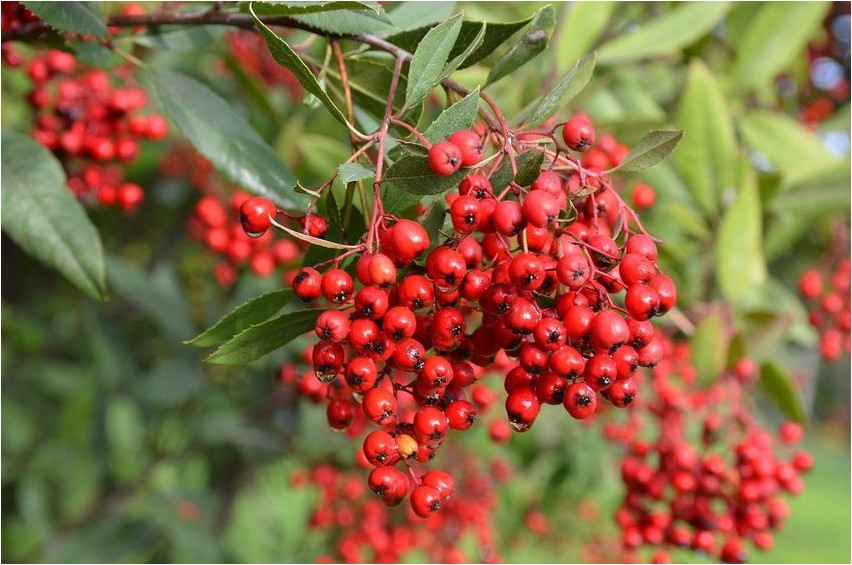
Heteromeles arbutifolia (lat. Heteromeles arbutifolia) is an evergreen perennial from the Rosaceae family. Its second name is toyon. And sometimes this crop is called a Christmas berry.
Description
Tree-leaved heteromeles is an evergreen perennial shrub, the height of which ranges from two to five meters, however, under particularly favorable conditions such bushes can stretch up to ten meters. All bushes are covered with durable reddish-grayish bark.
The width of the leaves of this plant, serrated along the edges, is from two to four centimeters, and the length is from five to ten centimeters. And they are attached to the shoots using short petioles.
Tree-leaved heteromeles blooms with five-petalled white flowers, the diameter of which can vary from six to ten millimeters. These flowers are pollinated by butterflies, and their sweetish aroma is somewhat reminiscent of the aroma of hawthorn flowers. As for flowering time, it usually falls in June-July.
The fruits of heteromeles arborifolia are bright red drupe apples reaching a diameter of five to ten millimeters (about the same as those of hawthorn). They usually grow in fairly large clusters, and their ripening occurs in September and October. These berries are loved not only by birds, but also by some representatives of the animal world — coyotes, bears, etc. However, these fruits do not cause any harm to animals and birds. And the seeds of heteromeles arborifolia boast resistance to digestive juices — this feature allows birds and animals to distribute them along with their own excrement.
Where does it grow
The natural habitat of Heteromeles arborifolia is Northwestern Mexico and Southwestern California. However, recently it has gradually spread beyond these territories.

Application
The berries of Heteromeles arborifolia are sometimes eaten fresh, even though they have an astringent and rather sour taste. In addition, these fruits contain a certain amount of cyanogenic glycosides that can cause serious poisoning of the body (in the digestive tract they are gradually converted into hydrocyanic acid), so they should be consumed with extreme caution. The best option to avoid poisoning is to heat treat the fruits: even minor cooking copes well with this problem. These berries also make delicious soft drinks, jellies and wines. By the way, sometimes they are added to custard — in this case they act as a very piquant seasoning.
The fruits of this crop boast a rich content of various mineral elements and vitamins. They are especially rich in tannins, vitamin C and beta-carotene.
A decoction of the leaves of heteromeles arborifolium is an excellent antispasmodic and is often used for abdominal pain — this property of the leaves was noticed by ancient tribes. And the graceful openwork crowns of these shrubs allow them to be used in gardening and forestry, as well as in the subtropics for soil and forest protection cultivation (especially often in California).
Contraindications
It is categorically not recommended to consume the fruits of heteromeles arborifolia fresh — it is unlikely that anyone will be pleased with the prospect of poisoning with cyanogenic glycosides. These berries can be eaten only after proper heat treatment.
You should not use Heteromeles arborescens if you have an individual intolerance, as well as in case of exacerbation of any gastrointestinal diseases.





