Rhubarb fibrous
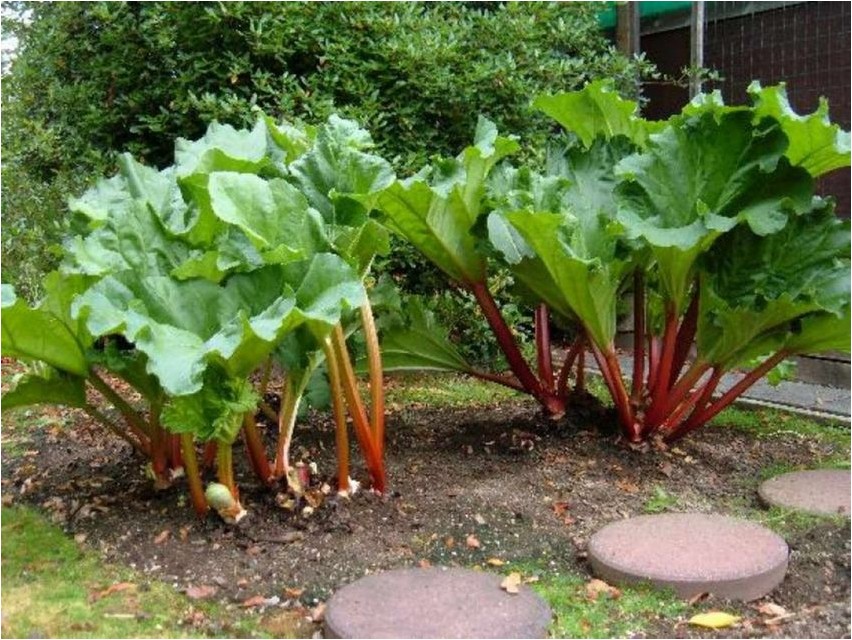
Fibrous rhubarb is one of the plants of the buckwheat family; in Latin the name of this plant will be as follows: Rheum udulatum L.
As for the name of the fibrous rhubarb family itself, in Latin it will be: Polygonaceae Juss.
Description of fibrous rhubarb
Fibrous rhubarb is a perennial herbaceous plant endowed with a rather powerful taproot. The leaves of this plant are triangular, their length will vary between fifteen and sixty centimeters. Such leaves are endowed with a wavy edge and a crescent-shaped base, as well as long and wide petioles, which can be either colored or green. The upper stem leaves of fibrous rhubarb are sessile. The inflorescence of this plant will be paniculate, the flowers are quite small in size, and the perianth will consist of oblong-ovate yellow leaflets. The fruits of fibrous rhubarb are ovoid in shape, they are dull brown nuts, the length of which is eight millimeters and the width is about six to seven millimeters. The fruits will also be endowed with wings with a vein in the middle, which are colored light brown. Reproduction of this plant occurs through seeds.
Fibrous rhubarb blooms from May to June. Under natural conditions, this plant is found in Eastern Siberia. It is noteworthy that this plant is grown in cultivation as a vegetable. Due to the fact that fibrous rhubarb is a fairly cold-resistant plant, it can also be grown in the northern regions. For growth, this plant prefers sandy soils, forest edges and sparse forests.
Description of the medicinal properties of fibrous rhubarb
Fibrous rhubarb is endowed with very valuable healing properties, and it is recommended to use the leaves and roots of this plant for medicinal purposes. The presence of such valuable healing properties is recommended to be explained by the content of anthraquinones and stilbene rapotigenin in the roots; stilbene rapotigenin will also be present in the rhizomes. The aerial part of fibrous rhubarb contains catechins, anthraquinones, flavonoids, stilbene raponticin and phenolcarboxylic acids.
As for traditional medicine, here this plant is very widespread. Traditional medicine recommends using this plant as an antiscorbutic and laxative. A decoction and infusion prepared from rhizomes and roots should be used for flatulence, rheumatism, food poisoning, intoxication, internal bleeding, stomach and duodenal ulcers, inflammatory infections of the female genital area and food toxic infections.

It is noteworthy that fresh juice and aqueous extract of fibrous rhubarb are endowed with very effective protistocidal properties. It should be noted that this plant is quite widely used in the liquor production, used for making jam, pies, jelly, marmalade, compotes and candied fruits.
However, you should remember the fact that during pregnancy, taking medicinal products based on this plant is strictly prohibited.
For food poisoning, intoxication, rheumatism and flatulence, it is recommended to use the following very effective healing remedy based on this plant: two teaspoons of crushed roots and rhizomes of fibrous rhubarb per glass of boiling water. The mixture is infused and taken three times a day, one third of a glass.





