Karatavi onion
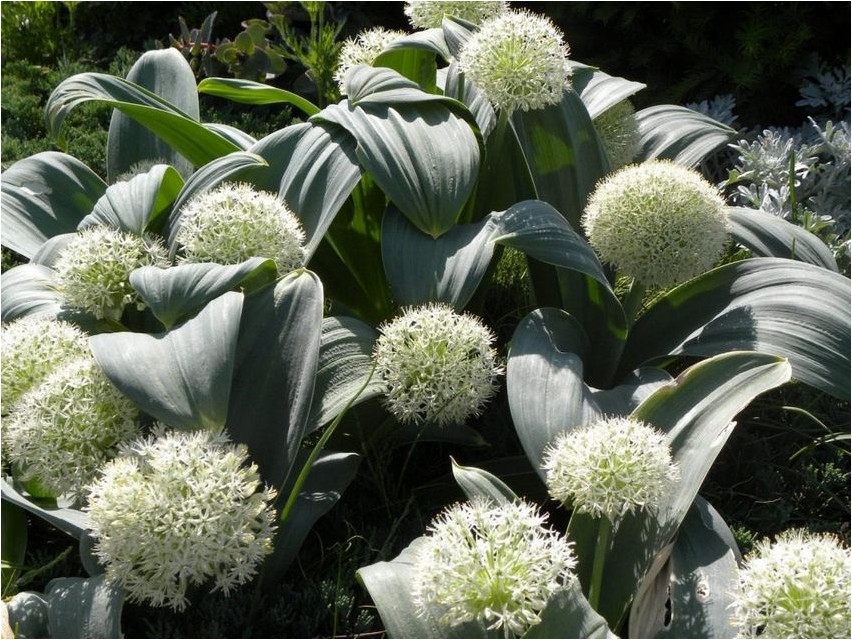
karatavi onion (lat. Allium karataviense) is a representative of the Onion genus of the Onion family. A perennial herbaceous plant most often used in garden design.
Natural habitat — Western Tien Shan and the foothills of Altai. Typical sites are scree and limestone.
Characteristics of culture
Karatavsky onion is a plant with a spherical bulb reaching 2-6 cm in diameter. The bulb shells are gray or blackish, paper-like. The stem is strong, up to 25 cm high, often 1/3 or 1/2 immersed in the ground. The leaves are lanceolate or elliptical, smooth along the edges, always longer than the stem. The flowers are collected in spherical, dense, multi-flowered inflorescences. The perianth is star-shaped, pink-violet. The tepals are obtuse, linear, and over time slightly curl and bend. The fruit is an obovate capsule.
Subtleties of cultivation
In cultivation, Karatavsky onion is unpretentious, but it blooms better on light, loose, moderately moist, neutral soils rich in nutrients. They have a negative attitude towards waterlogged soils and easily tolerate short droughts. Stagnation of water is not acceptable; this can cause rotting of the bulbs, resulting in the death of the plants. Karatavsky onion is a photophilous and heat-loving crop that does not tolerate dense shade.
Karatavsky onion is propagated by seeds and baby bulbs, which are formed during the growth process. In one area, the plant is able to develop normally for several years, although over time the plantings become very dense, and this leads to smaller leaves and poor flowering. For this reason, plantings of Karatav onion must be regularly thinned, or rather, divided.
Plants are divided every 3-5 years. Bulbs are dug up only after the leaves have died and the seeds have fully ripened. Planting is carried out at the end of September, in warm regions — at the beginning of October. The planting depth depends on the size of the bulb. The distance between the rows should be about 20-30 cm. Sowing the seeds of Karatavsky onion is carried out in the fall. Spring sowing is also not prohibited. Plants grown from seeds bloom only in the third year of life.

Caring for Karatavsky onions is not at all difficult; it consists of weeding and loosening the rows, rare watering and fertilizing. Mulching is also necessary. Natural materials, including peat and humus, can be used as mulch. Plants are fed in early spring, before flowering and at the end of summer. It is recommended to use complex mineral fertilizers for fertilizing. Fresh organic matter should not be used.
Usage
Karatavian onion is valued in ornamental gardening. It is used in group plantings on the lawn, as well as in the design of mixborders, rock gardens, borders and other types of flower beds. Plants are planted in the background or middle ground. Low-growing forms look more harmonious in the first line. Caratavian onion is also suitable for cutting. The inflorescences of the plant can also be used to make winter bouquets.