Real cardamom
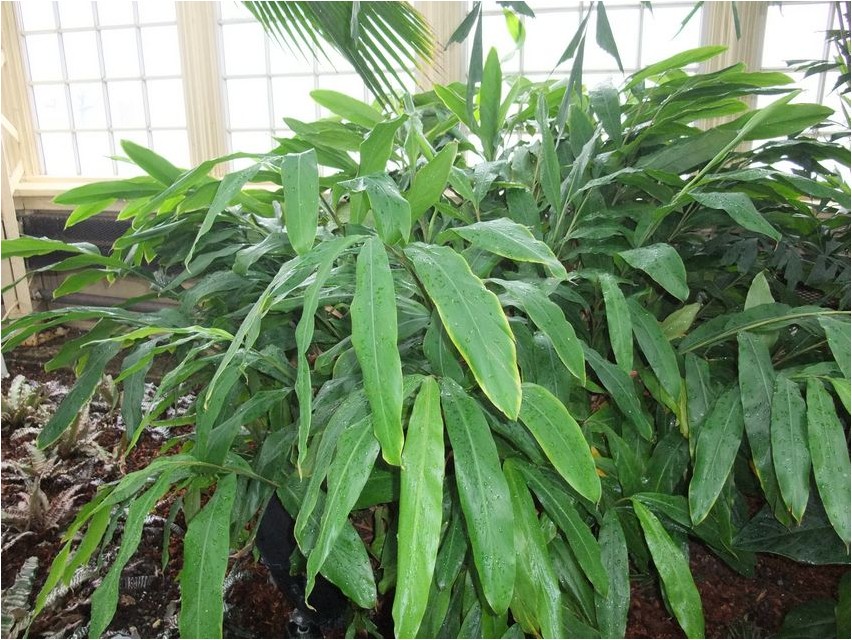
True cardamom is one of the plants of the ginger family; in Latin the name of this plant will be as follows: Elettaria cardamonum White et Maton.
As for the name of the true cardamom family itself, in Latin it will be like this: Zingiberaceae.
Description of real cardamom
True cardamom is a perennial herbaceous evergreen tropical plant, endowed with a fairly large rhizome, from which several herbaceous stems will extend, the height of which will be equal to two to three meters. The leaves of this plant are broadly lanceolate and quite long: their length reaches sixty centimeters. The inflorescence of true cardamom is a long raceme. The flowers of this plant are irregular, they are endowed with a simple white perianth and a wide white lip. Such a lip, in turn, will be endowed with a yellowish edge and dotted with radiant veins, painted in blue tones. The fruits of this plant are capsules endowed with numerous seeds, the ripening of which occurs very slowly, over approximately seven to eight months.
For growth, true cardamom prefers damp mountain forests of South India and Vietnam. It is noteworthy that this plant is cultivated in Southern China, India, Indochina, as well as in Central America, especially in Guatemala.
Description of the medicinal properties of real cardamom
It should be noted that true cardamom seeds are quite widespread in the food industry. The capsules should be collected while still unripe. The seeds of this plant contain essential oil, which is contained in a special layer of the peel. This oil contains borneol, ternisol, limonene, their esters and cineole.
Real cardamom should be stored without separating the seeds from the pods: this is done in order to avoid the volatilization of the essential oil. Before use, real cardamom seeds should be husked from the pods, and then such seeds can be added to the dish. Real cardamom will add a completely unique taste to honey gingerbread, marzipan, fruit cakes, liver and yeast pies. It should be noted that sometimes ground real cardamom can be added to black coffee. It is noteworthy that the seeds of some other ginger plants can serve as substitutes for this plant.

In folk medicine, the rhizomes of this plant are used as a valuable stimulant, and also for kidney stones, renal colic, and dysentery.
The fruits of cardamom are also recommended as a highly valuable and effective stomach remedy, as well as for coughs, rheumatism, and runny noses. Overall, cardamom has a very beneficial effect on the entire body. This plant stimulates and even regulates the secretion of gastric juice, and also has appetite-stimulating properties that promote digestion. Furthermore, cardamom has pain-relieving properties, and it’s worth noting that this effect is quite strong, and this plant can quickly help relieve pain. Furthermore, as already noted, cardamom helps improve overall tone, and this effect is quite effective. It’s worth noting that, because the plant’s chemical composition hasn’t been fully studied, new uses for it are likely to emerge in the near future.
Cardamom: Beneficial Properties





