Tomato
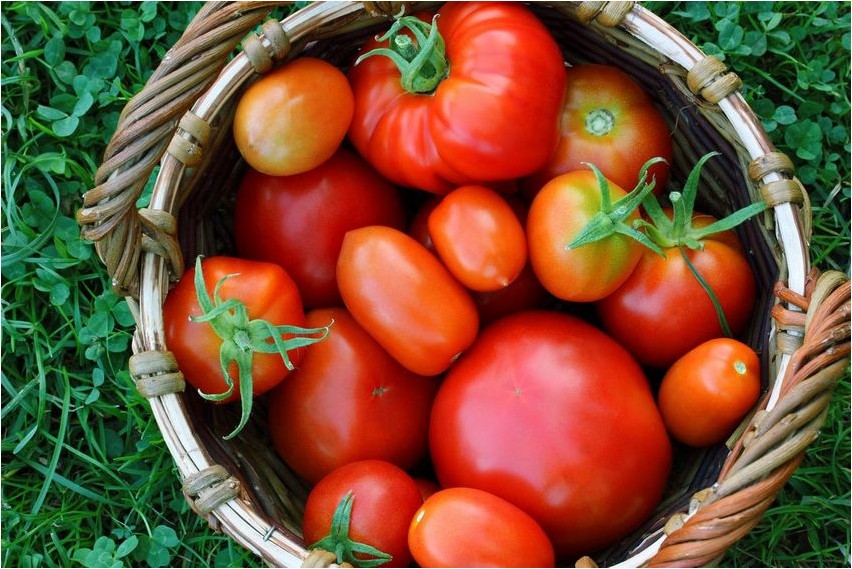
Tomato (Solanum lycopersicum) is a popular vegetable, an annual herbaceous plant of the Solanaceae family.
Characteristics of culture
Tomato is an annual crop. The root of a young plant is taproot, becomes branched as it grows, and forms a large number of roots located in the top layer of soil. Individual roots can reach a depth of 1. 5 m. The stems are herbaceous, strongly branched, erect, prone to lodging; during growth they form stepsons growing from the axils of the leaves. The foliage is large, odd-pinnate, dissected, on the outside, grayish-green on the inside.
The above-ground part of the crop is pubescent and, when rubbed, releases a light yellow, watery liquid with a not entirely pleasant odor. Tomato flowers are light yellow, collected in racemes, and sit in tiers on the stems. There are self-pollinating and cross-pollinating varieties. When growing freely, the bushes of the plant reach a height of 1. 5-2 m. The fruits can be of a wide variety of shapes, sizes and colors. Red varieties are very popular.
Subtleties of cultivation
Tomatoes are considered heat- and light-loving plants. If the crop is planted in a shaded area, it will produce a poor harvest, the fruits will be tasteless, and the plant will be susceptible to various diseases. The optimal temperature during the day for growing tomatoes is +22-23C, and at night +16-18C
Sowing seedlings
On the territory of the Russian Federation, tomatoes are grown exclusively by seedlings; subsequently, the seedlings are transplanted into the ground or greenhouse. Before sowing tomatoes, the seeds are treated with a weak solution of potassium permanganate for pickling, after which they are washed under running water, laid out on a damp cloth or gauze, wrapped, placed in a plastic bag and put on the bottom shelf of the refrigerator. It is important to ensure that the fabric is constantly damp, but there should not be excess water on top of it.
The soil for sowing tomatoes is prepared in the fall, or purchased at gardening stores or nurseries. Sowing boxes are filled with soil fertilized with complex mineral fertilizers, or soil substrate, which is made up of garden soil, humus and peat. Shallow grooves are formed on the surface of the soil in the box, leaving a distance of 5 cm between them, the seeds are sown and covered with soil. Immediately after sowing, the soil is moistened with a spray bottle, the boxes are covered with plastic wrap and placed in a warm place.

After the shoots emerge, the film is removed and the boxes are placed in a well-lit place. The optimal temperature for growing seedlings is 18-20C. Tomatoes need additional lighting; for this you can use fluorescent lamps. Lighting from all sides promotes uniform growth of seedlings, the plants become stronger and practically do not stretch. To prevent the spread of diseases, plants are sprayed with a weak solution of potassium permanganate. The seedlings are fed with mineral fertilizers, humus or compost every 10-12 days.
When the seedlings have 2-3 true leaves, the tomatoes are picked into separate containers. Before picking, water the plants well, carefully remove the seedling from the soil using a fork and place it in a container filled with soil substrate. After the procedure, the plants are watered at the root with a solution of sodium humate and dusted with wood ash. Picked tomatoes continue to be grown on windowsills, illuminated with fluorescent lamps. As a rule, after a week the seedlings take root and begin to grow.
Before planting seedlings in the ground, they are fed and hardened, periodically taking them out into the fresh air. At the moment flower clusters form on the seedlings, they are planted.
Planting seedlings
The beds for tomatoes are prepared in the fall: the ground is dug up and loosened, humus and wood ash are added. With the onset of spring, they loosen the ground, dig holes that are not too deep, fill them with plenty of soft and settled water, and begin planting seedlings. Holding the seedling with your hand, fill the hole with soil, lightly compact it and water it.
Care procedures
Caring for tomatoes is a labor-intensive process, but any gardener can cope with this task. Plants require regular watering, weeding and fertilizing. Once a week the crop is loosened, but very carefully, without touching the roots. This procedure will saturate the roots with oxygen, which has a positive effect on the development of tomatoes. Grown tomatoes need to be tied up, otherwise they will fall to the surface of the soil, and the fruits that appear will begin to rot. Also, as necessary, the plants” stepsons are torn off.
Harvest
Tomatoes are harvested green or ripe. They are removed from the bush with stalks and placed in boxes. Tomatoes are stored for 25-30 days at a temperature of 2-5C. Unripe fruits are stored in a dark room at a temperature of 15-18C.





