Bed bug
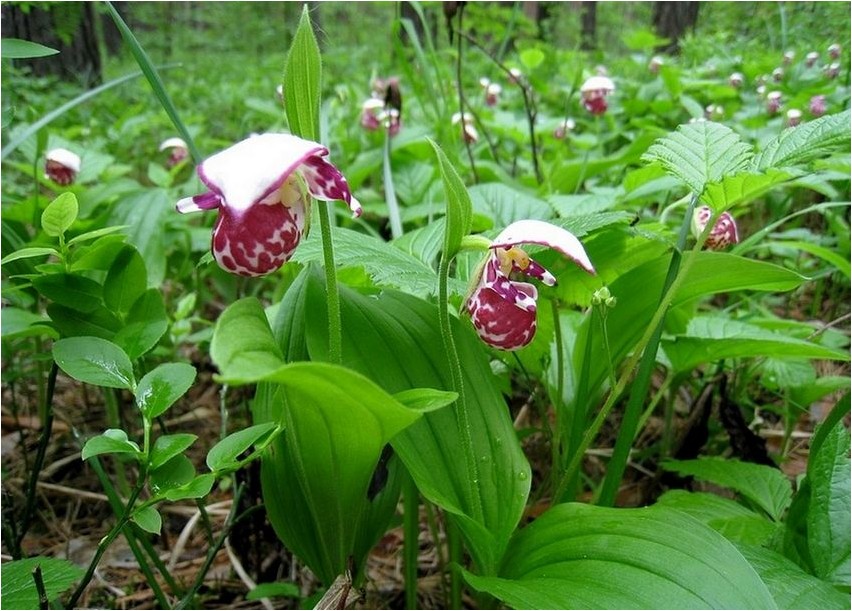
Lepidium graminifolium L. is one of the plants of the cabbage family.
As for the bug family itself, in Latin it will be like this: Brassicaceae Burnett.
Description of the grass bug
Bed bug is a perennial herbaceous plant, the height of which will fluctuate between thirty and sixty centimeters. The stem of this plant will be almost bare and straight, and also very branched. The basal leaves of the grass bug will be crenate-serrate and oblong, while the stem leaves are either entire or slightly serrated. The upper leaves of this plant will be linear and they are endowed with a very narrow border, painted in white tones. The petals of the grass-leaved bug are also painted white, and their length does not exceed one and a half millimeters. When fruiting, the brushes of this plant will be elongated. The length of the pods is two and a half to three millimeters, the width will not exceed two millimeters. The seeds of this plant are not edged; they are narrowly ovoid and colored in dark red tones.
The flowering of the grass bug occurs in the month of June. Under natural conditions, this plant is found in the Crimea and Western Transcaucasia in Abkhazia. As for the general distribution, this plant can be found in the Balkans, Central Europe and the Mediterranean. For growth, the plant prefers slopes, hills and dry rocky places.
Description of the medicinal properties of the grass bug
The grass bug is endowed with very valuable healing properties, and it is recommended to use the grass of this plant for medicinal purposes. The concept of grass includes the flowers, leaves and stems of the grass bug. The presence of such valuable healing properties should be explained by the content of the following flavonoids in this plant: glycosides of quercetin and kaempferol.
The seeds of this plant contain fatty oil, which contains the following acids: behenic, arachidic, linoleic, eicosenoic, palmitic and eicosadienoic. The seeds also contain thioglycosides, glucolepigramin, glucotropeolin and glucolimantin.

The herb of this plant is recommended for use for injuries to the skin and muscles, as well as for urolithiasis.
For urolithiasis, it is recommended to use the following very effective remedy based on the grass bug: to prepare such a remedy, you will need to take two tablespoons of crushed herbs of this plant per half liter of boiling water. The resulting mixture should be infused for two hours, after which it is recommended to strain this mixture based on bugs. Take the resulting healing agent one third or one fourth of a glass three times a day for about two to three weeks. It is important to remember that, if necessary, it is recommended to repeat this course until the desired result is achieved. It should be noted that in order to ensure the greatest effectiveness when taking such a remedy based on the bug, it is important to strictly observe not only all the rules for taking the resulting medicinal product, but also carefully follow all the rules for its administration. It is noteworthy that such a remedy based on this plant will be very effective and most often just one course of taking such a remedy will be enough for a cure, but after two courses the result becomes noticeable even in particularly severe cases.
Klopovnik
https://www. youtube. com/watch? v=sKk5C9021bQ





