Melon
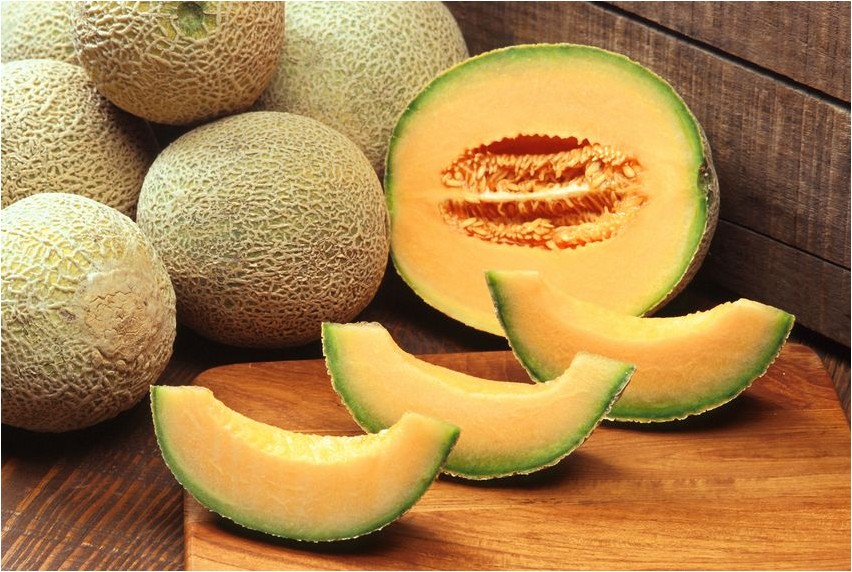
Melon (Latin: Cucumis melo) is a popular melon crop; an annual plant in the Cucurbitaceae family. Melon is native to Central and Asia Minor. In Russia, it is widely grown in the southern regions.
Crop Characteristics
Melon is a herbaceous plant with a creeping, rounded-faceted stem, 2. 5-3 meters long, covered with stiff hairs all over. The root system is robust, consisting of a main root and lateral branches that form numerous small rootlets. Most of the roots are located at a depth of 20-30 cm, with some roots extending as deep as 2. 5 meters.
The leaves are alternate, pubescent, dark green, light green, or gray-green, lacking stipules, and are borne on long petioles. Petioles are rounded-faceted, coarsely pubescent, grooved, and in some varieties, erect or oblique. The leaf blade is rounded or cordate, kidney-shaped or angular, dissected or entire, with smooth or serrated margins. Leaf length, depending on the variety, can vary from 7 to 20 cm, and width from 12 to 28 cm.
The flowers are large, yellow, and regularly shaped. The perianth is pentamerous. The corolla is fused with the calyx, funnel-shaped, and sympetalous. The petals are rounded or ovate, densely pubescent along the veins. The calyx is light green, conical or goblet-shaped, with five awl-shaped sepals. Flowering occurs in June-July. The fruit is a multi-seeded berry (also known as a pumpkin), which can be of a wide variety of shapes (from cylindrical to flattened), with a smooth or wrinkled surface. There are a huge number of melon varieties, differing in size, aroma, flavor, flesh color, and even chemical composition. The seeds are ovoid, elongated, or oval, with pointed tips, and are yellow, white, or cream-colored.
Growing Conditions

Melon is a heat-loving plant, preferring well-lit areas that receive daytime warmth, protected from cold and piercing winds. Sites on south-facing slopes are preferred. Light, moderately moist, fertile soils with a rich mineral composition and a neutral pH are suitable for growing the crop. Acidic soils require preliminary liming. Although most melon varieties are tolerant of soil salinity and waterlogging, they are extremely sensitive to soil acidification, which leads to the development of fungal diseases and dangerous pests.
Growing seedlings and preparing the soil
In central Russia, melons are grown mainly by seedlings, less often by sowing in open ground. The seeds are sown in special seedling containers or pots filled with turf soil, peat, humus mixed with mineral fertilizers and wood ash. The time for planting melon seedlings is March — April. The seeding depth is 1. 5-2 cm. Before emergence, the crops are covered with plastic film or glass. The optimal temperature is 20-25C during the day, 18-20C at night.
When the first true leaf appears on the seedlings, the plants are fed with ammonium nitrate, superphosphate and potassium chloride. After two weeks, the procedure is repeated again. Seedlings that have reached the stage of 5-7 true leaves are planted in open ground. The seedlings are first hardened. Before planting, the soil in the containers is thoroughly moistened.
The area for growing melons is prepared in the fall, the soil is dug up, rotted manure and complex mineral fertilizers are added. In the spring, the ridges are loosened and shallow holes are dug. The seedlings are carefully removed from the pots, lowered into the hole, covered with soil, compacted, watered abundantly and mulched with peat. The distance between plants should be about 55-60 cm. Important: the root collar of the seedlings should be located at ground level. And in order to avoid damage to young plants by fungal diseases, it is advisable to add a little washed river sand to the stem zone.
Care
In order to significantly speed up the process of fruit formation and ripening, experienced gardeners advise pinching melons. First, the growing points above the fourth to sixth true leaf are removed from the plants, and immediately after the formation of the ovaries, all the rest are removed. It is also advisable to carry out additional pollination of female flowers. This procedure does not take much time and can be done even by a novice gardener.
The crop requires systematic watering, but during the period of fruit formation it is reduced to a minimum. It is worth remembering that with excessive watering, the roots of the plant can rot, which has a detrimental effect on the quality and quantity of the harvest. Melons also respond well to fertilizing. The first feeding is carried out immediately after planting at the moment of formation of new shoots, the second — during the formation of buds. You should be very careful with nitrogen fertilizers, since their excess can lead to delayed fruiting. We must not forget about regular weeding and loosening between rows, as well as preventive treatments against pests and diseases.
Natalia Ivanova feat. Balagan Limited — Melon