Saraha
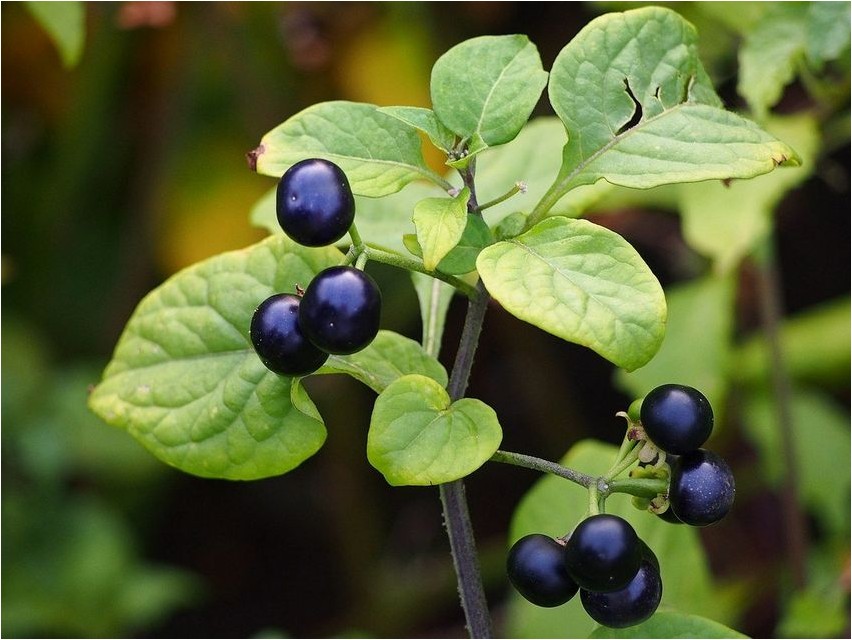
Saraha (lat. Saracha) is a genus of herbaceous plants of the Solanaceae family. The plant is native to South America. In appearance, Saraha is similar to black nightshade, which grows like a weed in potato fields. In Russia, sahara is grown only on personal plots.
Characteristics of culture
Saraha is a perennial plant, which is a spreading semi-recumbent bush with a highly branched stem, branching into two shoots at each internode. In places where the plants fork, peculiar single yellow flowers are formed, reaching 0. 5-1 cm in diameter. It is the flowers that make it possible to distinguish Saraha from nightshade.
The fruit is a berry, unripe berries are green, ripe ones are black with a waxy bluish coating. The berries are edible, but unripe berries should not be eaten. The taste of ripe berries depends solely on the growing conditions; with insufficient lighting and frequent rainfall, the fruits become tasteless or bland; under favorable conditions, they have the taste of wild blueberries with a nutty tint. The berries fall off almost immediately when ripe.
Growing conditions
Saraha fully develops on light, fertile, moderately moist, well-drained soils. Loamy and sandy loam soils with a neutral pH reaction are optimal. The culture has a negative attitude towards waterlogged soils, and this is despite the fact that plants love moisture. The location is preferably sunny, although light partial shade is not prohibited.
Growing
The crop can be grown both in open ground and in a greenhouse. In cool, rainy summers, it is preferable to grow Saraha under a film cover, in which case the berries will be sweeter and more aromatic. In central Russia, it is recommended to grow Saraha in seedlings, since the growing season is quite long and amounts to 100-120 days. Seeds are sown in the second or third decade of March in seedling boxes. The soil used is the same as for tomatoes.

With the appearance of two true leaves on the seedlings, the temperature in the room is reduced to 15-16C. In the evening, the seedlings are illuminated. During the same period, seedlings can be planted in separate containers, especially since the seedlings can easily tolerate transplantation. Seedlings with an earthen lump are planted using the transshipment method. Seedlings are planted in a permanent location after the threat of frost has passed. The seedlings are buried to the bottom leaf.
Care
Caring for the sugar is not difficult. The crop needs regular weeding, loosening and watering. Sugar grass responds positively to fertilizing; it is important not to overdo it with nitrogen fertilizers, otherwise the plants will begin to actively build up a powerful vegetative mass, which will have a bad effect on fruiting.
To obtain good harvests, the side shoots of the bushes are removed. Then they can be covered with a glass cap, under which they can easily take root, and planted in the ground. In the first ten days of August, the growing points are pinched; this procedure will speed up the ripening process of the berries. The crop is resistant to diseases and pests, is rarely affected by late blight, and more often dies from frost.





