Phellodendron
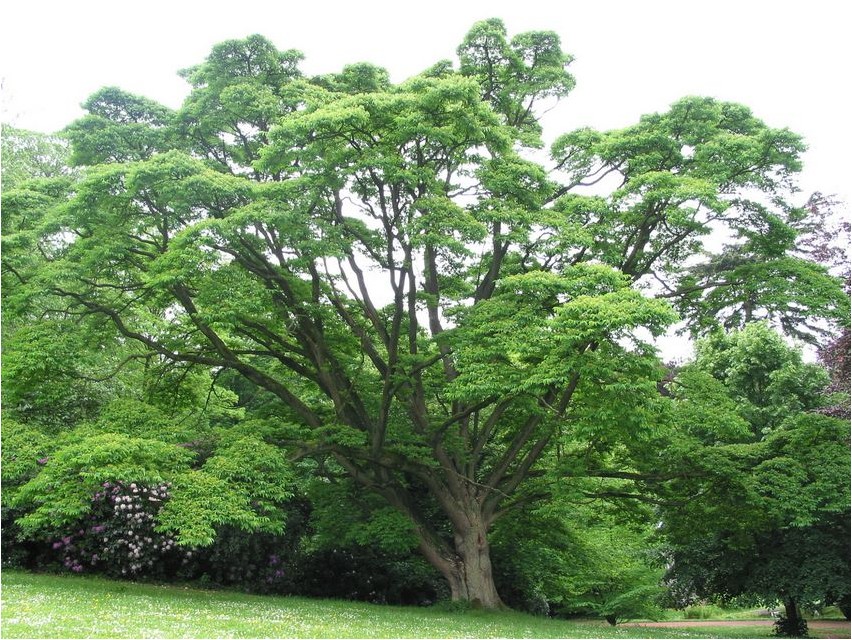
Phellodendron (lat. Phellodendron) is a shade-tolerant woody plant from the Rutaceae family. Its other name is velvet.
Description
Phellodendron is a dioecious deciduous tree, endowed with a wide oval and amazingly beautiful semi-open crown. However, its velvety bark also boasts a very high decorative value! In young plants, the bark usually has a light gray (sometimes even silver) color, and in adult specimens it gradually darkens, gradually turning dark brown. The bark of this plant is formed in two layers: the corky, velvety outer layer can reach five centimeters in width, and the bast inner layer boasts a pleasant amber-yellow color and a specific aroma.
As for young phellodendron branches, they are usually painted in light gray or dark purple tones. And the large odd-pinnate opposite leaves of this plant exude a very specific aroma. The oily leaf blades are equipped with finely toothed edges, and on each leaf you can see from seven to eleven small leaves. The glossy and bare upper sides of the leaves are usually a rich dark green, while the undersides of these same leaves will be slightly paler, with characteristic pubescence sometimes visible along their central veins. Under favorable conditions, the height of phellodendron can reach twenty-five meters, and the diameter of its trunks can reach 1. 2 m. The total lifespan of this plant can reach three hundred years!
You can admire the flowering of phellodendron in July, and the ripening of its fruits usually occurs in the second half of September or at the very beginning of October. True, only adult specimens are capable of flowering and bearing fruit, as a rule, those that have already reached the age of twenty. At the same time, some of the trees bloom every year, and the other — once every few years.
In total, the genus Phellodendron has about ten species.
Where does it grow
The main place where phellodendron grows is considered to be East Asia. It can be seen especially often in mixed coniferous-deciduous forests, as well as on the slopes of hills and not too high mountains.

Usage
Phellodendron is quite actively used in landscaping, and Amur phellodendron is especially often planted for this purpose. This plant is very widespread in both garden and park culture in America and Europe.
Also, the outer cork layer of phellodendron is very actively used in industry. The bark, leaves, flowers and inedible fruits of this stately beauty, which look like black drupes, have found their use in folk medicine. This plant is also an excellent honey plant: phellodendron honey has a characteristic greenish tint, has a very delicate and delicate taste, and also boasts a huge number of beneficial properties.
Growing and care
Phellodendron is very light-loving, so it should be planted only in open and well-lit areas. It is also quite demanding on soils — the most suitable for its cultivation are neutral and nutritious garden soils, characterized by good breathability and moisture. Slightly acidic soils are also quite acceptable. But this plant boasts very impressive drought resistance! However, phellodendron is watered more than three times a week — it needs constant soil moisture. In general, this handsome man is very unpretentious in care. And propagation of phellodendron is carried out mainly by root shoots or seeds.