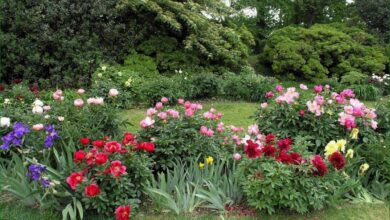
Cladrastis
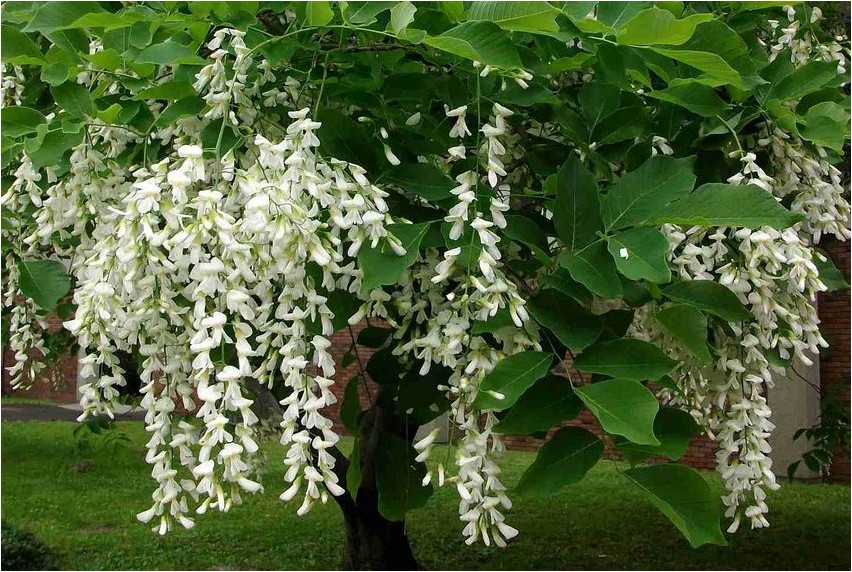
Cladrastis (lat. Cladrastis) is a genus of shrubs and trees of the Legume family. The genus has five species (according to other sources four).
In nature, representatives of the genus are found in North America and East Asia. In Russia, only one species is cultivated — Cladrastis yellow (or American yellow acacia, or Virgilia). The name of the genus comes from the combination of two Greek words “klados” — branch, “thraustos” — fragile, which directly indicates the fragility of the branches of cladrastis.
Characteristics of culture
Cladrastis is a deciduous shrub or tree up to 20 m high with a dense, tent-shaped crown. The bark is smooth, light gray. Shoots at a young age are green, pubescent, later — brown, bare. The leaves are quite large, complex, odd-pinnate, alternate, consisting of 7-11 leaflets. The apical leaf has larger parameters. The leaves are light green on the outside and gray-green on the inside.
The flowers are very fragrant, white, medium in size, equipped with a yellow spot at the base, collected in multi-flowered drooping racemes. The fruit is a bean, tapering at both ends. Cladrastis blooms in May-June for 12-14 days. In the conditions of the middle zone, the fruits are set, but the seeds do not have time to ripen.
Growing conditions
In general, cladrastis is undemanding to growing conditions. However, it develops better on loamy, slightly acidic, moderately moist soils. Neutral soils are also suitable. The location is sunny or semi-shaded, protected from piercing winds.
Reproduction
The crop is propagated by seeds. The seeds need pre-treatment: first they are scalded, then soaked in warm water for 24 hours. To increase the percentage of germination, the seeds must be scarified. Treatment with concentrated sulfuric acid is also recommended.

Stratification is not prohibited; for this purpose, the seeds are placed in damp sand mixed with peat for three months and stored at a temperature of 5C. Cuttings for culture are acceptable. The cuttings are rooted in special greenhouses. The optimal cutting length is 5-7 cm.
Care
Cladrastis is a drought-resistant crop, but watering is a must. Overmoistening is not recommended. It is advisable to prune at the end of summer. Adult specimens do not need shelter for the winter. At temperatures belo w-30C the shoots freeze severely.
Application
Cladrastis is used in garden design. It looks great in both single and group plantings. Beautifully flowering deciduous and coniferous shrubs and trees can become ideal allies. A yellow dye is obtained from cladrastis wood, which is used in industry.