Euterpe palm vegetable
Euterpe vegetable palm (lat. Euterpe oleracea) is a species of palm tree of the genus Euterpe (lat. Euterpe) of the Palm family (lat. Palmaceae). In its native Brazil, the palm is called “Acai” in Portuguese.
In culture, the palm tree is grown for its healthy and tasty berries and the edible core of the trunk.
What”s in your name
The Latin name of the genus “Euterpe” is based on the ancient Greek name of the muse of poetry and music, Euterpe (or Euterpe), which in Russian means “amusement”. The reason for this name could be the external beauty of the palm tree, or its healthy berries, which, like other earthly berries, are the raw material for the production of delicious dark purple wine.
The specific epithet “oleracea”, represented in the Russian name by the word “vegetable”, was given to the palm tree for its edible stem core, for which people specifically grow palm plantations in order to provide themselves with a valuable and tasty food product.
The Brazilian name for the palm “Açaí” is borrowed from the natives of South America and is a Portuguese adaptation of a Tupa (one of the aboriginal languages) word, the meaning of which is “[a fruit that] weeps or expels (pushes out) water.”

Description
Euterpa vegetable is native to the swamps and river floodplains of Brazil, Trinidad and the northern lands of South America. The height of slender trees is more than 25 meters.
The spreading crown, located in the upper part of the trunk, is formed by feathery leaves up to three meters long.
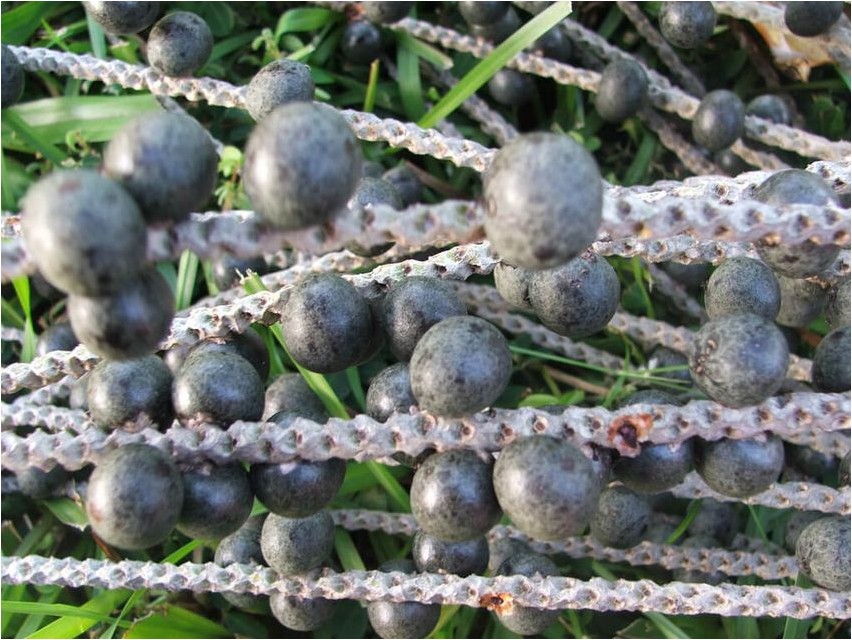
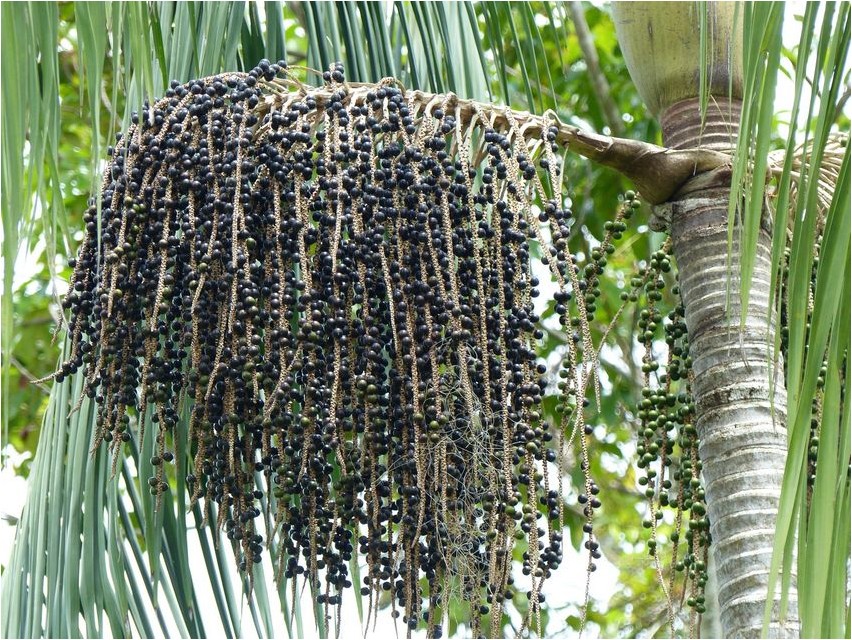
The fruit of the palm tree is a drupe, similar in appearance and black-purple color to grapes. But the size of the round berries is smaller than the size of the grapes, and the juicy internal component of the fruit is represented in smaller quantities. But the grape cluster is inferior in size to the branched palm panicles, which contain from 500 to 900 fruits.
The outer shell of ripe fruits, depending on the Acai variety and the degree of ripeness, can be green or dark purple. The fleshy layer of the fruit is very thin, usually no more than one millimeter thick. In the center of the fruit there is one hard seed, the diameter of which is from 7 to 10 millimeters. Thus, the seed takes up approximately 80 percent of the entire fruit. The fruit is harvested twice a year.
Recently, massive advertising of Acai berries, attributing to them a lot of abilities against diseases such as cancer, has greatly increased the demand for palm fruits. Therefore, the species “Euterpe oleracea”, which was previously cultivated for the “vegetable” heart of the palm, is today mainly cultivated for its berries. And the main source for the vegetable core was a close relative called “Euterpe edulis” (Edible Euterpe). Moreover, the palm tree of the species “Euterpe edulis” is distinguished by the numerous stems in one plant, which allows the preparation of the edible core without causing damage to the growth of the plant as a whole.
Usage
Euterpa vegetable is a very important plant that provides people with food products such as the vegetable stuffing of palm stems, which is a delicacy and exported to the United States of America; tasty and healthy berries that are not only eaten fresh, but also made into juice and dark purple delicious wine.
An advertising campaign launched in America ascribes many magical abilities to Acai fruits: weight loss, increased male potency, fight against diabetes and other chronic diseases, as well as the prevention of cancer, which is not confirmed by official research.
Dwellings are built from pest-resistant palm trunks. Palm leaves are used to make thatched roofs, make household brooms, weave baskets, rugs and hats to protect from the sun.