Callisia navicularis
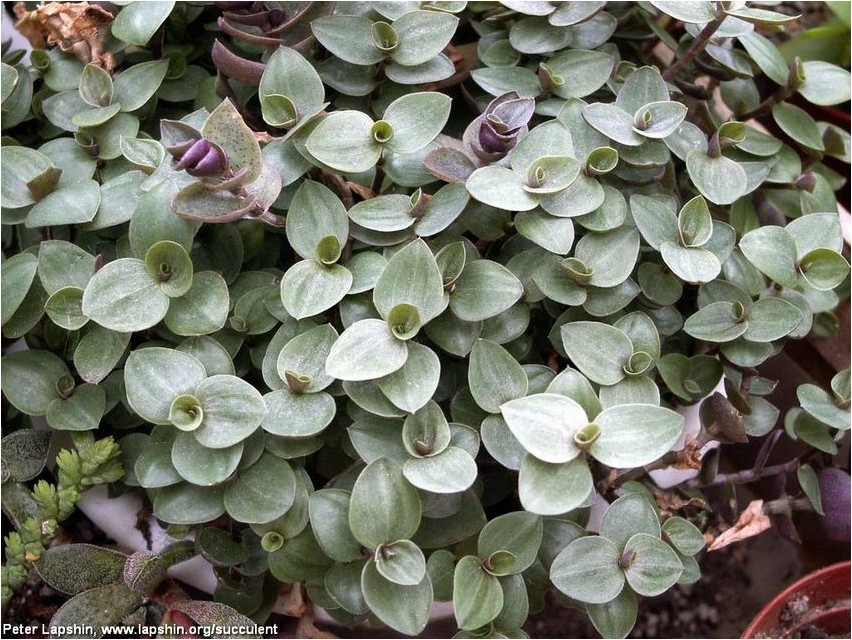
Callisia navicularis is also known as Tradescantia navicularis; in Latin the name of this plant is as follows: Callisia navicularis.
Callisia navicularis is one of the plants of the family called Commelinaceae, in Latin the name of this family will be: Commelinaceae.
Description of callisia scaphoid
To successfully grow this plant, you will need to provide it with either a sunny light regime or partial shade. Throughout the summer season, callisia navicularis should be watered moderately. At the same time, air humidity should remain quite high. The life form of Callisia navicularis is a leaf succulent.
It is recommended to grow callisia navicularis not only indoors, but also in winter gardens. The plant can be grown as a ground cover crop in flowerpots designed for growing large plants: for example, ficus and dracaenas. As for rooms, it is recommended to place pots with callisia navicularis either on western or eastern windows. If you plan to place the plant on a south-facing window, you will need to provide it with additional shading.
As for the maximum size that this plant can reach in cultivation, the height of Callisia navicularis will be about ten centimeters, and the diameter of the plant will reach twenty centimeters.
Description of the features of care and cultivation of callisia navicularis
For favorable development, this plant will require regular replanting, which should be done approximately every two years or every year. For replanting, it is recommended to use wide but shallow pots. This circumstance is due to the fact that the root system of this plant is rather weak, but the roots will grow quickly. Actually, this is why you should take a pot a little wider each time than the previous one. For replanting, the following soil composition should be prepared: one part each of turf soil and sand, as well as two parts each of leaf soil. The acidity of the soil intended for callisia scaphoid should be slightly acidic.

It should be remembered that the plant should always receive a sufficient degree of lighting. Otherwise, insufficient lighting may cause the shoots of the plant to stretch out and lose their decorative effect. It is also important to note that it is extremely undesirable to rearrange the plant in such a way that it changes its position relative to the light. If the soil dries out excessively, damage to the root system of Callisia navicularis may occur.
In order for the plant to retain its decorative and attractive appearance for as long as possible, short anti-aging pruning should be done approximately every two to three years. In addition, due to the fact that the plant ages quickly and the lower part of the stems becomes bare, it is recommended to pinch the shoots every year. If the air humidity drops below sixty percent, spider mite damage may occur.
Throughout the entire dormant period of callasia navicularis, an optimal temperature of approximately ten to fifteen degrees should be ensured. During this time, you should rarely water the plant. The dormant period begins in October and continues until February.
Reproduction of callisia navicularis can occur using stem cuttings, as well as through seeds. However, it should be noted that gardeners resort to the second method of propagation much less often.
In order for the plant to delight with its beauty, it is important to provide at least eight hours of daylight.