Acitandera (fragrant gladiolus)
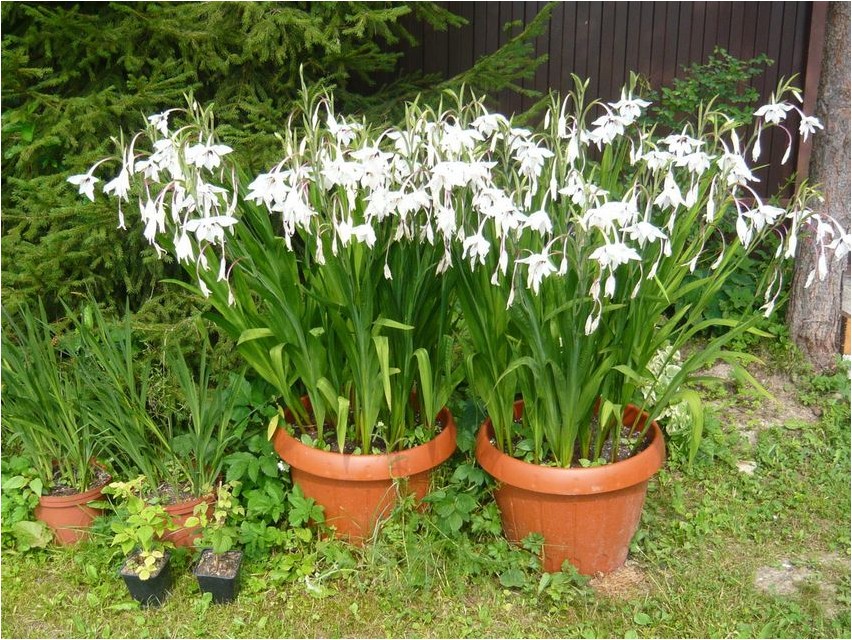
Acitander is not such a widely known flower crop, despite the fact that this plant is one of the varieties of the well-known gladiolus.
Description
Acitandera has graceful silhouettes and a surprisingly refined jasmine aroma; at night such aromas are especially active. Actually, thanks to all these properties, the plant seems so attractive for growing in gardens.
It should be noted that acitander is not the correct botanical name for this flower. The cultivation of this plant began already at the end of the eighties of the last century, then the very name of the flower belonged to the Kasatikov family. In the modern world, the name of the plant is simply fragrant gladiolus.
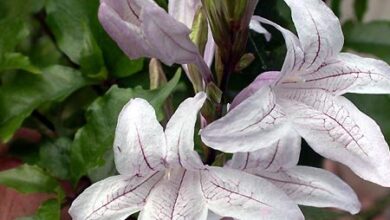
This plant should be classified as a perennial herbaceous plant. The underground organ of acitander looks like a corm, the diameter of which reaches six centimeters. This underground organ is covered with a rather dense reticular membrane, colored brown. Actually, thanks to such a corm, the plant’s belonging to the tuberous crops is proven. Acitandera has long, narrow and flat leaves, but they are also surprisingly soft and flexible. These leaves are very decorative and incredibly attractive throughout the development of the plant. The leaves can reach a length of up to sixty centimeters, while they are sword-shaped in shape, and the ends of the leaves are pointed. A strong and slender peduncle can be even more than one hundred and twenty centimeters in length; an inflorescence consisting of approximately two to ten flowers is formed on this peduncle. These flowers will be white with a dark purple center and their diameter can range from five to ten centimeters.
Each Acitandera flower has six petals, which have sharp edges and are shaped very much like pointed stars. Actually, translated from Greek, the name of the plant means nothing more than “sharp flower.” The plant will bloom from August to September; the exact period will directly depend on the time of planting. It is noteworthy that each peduncle can bloom even for one month, and the flowers themselves of such an inflorescence open sequentially one after another, starting from the lower ones. Naturally, the more flowers there are, the longer the flowering of the plant will last. In the autumn, the flowers produce fruits, which are elongated boxes. These boxes will contain seeds through which acitander can be propagated. However, such new plants may only bloom after a few years, so propagation through the corms themselves is recommended.

In nature, this plant can be found in tropical Africa: Mozambique, Tanzania, Ethiopia and Malawi. Actually, all the properties of this plant and its requirements for cultivation should be explained by this origin. Acitander loves warmth very much, but it is quite problematic for it to winter in the open ground in our conditions.
Acitandera will be a wonderful addition to your garden, regardless of whether the plant blooms or not. Very often this plant is used in garden design, because the leaves are quite long and flexible, which can give the landscape completely new colors and correctly place accents.
The optimal solution would be to plant acitander in pots or containers that are easy to mix. Indeed, at night the aromas of this plant are especially attractive.